Serving The Jacksonville Area



Kitchen Sink Gurgles When the Dishwasher Drains: What Does It Mean?

Kitchen Sink Gurgles When the Dishwasher Drains: What Does It Mean?
If your kitchen sink gurgles when the dishwasher drains, the sound usually means air is moving through the shared drain system because water isn’t flowing or venting as smoothly as it should. A partial clog, restricted drain connection, or plumbing vent problem may be responsible.
Most residential dishwashers discharge wastewater into the same drainage system used by the kitchen sink. When the dishwasher pumps out water, that extra flow can expose a restriction that isn’t obvious when you simply run the faucet.
For Jacksonville homeowners, a gurgling sink doesn’t automatically mean the dishwasher is broken or the sewer line needs replacing. The problem may be limited to grease buildup, food debris, a garbage disposal connection, or a drainage issue beneath the sink.
However, if dirty water rises into the sink, the dishwasher stops draining properly, or multiple fixtures begin gurgling, the problem deserves closer attention.
Quick Answer: Why Does the Kitchen Sink Gurgle When the Dishwasher Drains?
A kitchen sink often gurgles during the dishwasher’s drain cycle because the appliance pumps wastewater into a shared drainpipe, causing air pressure changes inside the plumbing.
When water encounters a restriction or the drain cannot vent properly, air may bubble through the water in the sink’s P-trap. That produces the familiar gurgling or glugging sound.
Common causes include:
- Partial drain blockage: Grease, soap residue, and food particles restrict wastewater flow.
- Garbage disposal buildup: Food debris or a restricted disposal drain connection interferes with drainage.
- Plumbing vent problems: Inadequate venting allows pressure fluctuations inside the drain.
- Dishwasher drain hose issues: Incorrect routing or a kinked hose may create additional drainage problems.
- Shared drain restrictions: The kitchen drain may struggle to accommodate the dishwasher’s discharge.
- Deeper sewer line problems: If other fixtures are affected, the restriction may extend beyond the kitchen.
The most useful first step is observing whether the kitchen sink drains normally when the dishwasher isn’t running.
If the sink drains slowly on its own, a partial clog becomes more likely. If it drains normally but gurgles only during dishwasher discharge, the shared connection or venting system may need evaluation.
How the Dishwasher and Kitchen Sink Share a Drain
Your dishwasher and kitchen sink usually connect to the same household drainage branch.
Depending on the kitchen’s plumbing arrangement, the dishwasher drain hose may connect to the garbage disposal or a fitting along the sink’s drain assembly.
When the dishwasher reaches its drain cycle, a pump pushes wastewater through the hose and into the kitchen drainage system.
The water then travels through the sink’s drainage piping toward the home’s larger drain line.
Unlike water running gradually from a faucet, dishwasher discharge enters the drain in concentrated bursts.
If the pipe is partially blocked or airflow is restricted, the sudden discharge can create noticeable pressure changes.
The kitchen sink may gurgle as air moves through the water sitting inside its P-trap.
This is why the sound may appear only when the dishwasher runs, even if the sink seems perfectly normal during other activities.
The dishwasher may simply be revealing an existing drainage problem.
Can a Partial Kitchen Drain Clog Cause Gurgling?
Yes. A partial clog is one of the first possibilities to investigate when a kitchen sink gurgles during dishwasher discharge.
Kitchen drains handle food residue, cooking grease, soap, and other debris.
Over time, these materials can collect along the pipe walls and reduce the space available for wastewater.
The drain might still handle ordinary faucet use, but a sudden discharge from the dishwasher can expose the restriction.
Signs of a partial kitchen drain blockage include:
- Water draining more slowly than usual
- Gurgling when the dishwasher empties
- Water briefly rising in the opposite basin of a double sink
- Recurring unpleasant odors
- Frequent kitchen drain clogs
If the restriction becomes severe, dishwasher wastewater may back up into the sink.
A minor gurgle doesn’t establish that a clog is present, but the combination of noise and slow drainage makes a blockage more likely.
Professional drain cleaning can help when buildup is located beyond an easily accessible strainer or connection.
Could the Garbage Disposal Be Causing the Noise?
Yes. If your dishwasher drains through the garbage disposal, buildup around the disposal outlet or connected drainpipe may affect how wastewater moves.
The garbage disposal and dishwasher often share a connection, but they perform different jobs.
The disposal grinds suitable food scraps, while the dishwasher pumps wastewater through its drain hose.
If the disposal chamber contains food residue or the downstream drain is restricted, the dishwasher’s discharge may cause bubbling or gurgling.
You may notice:
- Water collecting in the disposal side of a double sink
- Slow drainage after using the disposal
- Gurgling during dishwasher operation
- Food residue or odors around the drain
A newly installed garbage disposal can also create dishwasher drainage problems if its dishwasher inlet wasn’t prepared correctly during installation.
However, that situation more commonly causes the dishwasher to fail to drain rather than producing an ordinary sink gurgle.
Never place your hand inside a garbage disposal to investigate a blockage.
If you suspect a problem with the disposal connection or internal components, have the assembly inspected by a qualified professional.
How Plumbing Vent Problems Create Gurgling Sounds
Your home’s drainage system needs airflow to move wastewater efficiently.
Plumbing vents help maintain appropriate air pressure inside drainpipes as water flows.
When venting doesn’t work properly, pressure changes may cause air to move through fixture traps.
The result can be gurgling, bubbling, or other unusual drain noises.
For example, the dishwasher may discharge enough water to create a noticeable pressure difference in a poorly vented kitchen branch.
Possible vent-related problems include:
- An obstructed plumbing vent
- An incorrectly configured drain or vent connection
- A malfunctioning air admittance valve, where one is installed
- Plumbing modifications that affect venting
These conditions can sometimes produce symptoms similar to a partial clog.
A gurgling sink alone cannot confirm a blocked vent.
If the sink drains normally but continues gurgling whenever the dishwasher empties, a plumber may need to evaluate how the drain is vented.
Homeowners should not attempt to access roof plumbing vents or modify concealed vent piping themselves.
Can the Dishwasher Drain Hose Cause the Problem?
The dishwasher drain hose carries wastewater from the appliance to its connection beneath the kitchen sink.
If the hose is kinked, restricted, or installed incorrectly, drainage problems may develop.
Dishwasher installations generally use an approved air-gap arrangement or an appropriately secured high loop, depending on the appliance instructions and applicable plumbing requirements.
These arrangements help prevent wastewater from flowing backward into the dishwasher.
Problems involving the hose may include:
- A visible kink restricting the hose
- An improperly secured high loop
- A blocked air-gap fitting
- An incorrect connection to the sink or garbage disposal
- Debris accumulating near the hose outlet
However, the hose isn’t always responsible for sink gurgling.
A partially blocked kitchen drain farther downstream can produce the same sound even when the dishwasher connection is correctly installed.
If the problem began after a dishwasher replacement or kitchen renovation, tell your plumber.
Recent installation changes can provide a useful clue.
Why Does the Sink Gurgle Only When the Dishwasher Runs?
This timing is an important diagnostic detail.
When you turn on the kitchen faucet, water typically flows into the sink drain at a relatively steady rate.
During a dishwasher drain cycle, the appliance’s pump sends wastewater into the drain in a shorter burst.
A pipe with moderate buildup may still handle ordinary faucet use but struggle with the dishwasher’s discharge.
The difference can cause air to bubble through the sink trap, creating a sound you don’t hear at other times.
This doesn’t necessarily mean the dishwasher pump is defective.
It may mean the kitchen drain has limited capacity or the plumbing vent isn’t managing pressure changes properly.
If the sink also begins draining slowly during normal use, the problem may be progressing.
Is Gurgling Different From Water Backing Up Into the Sink?
Yes. Gurgling and wastewater backup are related symptoms, but they don’t necessarily indicate the same level of restriction.
Gurgling without visible backup may occur because of pressure fluctuations, a developing blockage, or inadequate venting.
Water rising into the sink during dishwasher discharge indicates the drainage system is not carrying the water away quickly enough.
If dirty dishwasher water is entering the sink basin, stop using the dishwasher until the problem is evaluated.
Continuing to run cycles may increase the risk of overflow or wastewater entering places it shouldn’t.
Also pay attention to other fixtures.
If the kitchen sink gurgles but every other drain works normally, the problem may be isolated to the kitchen branch.
If toilets, showers, or other sinks begin reacting when appliances drain, a deeper blockage or venting issue becomes more concerning.
Those broader symptoms justify prompt professional inspection.
What Can Homeowners Safely Check?
Before scheduling plumbing service, there are several simple checks that can help narrow down why the kitchen sink gurgles when the dishwasher drains.
These checks do not require opening drainage pipes or disassembling appliances.
1. Check whether the kitchen sink drains slowly
Run a moderate amount of water into the sink and observe how quickly it drains.
If water pools or empties unusually slowly, a restriction may be developing in the sink drain.
Avoid running large amounts of water if the sink is already backing up.
2. Inspect the sink strainer
Food particles can collect around the drain opening.
Remove visible debris from an accessible sink strainer and dispose of it in the trash.
Avoid pushing debris farther into the drain.
3. Check the garbage disposal’s normal operation
If the kitchen has a garbage disposal, pay attention to whether it operates normally and whether water drains after use.
Follow the manufacturer’s operating instructions.
Never reach inside the disposal chamber, even when it appears to be switched off.
4. Look at the visible dishwasher drain hose
If the hose is accessible beneath the sink, check for obvious kinks or a disconnected section.
Do not disconnect hoses, remove clamps, or modify the installation.
5. Observe other plumbing fixtures
Notice whether nearby sinks, showers, or toilets also make unusual sounds when water drains.
Multiple affected fixtures may indicate that the problem extends beyond the kitchen.
6. Check for water under the sink
Look for visible moisture around the plumbing connections, disposal, and dishwasher drain hose.
If you notice active leakage, stop using the affected fixture or appliance until the source is identified.
Avoid pouring chemical drain cleaners into the sink or garbage disposal. These products can create handling hazards, may not remove the underlying restriction, and can make subsequent plumbing service more dangerous.
When Professional Drain Cleaning May Be Needed
Professional drain cleaning may be appropriate when gurgling persists, water drains slowly, or dishwasher discharge causes wastewater to rise into the kitchen sink.
A plumber can evaluate the kitchen’s shared drain system to determine whether buildup is restricting the flow.
Depending on the location and severity of the blockage, professional service may involve clearing the drain using appropriate equipment.
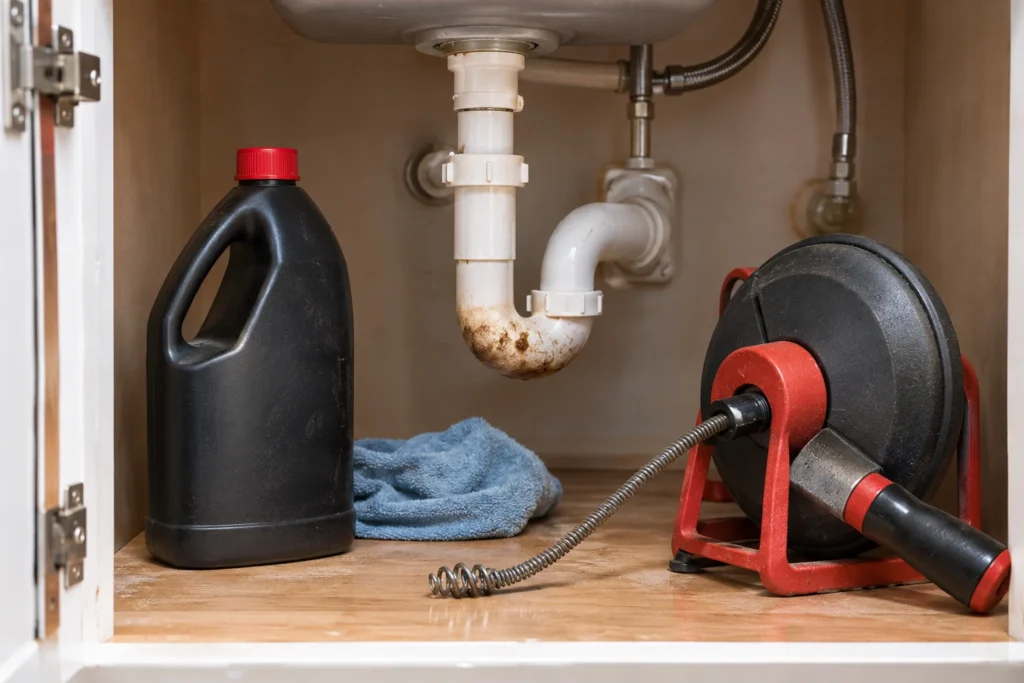
In some cases, a drain auger can remove a localized obstruction. More extensive buildup may require additional cleaning methods.
The right approach depends on the plumbing material, pipe condition, and location of the restriction.
Drain cleaning may not resolve the issue if the true cause is inadequate venting or an incorrectly installed dishwasher connection.
That’s why diagnosing the source is important before selecting a repair.
King of Home Solutions provides drain cleaning services for kitchen sinks and other household drains throughout Jacksonville.
When Could the Problem Be in the Main Sewer Line?
A gurgling kitchen sink doesn’t automatically indicate a main sewer line problem.
When the noise occurs only during dishwasher discharge and no other fixtures are affected, the kitchen branch drain or its venting is generally a more useful place to start.
However, warning signs of a broader drainage problem include:
- Multiple fixtures draining slowly
- Toilets bubbling when another fixture drains
- Wastewater backing up into showers or tubs
- Strong sewer odors
- Recurring clogs throughout the home
- Backups affecting fixtures in different rooms
These symptoms may suggest a restriction in shared drainage piping or the main sewer line.
A plumber may recommend additional testing or camera inspection when the symptoms point to a deeper obstruction or damaged piping.
Avoid continuing to use water-intensive appliances when sewage is backing up into the home.
How Plumbers Diagnose Dishwasher-Related Sink Gurgling
A professional plumbing evaluation generally begins with the exact symptoms you’re experiencing.
A plumber may ask whether the sink drains slowly, whether the dishwasher leaves standing water behind, and whether the sound began after recent plumbing work.
Depending on the findings, the evaluation may include:
Checking the shared drain connection: Inspecting the visible plumbing configuration and dishwasher discharge connection.
Evaluating drainage: Determining whether wastewater moves freely through the kitchen branch.
Examining the garbage disposal connection: Looking for restrictions or installation-related problems.
Assessing venting: Investigating whether inadequate airflow or pressure changes are affecting drainage.
Checking other fixtures: Determining whether the problem may extend beyond the kitchen.
Inspecting deeper piping when warranted: Using appropriate diagnostic equipment to investigate recurring or widespread drainage problems.
The goal is to identify whether the problem involves a localized blockage, plumbing vent, appliance connection, or another part of the drain system.
Not every gurgling sink requires extensive drain cleaning or major pipe repairs.
How to Prevent Kitchen Drain Gurgling
Although not every plumbing issue is preventable, good kitchen habits can help reduce the buildup that contributes to drain restrictions.
Keep cooking grease out of the sink
Allow fats, oils, and grease to cool, then dispose of them appropriately rather than pouring them down the drain.
Grease can accumulate inside pipes over time.
Limit food debris entering the drain
Scrape food scraps into the trash or appropriate collection container before washing dishes.
A garbage disposal does not eliminate the risk of drain buildup.
Keep the dishwasher filter clean
Follow the dishwasher manufacturer’s instructions for checking and cleaning its filter.
This helps the appliance operate properly, although it won’t clear a blockage farther down the kitchen drain.
Pay attention to early symptoms
Slow drainage, recurring gurgling, and unusual odors may indicate a developing plumbing problem.
Addressing symptoms before a complete blockage occurs can help reduce the risk of wastewater backups.
Correct improper drain connections
If gurgling began after a kitchen remodel, dishwasher replacement, or disposal installation, have the affected plumbing connections evaluated.
Correct hose routing and drainage configuration are important for dependable operation.
Kitchen Drain and Dishwasher Plumbing Services in Jacksonville
Jacksonville homeowners rely on their kitchen sinks and dishwashers throughout the day. When the dishwasher starts causing gurgling noises in the sink, even routine cleanup can become frustrating.
Kitchen drainage problems can develop in both newer and older homes.
Some properties experience buildup from cooking grease and food waste, while others may have plumbing connections or venting arrangements that need attention.
In established Jacksonville neighborhoods, previous renovations or changes to kitchen fixtures can also influence how the dishwasher and sink share their drainage connections.
At King of Home Solutions, we help homeowners identify drainage problems and determine appropriate repair options.
Our plumbing services include kitchen drain cleaning, garbage disposal work, and evaluation of residential plumbing concerns.
Whether the sink gurgles only when the dishwasher runs or wastewater is beginning to back up into the basin, identifying the source is the first step toward restoring normal drainage.
We serve Jacksonville and surrounding Northeast Florida communities, including areas throughout Duval, Clay, and St. Johns counties.
If the kitchen sink keeps making unusual noises during dishwasher operation, our team can assess the symptoms and recommend practical next steps.
FAQs About Kitchen Sink Gurgling
Why does my kitchen sink make a gurgling sound when the dishwasher drains?
The dishwasher typically discharges water into the same drain system used by the kitchen sink. If that drain is partially restricted or not venting properly, air can bubble through the sink’s P-trap. The sound may indicate a developing blockage or another drainage issue.
Does a gurgling kitchen sink mean the drain is clogged?
Not always. A partial blockage is one possible cause, but inadequate plumbing venting or an issue with the dishwasher drain connection can produce similar symptoms. Slow drainage or wastewater backup makes a restriction more likely.
Can a garbage disposal cause the sink to gurgle when the dishwasher runs?
Yes. Many dishwashers drain through a connection on the garbage disposal. Food buildup or a restriction in the connected drainpipe can affect wastewater flow. A plumber can determine whether the disposal connection or downstream piping is responsible.
Why does my kitchen sink gurgle but drain normally?
A sink may handle ordinary faucet use while struggling with the dishwasher’s faster discharge. A partial restriction or venting issue may become noticeable only when more water enters the drain. If the sound keeps returning, an inspection can help identify the cause.
Should I stop using the dishwasher if the sink gurgles?
A brief gurgle without other symptoms doesn’t necessarily require an immediate shutdown. However, stop using the dishwasher if water backs up into the sink, leaks develop, or drainage becomes significantly restricted. Continued operation could contribute to an overflow.
When should I call a plumber about a gurgling kitchen sink?
Call a plumber when the noise persists, drainage becomes slow, wastewater backs up, or other fixtures begin gurgling. These symptoms can indicate a blockage, venting problem, or another issue requiring professional diagnosis.
Get Your Kitchen Drain Working Normally Again
A kitchen sink that gurgles whenever the dishwasher drains may be warning you about a developing drainage problem.
While the cause may be as simple as buildup in a shared kitchen drain, persistent gurgling can also involve plumbing venting or dishwasher connection problems.
If you’ve checked for visible debris, confirmed that the sink isn’t obstructed, and the noise continues, professional diagnosis can help identify the next step.
At King of Home Solutions, we help Jacksonville homeowners address slow drains, kitchen sink backups, and other residential plumbing concerns.
Whether your home needs professional drain cleaning or a closer inspection of its kitchen plumbing, our team can help you understand the problem before recommending a repair.
Schedule drain cleaning in Jacksonville or call 904-865-4663 to get help from King of Home Solutions.