Serving The Jacksonville Area


Garage Door Reverses Before Touching the Floor: What Causes It?

Garage Door Reverses Before Touching the Floor: What Causes It?
When a garage door reversesbefore touching the floor, the problem may involve misaligned safety sensors, an obstruction, incorrect opener travel settings, or mechanical resistance in the tracks and rollers. Modern garage door openers are designed to reverse when certain safety systems detect an obstruction or abnormal movement. However, repeated reversal when nothing is blocking the doorway may indicate that a component needs inspection or adjustment.
In Orange Park, FL, frequent garage door use, humidity, and occasional storm-related debris can contribute to closing problems. At King of Home Solutions, we help homeowners identify why their garage doors reverse unexpectedly, inspect the relevant safety and mechanical components, and recommend repairs that restore proper closing without compromising important safety features.
Garage Door Won't Close All the Way?
Don't let a faulty garage door disrupt your day. Schedule expert troubleshooting and repair today!
Quick Answer: Why Does My Garage Door Reverse Before Closing?
A garage door that starts closing but reverses before reaching the floor may be reacting to a sensor signal, incorrect travel control, or resistance during movement.
The problem can originate from the opener, the door’s mechanical components, or something in the doorway.
Common causes include:
- Misaligned safety sensors: The photo-eye sensors may lose their alignment and interrupt the closing cycle.
- Dirty sensor lenses: Dust, cobwebs, or other material may interfere with the infrared beam.
- Physical obstructions: Objects near the doorway may block the sensors or interfere with door movement.
- Incorrect travel settings: The opener may not recognize the intended fully closed position.
- Force-detection problems: The opener may interpret unexpected resistance as an obstruction.
- Damaged tracks or rollers: Binding or misalignment can prevent smooth closing.
- Opener control problems: Faulty wiring, sensors, or electronic components may interfere with the closing sequence.
The timing of the reversal can provide a useful clue.
If the door begins reversing before it gets close to the floor, the photo-eye sensors or mechanical resistance may be involved.
If the door reaches the bottom, touches the floor, and immediately reverses, incorrect close-travel settings or force-related issues become more relevant.
These are diagnostic clues rather than confirmed causes.
Homeowners can safely check for visible obstructions, inspect sensor lenses, and note any opener error messages.
However, internal opener adjustments, track repairs, and work involving springs or cables should be performed by a qualified garage door technician.
Never bypass the safety sensors or increase the opener’s closing force to overcome an unknown problem.
How the Garage Door Reversal Safety System Works
Garage door openers are designed to protect people, pets, vehicles, and property from certain closing hazards.
Modern residential systems use safety features that respond when an obstruction or abnormal resistance is detected.
However, not every reversing mechanism works the same way.
Photo-Eye Safety Sensors
Most modern residential garage door openers have photoelectric sensors located near the bottom of the doorway.
One sensor transmits an infrared beam toward the receiving sensor on the opposite side.
When the beam is interrupted, the system prevents normal closing or reverses a door that is already moving downward.
Why the Sensors Are Near the Floor
The sensors are positioned to detect certain objects or people in the garage door’s closing path.
The Door & Access Systems Manufacturers Association (DASMA) identifies placement near the bottom of the doorway as part of standard residential garage door safety arrangements.
Built-In Resistance Detection
Garage door openers also monitor aspects of the door’s movement.
Depending on the model, this may involve motor force, speed, position, or other operating signals.
If the opener encounters unexpected resistance, it may stop and reverse.
Contact Reversal
A properly functioning residential garage door opener should reverse when it encounters an appropriate test obstruction during closing.
This is an important safety feature.
Why a Garage Door May Reverse Without a Visible Object
A malfunctioning sensor or mechanical component can create conditions that the opener interprets as an obstruction.
For example, a damaged roller may increase resistance even when the doorway appears clear.
Can Safety Systems Fail?
Yes.
Sensors, wiring, opener controls, and mechanical components can develop faults.
A garage door should not be considered safe simply because it still opens normally.
Why Professional Testing Matters
Garage door safety systems must operate correctly after repairs or adjustments.
A technician can evaluate the door’s movement and verify that the opener’s protective features function according to the manufacturer’s instructions.
The goal is to restore normal closing while preserving the safety mechanisms that protect the household.
Can Misaligned Safety Sensors Cause Early Reversal?
Yes. Misaligned photo-eye sensors are among the common possible causes of a garage door reversing before it reaches the floor.
These sensors must maintain proper communication across the garage door opening.
If their alignment changes, the opener may behave as though an object is blocking the doorway.
What Causes Sensor Misalignment?
Sensor brackets can shift because of:
- Accidental contact with stored objects.
- Vehicles or equipment bumping the brackets.
- Normal vibration.
- Loose mounting hardware.
- Previous repairs or adjustments.
- Damage after a storm or impact.
Even a small alignment change can interfere with certain sensor systems.
What Happens When the Sensors Lose Alignment?
The opener may refuse to close the door.
In other situations, it may begin closing and then reverse when sensor communication is interrupted.
The exact behavior depends on the opener.
Do Sensors Have Indicator Lights?
Many models use indicator lights to show sensor status.
For example, certain Chamberlain and LiftMaster systems use separate indicators on the sending and receiving sensors.
A blinking or unlit indicator may suggest an alignment, wiring, or power issue.
However, indicator meanings vary by model.
Can Sunlight Interfere With Sensors?
In some installations, strong direct sunlight can affect sensor operation.
A homeowner may notice that the problem occurs more often at a particular time of day.
However, sunlight should not be assumed to be the cause without checking other conditions.
Can the Door Close Sometimes and Reverse Other Times?
Yes.
Intermittent sensor communication may cause inconsistent operation.
The door might close successfully several times before unexpectedly reversing.
What Can Homeowners Safely Check?
From outside the door’s travel path, homeowners can visually inspect the sensors.
Look for obvious damage, displaced brackets, or abnormal indicator lights.
The manufacturer’s user manual may explain normal indicator behavior.
Should Homeowners Realign the Sensors?
Simple manufacturer-approved cleaning and visual checks are reasonable.
However, if brackets are damaged, wiring is exposed, or adjustment requires tools or uncertain procedures, professional service is appropriate.
Never bypass the sensors or operate the opener with disabled safety protection.
How Dirt or Obstructions Can Affect the Sensors
Garage door sensors are installed close to the floor, where dust and other debris can collect.
In Orange Park garages, ordinary household activity, outdoor dirt, and weather-related debris may affect the sensor area.
Dust on Sensor Lenses
A layer of dust or dirt may interfere with the infrared beam.
This can cause the opener to interpret the sensor path as blocked.
Cobwebs and Insects
Spiderwebs, insects, or other material around the sensor housing can interfere with detection.
Stored Household Items
Bicycles, tools, storage containers, and other objects may extend into the sensor beam.
An object does not need to touch the garage door itself to cause a sensor-related problem.
Leaves and Storm Debris
Wind can carry leaves, small branches, and other debris into the garage opening.
If they interrupt the beam, the door may reverse.
Moisture Around Sensors
Water exposure or damaged components may affect electrical connections and sensor reliability.
Homeowners should not open wet or damaged sensor housings.
What Can Homeowners Safely Remove?
When the door is stationary and the area is safe, homeowners can remove loose objects from the doorway.
A clean, soft cloth may be used to gently wipe accessible sensor lenses according to manufacturer instructions.
Avoid spraying chemicals or excessive water onto the sensors.
Why Cleaning May Not Fix the Problem
If the sensors are misaligned, damaged, or experiencing electrical faults, removing dirt may not restore reliable communication.
What If the Sensor Lights Still Flash?
Record the indicator behavior and compare it with the opener’s user manual.
If the error remains, arrange professional inspection.
The sensors should never be disconnected to make the door close.
Can Incorrect Travel Settings Stop the Door Too Soon?
Yes. Garage door opener travel settings determine how far the opener moves the door during opening and closing.
If the close-travel setting is incorrect, the opener may stop or reverse at the wrong position.
However, the precise behavior depends on the opener model.
What Are Travel Limits?
Travel limits tell the opener where the fully open and fully closed positions should be.
Some older openers use mechanical adjustment controls.
Newer models may use electronic programming.
What Happens When the Close Limit Is Wrong?
A setting that stops the door too early may leave a gap beneath the door.
On certain opener systems, incorrect travel programming can also contribute to reversal or position-related errors.
What If the Door Touches the Floor Before Reversing?
This is a different diagnostic pattern.
An opener that continues applying downward force after the door reaches the floor may interpret the resulting resistance as an obstruction and reverse.
This may indicate a close-travel adjustment problem.
Can the Floor Level Matter?
An uneven floor or deteriorated bottom weather seal may affect how the door meets the ground.
However, those conditions do not automatically explain a reversal that happens several inches above the floor.
Why Reversal Height Matters
Homeowners should note whether the door reverses:
- Several feet above the floor.
- Halfway down.
- Only a few inches before the floor.
- Immediately after touching the floor.
The pattern helps narrow possible causes.
Should Homeowners Change the Travel Settings?
Because travel settings affect the door’s stopping position and safety operation, adjustments should follow the specific manufacturer’s procedures.
For a malfunctioning door that repeatedly reverses, professional evaluation is recommended before changing these settings.
What Happens After Adjustment?
The technician should verify proper travel and test the opener’s safety-reversal features.
A door that closes completely but no longer reverses appropriately is not a successful repair.
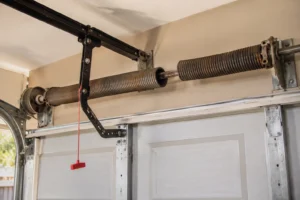
Cost to repair a Garage Door Spring in Duval County.
A broken garage door spring can leave your door stuck, crooked, or too heavy to lift. For homeowners in Duval…
Read The BlogHow Opener Force Settings May Affect Closing
Garage door openers are designed to respond when the door encounters resistance.
Force settings or electronically managed force detection help determine how the opener responds during movement.
What Is the Closing Force?
Closing force refers to the mechanical effort the opener applies while moving the door downward.
Different opener models monitor or control that force in different ways.
Why Does Resistance Cause Reversal?
If the door encounters more resistance than expected, the opener may stop or reverse.
This is part of its protective operation.
What Can Create Excessive Resistance?
Possible causes include:
- Bent tracks.
- Worn or damaged rollers.
- Binding hinges.
- Poor door alignment.
- Damaged door sections.
- Counterbalance problems.
- Objects in the travel path.
Can a Faulty Opener Misread Resistance?
Yes.
Problems with the motor, control board, movement sensors, or drive components may interfere with normal operation.
However, the mechanical condition of the door should also be evaluated.
Why Increasing Force Is Risky
Increasing the closing force to overcome resistance can make an unsafe door move despite an unresolved mechanical problem.
It may also reduce the effectiveness of the opener’s protective response.
Is Force Adjustment Always Necessary?
No.
If a damaged roller is causing the resistance, repairing that roller may resolve the problem.
Changing the opener’s force setting would not address the underlying cause.
Who Should Adjust the Opener?
A trained garage door technician can evaluate the door’s mechanical operation and opener controls.
Any necessary adjustment should follow the manufacturer’s specifications and be followed by appropriate safety testing.
At King of Home Solutions, we inspect the door and opener together before recommending adjustments or replacement parts.
Can Track or Roller Problems Trigger Reversal?
Yes. Damaged tracks or rollers can create resistance that causes the opener to stop and reverse during closing.
The tracks guide the garage door as it moves.
Rollers allow the door sections to travel along that path.
If the components bind, the opener may detect abnormal resistance.
Bent Tracks
A track can become bent after an impact or other mechanical damage.
A damaged section may restrict roller movement as the door approaches the floor.
Misaligned Tracks
Improper track positioning may cause the door to bind or move unevenly.
Worn Rollers
Rollers can wear, crack, or develop problems that interfere with smooth movement.
Damaged Hinges
Garage door hinges connect the door sections and support proper movement.
A damaged hinge may create alignment or travel problems.
Loose Hardware
Certain loose or damaged components can allow unwanted movement or vibration.
However, not all hardware is safe for homeowners to adjust.
Why the Door May Reverse at the Same Spot
If the garage door repeatedly catches at the same position, a mechanical restriction may be present at that point in its travel.
This can help a technician determine which track, roller, or door section needs inspection.
What About the Bottom Weather Seal?
A severely damaged or displaced bottom seal may sometimes interfere with closing.
However, a normal flexible seal should not cause repeated reversal before the door reaches the floor.
Signs of Track or Roller Problems
Homeowners may notice:
- Scraping sounds.
- Grinding or unusual vibration.
- Uneven movement.
- A door that appears crooked.
- Visible roller damage.
- Bent track sections.
- Reversal at a consistent height.
Should Homeowners Straighten Tracks?
No.
Tracks are part of a system that guides a heavy moving door.
Improper adjustment can create instability.
If a roller has left the track or the door moves unevenly, stop using the door and arrange professional service.
What Can Homeowners Safely Check?
A garage door that reverses before closing may have a simple obstruction or a more serious operating problem.
Homeowners can perform a few basic visual checks without dismantling equipment or adjusting high-tension components.
1. Check the Doorway for Objects
When the door is stationary, look for tools, storage items, leaves, or other objects in the closing path.
Remove only items that can be reached safely.
2. Look at the Safety Sensors
Check whether both sensors appear intact and properly positioned.
Do not touch damaged wiring or open sensor housings.
3. Gently Clean Accessible Sensor Lenses
Use a soft, dry cloth according to the manufacturer’s instructions.
Avoid harsh chemicals and excessive water.
4. Observe Sensor Indicator Lights
Some systems use steady or flashing lights to indicate sensor status.
Note the pattern and compare it with the user manual.
5. Watch Where the Door Reverses
From a safe location, observe whether the reversal occurs near the floor or much earlier.
If the door shows signs of instability or mechanical damage, do not operate it again for testing.
6. Listen for Unusual Sounds
Grinding, scraping, popping, or loud mechanical noises may suggest a mechanical problem.
7. Look for Visible Track Damage
Check for bent tracks, displaced rollers, or damaged door sections without touching them.
8. Review Opener Alerts
If the opener has a user-facing display or smartphone app, record any fault code or notification.
9. Note Recent Changes
Tell the technician if the problem began after:
- A thunderstorm.
- A power outage.
- A vehicle impact.
- Garage door maintenance.
- A new opener installation.
- A period of intermittent reversal.
What Homeowners Should Not Attempt
Avoid:
- Bypassing or disconnecting safety sensors.
- Increasing opener force.
- Changing internal travel controls without proper diagnosis.
- Adjusting springs or cables.
- Straightening tracks.
- Forcing rollers into place.
- Removing bottom brackets.
- Operating a crooked or unstable door.
- Repeatedly forcing the opener to close the door.
These actions can create safety hazards or worsen the problem.
What Warning Signs Mean You Should Stop Using the Door?
Some closing problems are caused by easily removable objects.
Others involve mechanical components that can make the garage door unsafe.
The Door Repeatedly Reverses
If the door continues reversing after visible obstructions have been removed, stop repeated attempts.
A Spring Appears Broken
Garage door springs operate under substantial tension.
A broken spring requires professional repair.
A Cable Is Loose or Hanging
A damaged lifting cable can affect the door’s stability.
Do not touch or reposition it.
The Door Is Crooked
Uneven movement may indicate a cable, spring, roller, or track problem.
Rollers Have Come Out of the Track
An off-track door should not be operated.
Loud Grinding or Popping Occurs
Severe mechanical noises may indicate damaged components.
The Opener Strains During Closing
An opener that repeatedly struggles against resistance may be responding to a mechanical problem.
The Safety Sensors Have Been Damaged
A malfunctioning or bypassed sensor system compromises an important protective feature.
The Door Closes Without Proper Reversal Protection
If the opener fails a manufacturer-approved safety test, stop using it until the problem has been corrected.
The Door Is Partially Open and Unstable
Keep people and pets away from the door’s travel area.
Do not pull the emergency release or attempt to move an unstable door manually.
Why Continued Operation Is Risky
A garage door is a heavy moving system.
Repeatedly forcing it to close can damage the opener, tracks, rollers, and supporting hardware.
More importantly, bypassing safety systems or operating unstable components can create serious injury risks.
When Does the Garage Door Opener Need Professional Adjustment?
Not every reversal requires an opener adjustment.
Before adjusting controls, a technician should determine whether the door itself moves correctly.
Travel Position Problems
If the opener does not recognize the correct closed position, the travel settings may require evaluation.
Incorrect Force Detection
If the opener responds improperly to normal movement, the force-detection system may need testing.
Intermittent Sensor Signals
Damaged sensor wiring or unstable alignment may require professional correction.
Faulty Electronic Controls
A control board, movement sensor, or another component may be malfunctioning.
Opener Drive Problems
A worn belt, chain, trolley, gear, or other drive component can affect operation.
Recent Opener Installation
Incorrect programming or installation may cause abnormal stopping and reversal.
When Adjustment Is Not the Solution
An opener adjustment cannot safely correct a broken spring, off-track door, or bent track.
The mechanical problem must be addressed first.
What Happens After Professional Adjustment?
The technician should verify:
- Full opening and closing travel.
- Smooth door movement.
- Correct sensor operation.
- Appropriate resistance detection.
- Safe reversal behavior.
- Proper response to operating commands.
When Might Opener Replacement Be Considered?
Replacement may make sense when major electronic components fail, compatible parts are unavailable, or the opener lacks necessary modern safety features.
However, a garage door that reverses unexpectedly does not automatically need a new opener.
Our Garage Door Opener Services help determine whether repair, adjustment, or replacement is appropriate.
When to Call a Garage Door Technician
Professional service is appropriate when the garage door repeatedly reverses before reaching the floor or when there are signs of mechanical damage.
The cause may involve sensors, opener controls, tracks, rollers, or the counterbalance system.
Call When the Sensors Appear Normal but Reversal Continues
If the doorway is clear and the sensor indicators appear normal, another problem may be affecting closing.
Call When the Door Reverses at the Same Height
Consistent reversal at one point may suggest a mechanical restriction or opener travel issue.
Call When Tracks or Rollers Are Damaged
Bent tracks, displaced rollers, and damaged hinges require proper repair.
Call When the Door Moves Unevenly
A crooked door may have a cable, spring, or alignment problem.
Call When the Opener Displays Errors
Persistent fault codes can help guide professional troubleshooting.
Call After Storm or Impact Damage
Garage door components can shift or become damaged following strong winds or impacts.
Call When Safety Features Do Not Work Correctly
A malfunctioning safety system should be repaired before normal operation resumes.
What Does a Technician Inspect?
A professional may evaluate:
- Safety sensor alignment and operation.
- Sensor wiring and related controls.
- Opener travel settings.
- Force-detection operation.
- Track alignment.
- Roller and hinge condition.
- Spring and cable condition.
- Door balance.
- Opener motor and drive components.
- Door panels and bottom weather seal.
Does the Entire Garage Door Need Replacement?
Usually not for an isolated sensor or opener-control problem.
Many issues can be corrected through targeted repair.
However, major structural damage, extensive corrosion, or multiple failed components may justify replacement.
A proper inspection helps determine the most appropriate option.
Garage Door Repair in Orange Park
Orange Park homeowners rely on their garage doors for daily access, vehicle storage, and home security.
When a garage door repeatedly reverses before reaching the floor, it may leave the garage unsecured or interrupt normal household routines.
At King of Home Solutions, we provide garage door diagnostics and repair for Orange Park and surrounding Clay County communities.
Identifying the Cause of Early Reversal
Our technicians evaluate the door’s closing behavior to determine whether the problem involves the safety sensors, opener controls, tracks, rollers, or another component.
We inspect the actual operation rather than assuming every reversal is caused by dirty sensors.
Safety Sensor Troubleshooting
Misaligned or malfunctioning sensors can interrupt closing.
We evaluate sensor operation and recommend appropriate repair or replacement when needed.
Garage Door Opener Repairs
Incorrect travel settings, control problems, and drive-system failures can affect closing.
Our Garage Door Opener Services address opener-related problems, including unexpected stopping and reversal.
Track and Roller Repairs
Damaged tracks, worn rollers, or misaligned hardware can create resistance during closing.
We inspect the affected components and recommend repairs based on their condition.
Complete Garage Door Diagnostics
Our Garage Door Repair Services include springs, cables, rollers, tracks, openers, and other components affecting safe door movement.
Testing After Repairs
After completing the approved work, we check door movement, closing performance, and relevant safety features.
The objective is to restore reliable closing without compromising the opener’s protective systems.
Serving Orange Park and Nearby Communities
We serve Orange Park, Fleming Island, Lakeside, Oakleaf Plantation, and surrounding areas of Clay County and Northeast Florida.
Whether the problem began after a storm or developed gradually, our team can inspect the garage door and recommend the appropriate next step.
FAQs About Garage Doors That Reverse Before Closing
Why does my garage door reverse before touching the floor?
Possible causes include misaligned safety sensors, obstructions, incorrect travel settings, mechanical resistance, damaged rollers, or opener control problems.
Can dirty garage door sensors make the door reverse?
Yes. Dirt, cobwebs, or other material blocking the infrared beam can interfere with sensor operation and prevent normal closing.
Why does my garage door reverse when nothing is blocking it?
The sensors may be misaligned or malfunctioning. Incorrect opener settings, damaged tracks, or mechanical resistance may also cause reversal.
Can sunlight interfere with garage door safety sensors?
Yes. Strong direct sunlight can affect certain sensor systems under specific conditions. Sensor alignment, condition, and wiring should also be evaluated.
What if the garage door reverses only a few inches above the floor?
Possible causes include travel-control problems, resistance near the bottom of the door’s path, or a sensor issue. The exact cause requires inspection.
Are opener travel settings and force settings the same thing?
No. Travel settings determine the door’s stopping positions, while force controls or detection systems govern how the opener responds to resistance.
Should homeowners increase the closing force to stop reversal?
No. Increasing force without identifying the cause can compromise safety. A technician should inspect the mechanical system and opener controls.
Can damaged rollers cause a garage door to reverse?
Yes. A damaged roller can bind in the track, increasing resistance and causing the opener to stop or reverse.
Does a reversing garage door need a new opener?
Not necessarily. Many reversal problems can be repaired. Opener replacement depends on the failed components, equipment condition, and availability of compatible parts.
When should Orange Park homeowners call for garage door repair?
Schedule service when the door repeatedly reverses, safety sensors do not function correctly, or tracks, rollers, springs, cables, or opener components show signs of damage.
Don’t Let a Reversing Garage Door Keep Your Home Open Call King of Home Solutions
A garage door that reverses before reaching the floor may be reacting to an obstruction, sensor problem, incorrect opener setting, or mechanical resistance.
Although some issues are simple to identify, repeatedly forcing the door to close can damage components or compromise important safety features.
Homeowners can check for visible obstructions and gently clean accessible sensor lenses, but internal opener adjustments and repairs involving springs, cables, tracks, and rollers should be handled professionally.
At King of Home Solutions, we help Orange Park homeowners identify why their garage doors will not close normally.
Our technicians inspect the safety sensors, evaluate the opener’s travel and resistance controls, and examine mechanical components that may interfere with movement.
We explain the findings and recommend repairs based on the actual cause rather than assuming the entire opener needs replacement.
Get Your Garage Door Closing Properly With King of Home Solutions
If your garage door reverses before touching the floor, contact us for professional garage door repair in Orange Park, FL.
Call King of Home Solutions at (904) 865-4663 to schedule service.
Our team provides garage door diagnostics, sensor troubleshooting, opener repairs, track and roller repairs, and safety inspections throughout Orange Park and surrounding Clay County communities.
Explore our Garage Door Repair Services or Garage Door Opener Services to learn more.
We identify what’s causing the reversal, explain the repair options, and help restore safe, dependable garage door operation.
Garage Door Reversing Before It Closes?
Get fast, professional garage door repair to fix the problem and restore safe, reliable operation. Call today!