Serving The Jacksonville Area



Garage Door Opens a Few Inches Then Stops: Common Causes
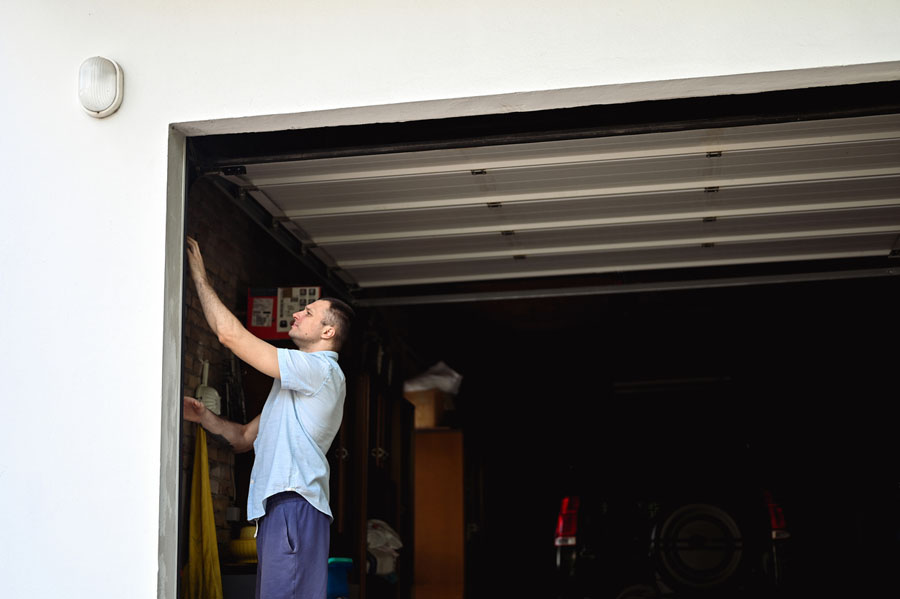
Garage Door Opens a Few Inches Then Stops: Common Causes
When a garage door opens a few inches then stops, the problem may involve a broken spring, an unbalanced door, damaged tracks, worn rollers, or a malfunctioning opener. The opener may stop because it detects excessive resistance, even though the motor is still working. Homeowners can visually check for obstructions and obvious damage, but they should not force the door open or attempt spring and cable repairs.
In Jacksonville, FL, frequent garage door use, humidity, and seasonal storms can contribute to mechanical wear and operating problems. A door that only lifts a few inches may become a safety concern if its counterbalance system has failed. At King of Home Solutions, we inspect garage door movement, identify the components responsible for the failure, and recommend appropriate repairs to restore dependable operation.
Quick Answer: Why Does My Garage Door Open a Few Inches Then Stop?
A garage door that begins opening but stops almost immediately is usually experiencing resistance, a balance problem, or an opener-related malfunction.
Garage door openers are designed to move doors that are properly balanced and able to travel smoothly along their tracks.
When the door becomes too heavy or encounters unexpected resistance, the opener may stop to prevent additional damage.
Common causes include:
- Broken or weakened springs: The door loses the counterbalancing force needed for normal lifting.
- Opener problems: The motor, travel controls, drive system, or movement sensors may malfunction.
- Damaged tracks: Bent or misaligned tracks can restrict roller movement.
- Worn rollers: A damaged roller may bind or become displaced from its track.
- Uneven door balance: The opener may detect more resistance than expected.
- Cable problems: A damaged or displaced lifting cable can cause uneven movement and dangerous door conditions.
- Physical obstructions: A manual lock or object interfering with the door’s path may prevent normal opening.
The exact behavior can provide useful clues.
A door that lifts a few inches before the opener strains and stops may have a spring or balance problem.
A door that catches at the same point every time may have a track obstruction or damaged roller.
If the opener motor continues running while the door barely moves, the drive mechanism or connection between the opener and door may need inspection.
However, these observations do not confirm the cause.
If the door suddenly becomes difficult to open, moves unevenly, or shows signs of spring or cable damage, stop using it and arrange professional repair.
Can a Broken or Weak Spring Cause Partial Opening?
Yes. A broken or weakened spring is one of the most important possibilities when a garage door lifts only a few inches before stopping.
Garage doors can be extremely heavy.
The opener is not designed to lift the full weight of the door without assistance.
Instead, springs help counterbalance the door so that it can move with relatively little effort.
How Garage Door Springs Work
Most residential garage doors use either torsion springs or extension springs.
Torsion springs are commonly mounted on a shaft above the garage door opening.
They store mechanical energy as the door closes and release that energy to help lift the door.
Extension springs are typically located along the horizontal track area.
They stretch as the door closes and assist with lifting during opening.
Both systems operate under substantial tension.
What Happens When a Spring Breaks?
When a spring breaks, the door loses some or all of its counterbalancing assistance.
The opener may attempt to lift the door but encounter much greater resistance than expected.
As a result, it may stop after moving the door only a few inches.
Why the Opener Cannot Simply Lift Harder
Garage door openers are designed to work with a properly balanced door.
Increasing the opener’s lifting force does not correct a broken spring.
Attempting to force the door may damage the opener, drive system, tracks, or other components.
What Does a Broken Spring Look Like?
Depending on the design, homeowners may notice:
- A visible separation in a torsion spring.
- A damaged or hanging extension spring.
- A door that suddenly appears unusually heavy.
- A loud bang from the garage before the problem began.
- An opener that strains and stops almost immediately.
Can a Spring Become Weak Without Breaking?
Yes.
Springs can lose performance or become unsuitable for the door’s operating requirements over time.
Incorrect spring selection or adjustment can also affect door balance.
A technician can evaluate the counterbalance system and determine whether repair or replacement is necessary.
Should Homeowners Try to Lift the Door Manually?
Not when a broken spring or cable problem is suspected.
A door without proper counterbalance assistance can be extremely heavy and may fall unexpectedly.
Homeowners should avoid pulling the emergency release or attempting manual lifting when the door is partially open, unstable, crooked, or showing visible spring damage.
When Professional Repair Is Necessary
If a spring appears broken or the door suddenly stops after lifting a few inches, professional inspection is recommended.
Spring replacement requires specialized tools, correct components, and safe tension adjustment.
At King of Home Solutions, we inspect the spring system and door balance before determining the appropriate repair.
How Garage Door Opener Problems Can Stop the Door
The opener may also be responsible when a garage door begins moving and then stops unexpectedly.
However, an opener should not be assumed defective until the condition of the door itself has been evaluated.
A mechanical problem can make a functioning opener appear faulty.
How an Opener Detects Resistance
Modern garage door openers include systems that monitor movement and respond to unexpected resistance.
Depending on the model, the opener may detect changes in motor speed, force, or door travel.
When the system encounters an abnormal condition, it may stop or reverse.
Incorrect Travel Settings
Travel settings help determine how far the door should move during opening and closing.
If these settings are incorrect, the opener may stop before reaching the fully open position.
However, homeowners should not compensate for a struggling door by changing travel settings without identifying the cause.
Force-Control Problems
Some openers use adjustable or electronically managed force controls.
If the opener detects excessive resistance, it may stop.
The resistance might come from the door, tracks, springs, or another mechanical issue.
Increasing force to overcome an unknown obstruction can create a safety hazard.
Drive System Problems
Garage door openers may use belts, chains, screws, or other drive mechanisms.
A worn gear, damaged trolley, slipping connection, or other drive problem can interfere with movement.
Motor Problems
A failing motor may struggle to move the door.
Homeowners might hear unusual humming, grinding, or repeated starting attempts.
Movement Sensor Problems
Some openers monitor motor rotation or door movement.
If the control system cannot confirm normal movement, it may stop the opening sequence.
What About Diagnostic Lights?
Certain openers display fault codes through flashing lights or a connected control panel.
These messages can provide useful information about the detected problem.
Homeowners may record visible codes and consult the manufacturer’s user instructions without opening the motor housing.
Why Opener Diagnosis Matters
A damaged opener and an unbalanced door can produce similar symptoms.
Replacing the opener without repairing a broken spring may leave the underlying problem unresolved.
Our Garage Door Opener Repair services include evaluating motors, drive mechanisms, controls, and the garage door’s mechanical condition.
Can Track or Roller Problems Restrict Movement?
Yes. Garage doors rely on tracks and rollers to guide their movement.
When these components become damaged, misaligned, or obstructed, the door may begin opening and suddenly stop.
How Garage Door Tracks Work
The tracks guide the rollers as the door moves from a vertical closed position toward a horizontal open position.
The door sections must move through these tracks without excessive binding.
Bent Tracks
A track may become bent after an impact or other mechanical stress.
A damaged section can restrict roller movement.
If the door catches at the same height repeatedly, a track problem is one possible explanation.
Misaligned Tracks
Tracks that are not positioned correctly can create uneven movement.
The door may strain, hesitate, or stop before reaching its intended position.
Worn Rollers
Rollers can become damaged through normal use, inadequate maintenance, corrosion, or mechanical wear.
A failing roller may not move smoothly.
Rollers Coming Out of the Track
A roller that becomes displaced can create an unstable door condition.
Operating the door in this condition may cause additional damage or increase the risk of the door falling.
Hinges and Other Hardware
Damaged hinges or loose structural hardware can also affect door movement.
These parts work together to keep the door sections aligned during travel.
Could an Obstruction Be Responsible?
Yes.
A visible object, such as a tool or storage item, may interfere with the door’s path.
A manual slide lock that remains engaged can also prevent opening.
What Can Homeowners Safely Check?
From a safe distance, homeowners can look for:
- Visible objects in the door’s travel path.
- Bent track sections.
- Rollers that appear displaced.
- Uneven door sections.
- Loose or hanging hardware.
- An engaged manual lock.
Avoid touching damaged track components or attempting to straighten them.
Why Tracks Should Not Be Forced Into Position
Tracks and supporting brackets help guide a heavy moving door.
Improper adjustments can worsen misalignment or affect the door’s stability.
If the garage door has come off its tracks or is visibly crooked, stop using it and schedule professional repair.
Do Safety Sensors Cause a Door to Stop While Opening?
Usually not in the same way they prevent a garage door from closing.
This is an important distinction because homeowners often assume that every unexpected garage door stop is caused by the photo-eye sensors.
What Do Garage Door Safety Sensors Do?
Most modern residential garage door openers have photoelectric safety sensors near the bottom of the opening.
These sensors detect an obstruction across the doorway.
Their primary purpose is to prevent the door from closing onto a person, pet, vehicle, or object.
Can a Blocked Sensor Prevent Closing?
Yes.
When the sensor beam is blocked or the sensors cannot communicate properly, the opener may refuse to close or may reverse during closing.
Do They Normally Stop Opening?
Generally, no.
Standard photo-eye sensors primarily govern closing safety.
A door that opens a few inches and then stops is more likely to have a mechanical, opener, travel-control, or balance problem.
Are There Other Safety Features?
Yes.
Garage door openers may have separate obstruction-detection systems that monitor resistance during both opening and closing.
These can stop the door when unexpected resistance is detected.
This function is different from the photo-eye beam near the floor.
What About Flashing Opener Lights?
Flashing lights or diagnostic messages may indicate a particular fault.
The meaning depends on the opener manufacturer and model.
Not every flashing indicator represents a photo-eye sensor problem.
What Can Homeowners Check?
Homeowners can visually check whether anything is blocking the photo-eye sensors.
However, clearing the sensor path is unlikely to solve a door that consistently stops during opening because of a broken spring or mechanical obstruction.
When Are Sensor Repairs Needed?
If the door also refuses to close, reverses unexpectedly, or displays a sensor-related fault, the photo-eye system may need attention.
A technician can evaluate the safety sensors alongside the opener and mechanical door components.
How Door Balance Affects Opener Performance
Door balance describes how effectively the spring system counteracts the garage door’s weight.
A properly balanced door moves with relatively little effort and does not place unnecessary strain on the opener.
Why Balance Matters
The opener is designed to guide and move the door, not lift its entire unsupported weight.
When the counterbalance system is working correctly, the opener can operate within its intended load range.
What Happens When the Door Is Unbalanced?
The opener may experience more resistance than expected.
Possible symptoms include:
- Slow or uneven opening.
- A door that stops shortly after starting.
- Increased motor noise.
- Repeated opener shutdowns.
- Jerky movement.
- Unusual strain on the drive system.
Can an Unbalanced Door Damage the Opener?
Yes.
Continued operation can place excessive stress on the motor, gears, trolley, and related components.
A door that has become too heavy should be repaired before repeated operation causes further damage.
What Causes Poor Balance?
Possible causes include:
- Broken or weakened springs.
- Incorrect spring selection.
- Previous improper adjustments.
- Added door weight.
- Damaged cables or other hardware.
- Structural changes to the door.
How Is Balance Evaluated?
A trained garage door technician can inspect the counterbalance system and perform appropriate tests.
The evaluation considers spring function, door weight, smooth movement, and mechanical safety.
Should Homeowners Perform a Manual Balance Test?
Not when the door has already shown signs of malfunction.
Although some manufacturer manuals describe balance checks, a door that is partially open, crooked, unusually heavy, or suspected of having a broken spring can be dangerous to disconnect.
Homeowners should leave balance testing to a qualified technician when partial opening is the presenting symptom.
Why Replacing the Opener May Not Fix the Problem
A more powerful opener cannot compensate safely for a defective spring system.
Correcting the door’s balance is essential before evaluating whether the opener also needs repair.

What Warning Signs Point to a Spring Problem?
A failed spring often creates noticeable changes in garage door movement.
Recognizing these signs can help homeowners avoid unsafe attempts to force the door open.
A Loud Bang From the Garage
A torsion spring may make a loud noise when it breaks.
Some homeowners describe it as a sharp pop or bang.
The sound may occur when nobody is using the door.
A Visible Gap in the Torsion Spring
On certain torsion spring systems, a broken spring may show a clear separation in the coiled metal.
This can sometimes be seen from a safe distance.
The Door Lifts Only a Few Inches
A spring failure can make the door too heavy for the opener.
The opener may strain briefly before stopping.
Uneven Movement
A door may appear crooked or move unevenly when the counterbalance system or cables are damaged.
Loose or Hanging Cables
A visibly loose cable may indicate a serious problem with the lifting system.
Do not touch or attempt to reposition it.
The Opener Sounds Strained
A motor may hum, slow down, or stop when it encounters excessive lifting resistance.
Sudden Change in Door Operation
A door that operated normally yesterday but barely opens today may have experienced a component failure.
What Should Homeowners Do?
If any of these symptoms appear, stop operating the door.
Do not disconnect the opener, pull on cables, touch spring assemblies, or attempt to lift the door manually.
A professional inspection can determine whether the spring system needs repair or replacement.
What Can Homeowners Safely Inspect?
A garage door that stops after opening only a few inches deserves careful observation rather than trial-and-error repairs.
Homeowners can perform simple visual checks without touching high-tension components.
1. Look for Visible Obstructions
From a safe position, check whether tools, storage items, or other objects are blocking the door’s travel path.
Do not enter beneath a partially open or unstable door.
2. Check the Manual Lock
When the door is fully closed and stable, look for an engaged manual slide lock.
Do not force the door if the lock or mechanism appears damaged.
3. Observe the Tracks
Look for bent sections, visible damage, or displaced rollers.
Do not attempt to straighten or reposition components.
4. Look at the Springs From a Distance
Check for an obvious gap or broken spring section without touching the assembly.
5. Check for Loose Cables
Observe whether any cables appear displaced, hanging, or uneven.
If cable damage is visible, stop troubleshooting.
6. Record the Opener’s Behavior
Notice whether:
- The motor starts normally.
- The door rises and immediately stops.
- The opener makes a grinding or humming sound.
- The door moves unevenly.
- The opener displays an error code.
- The failure began after a storm or impact.
7. Check Accessible Opener Messages
Certain smart openers display diagnostic information through an app or control panel.
Record the message without changing internal settings.
8. Consider Recent Events
Jacksonville homeowners should mention if the problem began after:
- A thunderstorm or power outage.
- A vehicle impact.
- Strong winds.
- An unusual popping noise.
- Previous hesitation or uneven movement.
What Homeowners Should Avoid
Do not:
- Pull the emergency release on a partially open or unstable door.
- Attempt to lift a suspected broken-spring door.
- Adjust torsion or extension springs.
- Handle loose cables.
- Remove bottom brackets.
- Straighten damaged tracks.
- Force rollers back into place.
- Increase opener force to overcome resistance.
- Repeatedly activate a struggling opener.
These tasks can create serious injury risks.
When Should You Stop Using the Garage Door?
Homeowners should stop operating the garage door when it shows signs of mechanical instability, high-tension component failure, or repeated abnormal movement.
Certain conditions deserve immediate professional attention.
The Door Stops After Only a Few Inches
If the door repeatedly lifts slightly and stops, do not keep pressing the opener button.
A Spring Appears Broken
A visibly damaged spring means the door may no longer be safely counterbalanced.
A Cable Is Loose or Broken
Cable problems can cause uneven lifting or sudden movement.
The Door Is Crooked
A tilted door may have a cable, roller, track, or spring problem.
A Roller Has Left the Track
An off-track door should not be operated until inspected and repaired.
Loud Popping or Grinding Occurs
Severe mechanical noises may indicate damaged or overloaded components.
The Opener Repeatedly Strains
A motor struggling against excessive resistance may be damaged by continued operation.
The Door Is Partially Open and Unstable
Keep people and pets away from the area beneath and around the door.
Do not attempt to release the opener or lower the door manually.
Storm or Impact Damage Is Visible
A damaged garage door can affect both safe operation and the security of the opening.
Professional evaluation is recommended before using it again.
Why Stopping Matters
A malfunctioning garage door can weigh hundreds of pounds.
When its counterbalance or guiding components are damaged, sudden movement may occur.
Continuing to operate the door can increase the risk of injury and further damage.
Why You Should Not Adjust Springs or Cables Yourself
Garage door springs and cables operate under significant mechanical tension.
They are not ordinary household hardware.
Incorrect adjustment or removal can cause components to move suddenly and violently.
Springs Store Mechanical Energy
Garage door springs are designed to counterbalance substantial door weight.
Even when the door is not moving, the spring system may contain stored energy.
Cables Help Support Door Movement
Lifting cables connect the counterbalance system to the door.
A damaged or improperly handled cable can create an unstable lifting condition.
Bottom Brackets Can Be Dangerous
Certain bottom fixtures are connected to high-tension lifting cables.
Removing or adjusting them without proper training can cause serious injury.
Improper Spring Adjustments Affect Balance
Even if no immediate injury occurs, incorrect adjustments may make the door too heavy or cause it to move unpredictably.
The Opener Cannot Correct a Dangerous Spring Problem
Increasing motor force does not restore proper counterbalance.
It may simply place additional stress on the equipment.
Why Professional Tools Matter
Technicians use appropriate tools and procedures to manage spring tension and replace components safely.
The work also requires selecting compatible springs and checking the door’s weight and balance.
When Replacement Is Appropriate
A broken spring generally needs replacement.
The technician should evaluate the complete counterbalance system and associated hardware.
The Safest Approach
If a spring or cable problem is suspected, leave the door in its current stable position and contact a garage door professional.
Do not attempt to move it until its condition has been evaluated.
When to Call a Garage Door Technician
Professional garage door repair is appropriate when the door repeatedly stops after moving only a short distance or shows visible signs of damage.
The cause may involve the counterbalance system, opener, tracks, rollers, or another mechanical component.
Call When the Door Barely Opens
A door that repeatedly lifts only a few inches may have excessive resistance or insufficient spring assistance.
Call When the Opener Strains or Stops
The opener may be responding to a mechanical problem or experiencing its own failure.
Call When a Spring Is Damaged
Spring repairs require specialized equipment and training.
Call When the Door Moves Unevenly
Crooked movement may indicate a cable, roller, track, or balance problem.
Call When Tracks or Rollers Are Damaged
A damaged guide system can prevent smooth travel and create an unstable condition.
Call When the Opener Displays a Fault
A technician can interpret the diagnostic information and determine whether the fault involves the opener or door.
Call After Storm Damage
Strong winds, debris, and impacts can affect door alignment and supporting hardware.
What Does a Technician Inspect?
A professional diagnostic visit may involve checking:
- Spring condition and counterbalance.
- Lifting cables.
- Roller and hinge condition.
- Track alignment.
- Door section condition.
- Opener motor and drive system.
- Travel and resistance detection.
- Safety sensors.
- Mounting hardware.
- Overall door balance and movement.
Repair or Replacement?
A garage door that stops after a few inches does not automatically need complete replacement.
A failed spring, damaged roller, or opener component may be repairable.
However, extensive track damage, structural problems, or multiple severely damaged sections may make replacement more practical.
The recommendation should follow a thorough safety inspection.
Garage Door Repair in Jacksonville
Jacksonville homeowners use their garage doors for daily access, vehicle storage, and home security.
A garage door that suddenly stops after lifting only a few inches can interrupt the household routine and create a safety concern.
Normal mechanical wear, repeated operation, humidity, and storm-related damage can all affect garage door performance.
At King of Home Solutions, we provide professional garage door diagnostics and repair throughout Jacksonville and surrounding Northeast Florida communities.
Identifying the Reason for Partial Opening
Our technicians inspect the door to determine why normal upward travel is being interrupted.
We evaluate the springs, cables, rollers, tracks, opener, and safety components rather than assuming the opener is responsible.
Spring and Cable Repair
If the counterbalance system has failed, we assess the affected components and recommend appropriate replacement or repair.
Track and Roller Repairs
Bent tracks, damaged rollers, and misaligned hardware can prevent smooth movement.
Our team identifies the affected components and explains the repair options.
Garage Door Opener Troubleshooting
When the opener is contributing to the problem, we evaluate its motor, drive system, controls, and movement detection.
Our Garage Door Opener Repair services address common opener failures and unexpected stopping.
Professional Garage Door Repair
Our Garage Door Repair services include spring, cable, roller, track, and opener-related problems.
Safety and Operation Testing
After the approved repair, we evaluate door movement, balance, opener response, and relevant safety features.
The goal is not simply to make the door move again.
It is to ensure that the system operates smoothly and safely.
Serving Jacksonville and Nearby Communities
We serve Jacksonville, Mandarin, Arlington, San Marco, Riverside, Bartram Springs, Jacksonville Beach, and surrounding areas.
Whether a door stopped working after a storm or gradually developed resistance during opening, our team can diagnose the cause and recommend the appropriate solution.
FAQs About Garage Doors That Stop While Opening
Why does my garage door open a few inches then stop?
Common causes include a broken spring, poor door balance, track obstruction, damaged rollers, or an opener that detects excessive resistance. A technician can identify the exact problem.
Can a broken garage door spring cause the opener to stop?
Yes. A broken spring may leave the door too heavy for the opener to lift safely. The opener may stop after moving it only a short distance.
Why does my garage door stop about six inches from the floor?
Possible causes include spring failure, mechanical resistance, track problems, or an opener movement-detection fault. The stopping distance alone does not confirm the cause.
Do garage door safety sensors stop the door from opening?
Standard photo-eye sensors primarily prevent unsafe closing. A door that stops while opening is more likely experiencing mechanical resistance, balance issues, or another opener fault.
Can a damaged roller make the garage door stop?
Yes. A damaged or displaced roller can bind in the track and prevent smooth upward movement.
Should I pull the emergency release if the door won’t open?
Not when the door is partially open, crooked, unstable, or suspected of having a broken spring. Disconnecting the opener may allow an improperly balanced door to fall unexpectedly.
Can increasing the opener force fix a door that stops?
Increasing force without identifying the resistance is unsafe. A broken spring, binding track, or damaged roller should be repaired rather than overcome with more motor force.
Does a garage door that stops while opening need replacement?
Not necessarily. Many problems can be corrected by repairing springs, rollers, tracks, or opener components. Extensive structural damage may require replacement.
Can Jacksonville storms cause garage door opening problems?
Yes. Wind, debris, impacts, and power-related issues can affect the door or opener. Sudden changes in movement after a storm should be inspected.
When should homeowners call for garage door repair?
Schedule service when the door repeatedly stops, strains, moves unevenly, makes loud noises, or shows spring, cable, roller, or track damage.
A Door That Barely Opens Deserves More Than Another Button Press
When a garage door opens a few inches then stops, repeated attempts to force it upward can make the situation worse.
The problem may be a broken spring, a damaged roller, track resistance, poor door balance, or an opener that is detecting abnormal movement.
Because the garage door relies on high-tension components to support its weight, some failures create serious safety concerns.
Homeowners can observe visible damage and check for obvious obstructions, but spring adjustments, cable repairs, and internal opener work should be handled by trained professionals.
At King of Home Solutions, we help Jacksonville homeowners determine why their garage doors stop before fully opening.
Our technicians inspect the door’s mechanical components, evaluate opener performance, and recommend repairs based on the actual cause.
Whether a spring has broken, a roller has shifted, or the opener is malfunctioning, our team can identify the next step.
Don’t Force the Door Call King of Home Solutions
If your garage door only opens a few inches before stopping, schedule professional garage door repair in Jacksonville, FL.
Call King of Home Solutions at (904) 865-4663 or visit our office at 5151-5 Sunbeam Road, Jacksonville, FL 32257.
We provide garage door diagnostics, spring and cable repairs, track and roller repairs, and opener troubleshooting throughout Jacksonville and surrounding Northeast Florida communities.
Explore our Garage Door Repair Services or Garage Door Opener Repair Services to learn more.
We identify what’s stopping your door, explain the repair, and help restore safe, dependable garage access.