Serving The Jacksonville Area


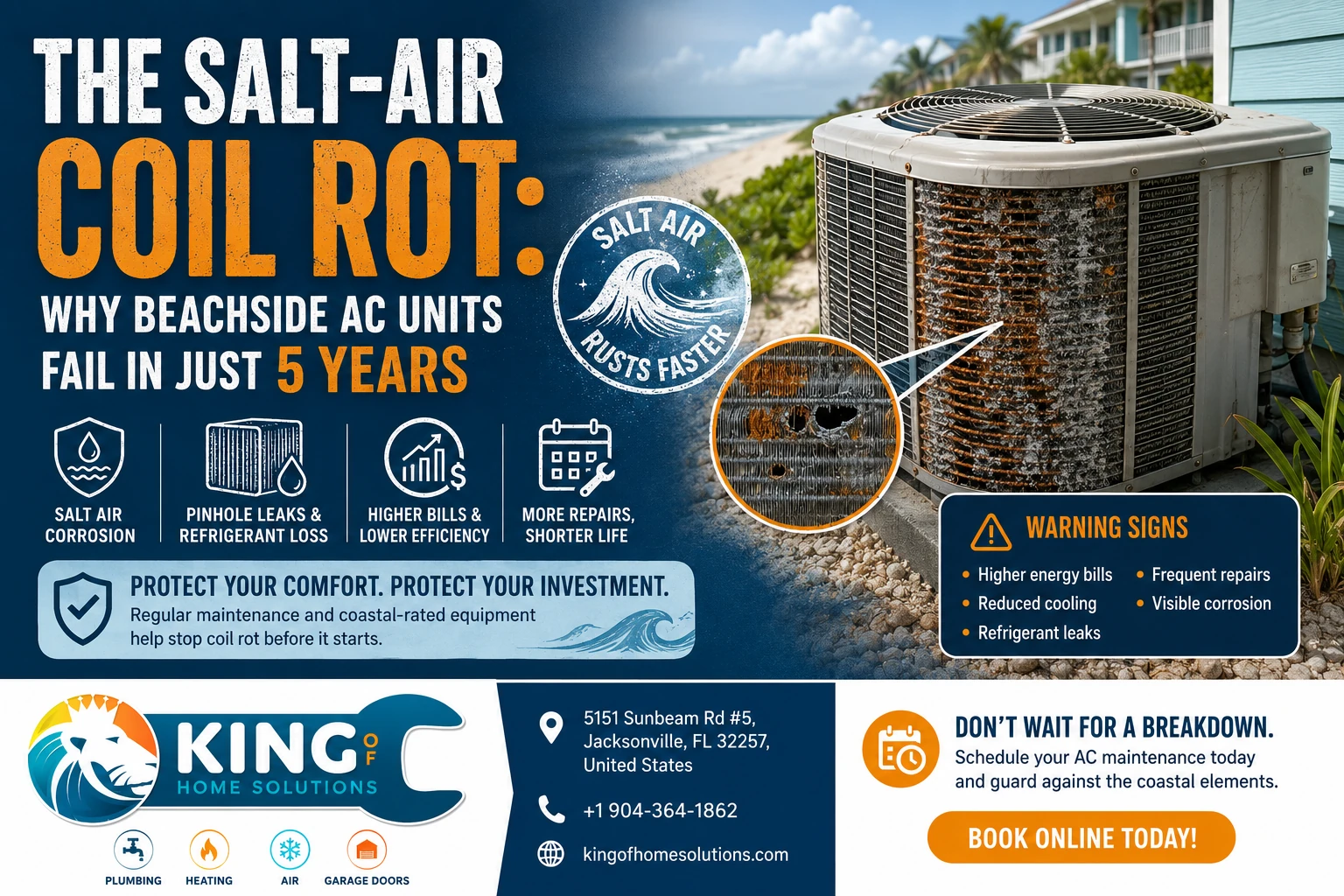
The Salt-Air “Coil Rot”: Why Beachside AC Units Fail in Just 5 Years
The Salt-Air “Coil Rot”: Why Beachside AC Units Fail in Just 5 Years
Living near the beach has its perks.
Ocean views. Sea breezes. Easy access to the water.
But for your air conditioner?
That same salty coastal air can be brutal.
Homeowners in Jacksonville Beach, Neptune Beach, Atlantic Beach, Ponte Vedra, and other coastal communities are often shocked when they’re told their AC system needs major repairs or even replacement after only five to seven years.
The culprit is often something HVAC technicians call coil rot: accelerated corrosion caused by salt-laden air attacking the metal components inside your air conditioning system.
Here’s why it happens, how to spot the warning signs, and what beachside homeowners can do to protect their investment.
Stop Salt-Air Damage Early
Protect your AC before corrosion leads to costly coil failure. Call now for professional AC service.
What Is “Coil Rot”?
Your air conditioning system relies on two primary coils:
- Evaporator coil (inside the home)
- Condenser coil (outside the home)
These coils contain refrigerant that absorbs and releases heat, allowing your system to cool your home efficiently.
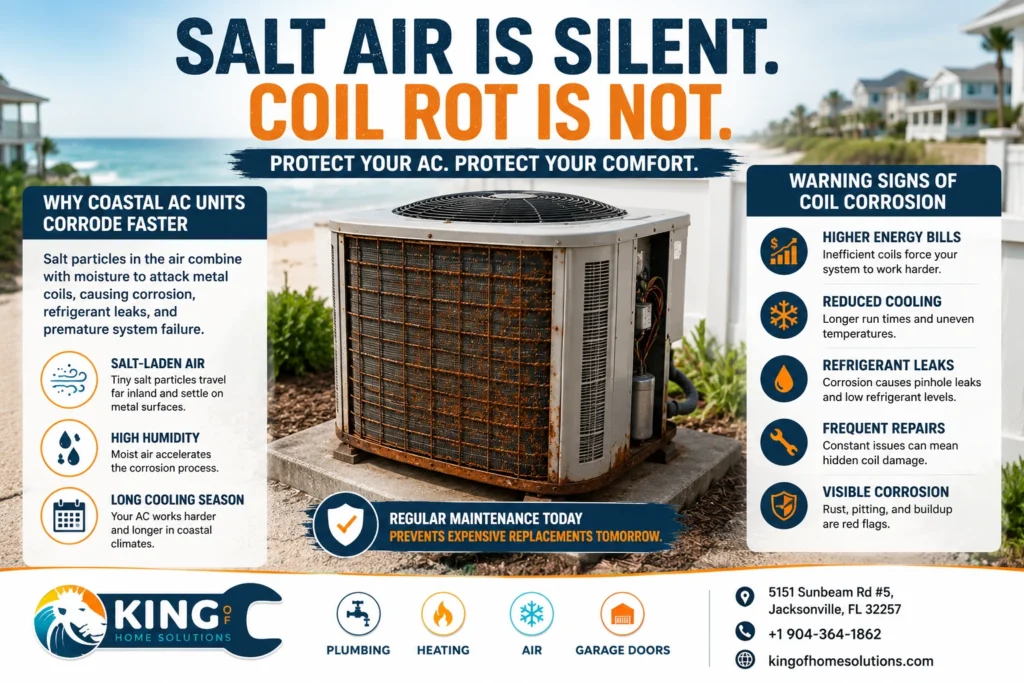
Over time, salt particles carried by coastal air settle on these metal surfaces.
Combined with humidity and moisture, those salt deposits create an extremely corrosive environment.
The result is gradual deterioration of the coil material, eventually leading to:
- Pinhole leaks
- Refrigerant loss
- Reduced efficiency
- System failure
This process is commonly referred to as coil rot.
Why Coastal Homes Are at Higher Risk
Salt doesn’t need to be visible to cause damage.
Tiny airborne salt particles can travel surprisingly far inland.
Homes located:
- Directly on the beach
- Within a few miles of the coastline
- Near Intracoastal waterways
Often experience significantly higher corrosion rates than homes farther inland.
In Northeast Florida, the combination of:
- Salt exposure
- High humidity
- Long cooling seasons
Creates a perfect storm for HVAC corrosion.
Your AC isn’t just battling heat, it’s fighting the environment every day of the year.

The Real Cost of a 15-SEER vs. 18-SEER AC Unit in Florida’s Humidity
If you’re shopping for a new air conditioner in Florida, you’ve probably heard the sales pitch: “Upgrade to an 18-SEER…
Read The BlogWhy Some Beachside Units Fail in 5 Years
Most homeowners expect an air conditioner to last:
- 10–15 years
- Sometimes longer with proper maintenance
Near the ocean, that timeline can shrink dramatically.
We’ve seen coastal systems experience major coil issues in:
- 4 years
- 5 years
- 6 years
Especially when preventive maintenance is neglected.
The closer the system is to the ocean, the more aggressive the corrosion tends to be.
Warning Signs of Salt-Air Coil Damage
The challenge is that corrosion often develops long before homeowners notice a problem.
Watch for these early symptoms:
Higher Energy Bills
As coils deteriorate, heat transfer becomes less efficient.
Your system runs longer to achieve the same cooling results.
Reduced Cooling Performance
You may notice:
- Longer cooling cycles
- Uneven temperatures
- Difficulty reaching thermostat settings
Refrigerant Leaks
Corrosion can create microscopic holes in the coils.
This often leads to:
- Low refrigerant levels
- Frozen coils
- Reduced cooling capacity
Frequent Repairs
Repeated service calls involving refrigerant issues may point to underlying coil deterioration.
Visible Corrosion
In advanced cases, technicians may observe:
- Rust
- Pitting
- Corrosion buildup
- Damaged coil surfaces
During routine inspections.
Why Replacing Refrigerant Isn’t the Real Fix
Many homeowners encounter a frustrating cycle.
The AC stops cooling properly.
A technician adds refrigerant.
The system works again for a while.
Then the problem returns.
If corrosion has created leaks in the coil, simply recharging refrigerant treats the symptom rather than the cause.
Eventually, the leak continues growing until coil replacement or system replacement becomes necessary.
How Beachside Homeowners Can Slow Coil Rot
You can’t eliminate salt exposure completely.
However, you can significantly reduce its impact.
Schedule Regular Coil Cleaning
Professional cleaning removes:
- Salt deposits
- Dirt
- Debris
Before they accelerate corrosion.
Wash Outdoor Units Periodically
A gentle rinse with fresh water can help remove salt buildup from exterior components.
Always follow manufacturer recommendations and avoid high-pressure washing.
Install Coastal-Rated Equipment
Some manufacturers offer:
- Corrosion-resistant coatings
- Coastal protection packages
- Enhanced coil materials
Designed specifically for marine environments.
Keep Up With Maintenance
Routine inspections often identify corrosion early before it becomes a refrigerant leak.
The Hidden Cost of Waiting
Many homeowners delay service because the system is still cooling “well enough.”
Unfortunately, coil corrosion tends to worsen over time.
What starts as:
- Minor efficiency loss
Can eventually become:
- Coil replacement
- Compressor damage
- Complete system failure
Addressing corrosion early often provides more repair options and can extend equipment life.
Is a More Expensive Coastal Unit Worth It?
For many beachfront homeowners, the answer is yes.
While corrosion-resistant systems typically cost more upfront, they may:
- Last longer
- Require fewer repairs
- Maintain efficiency better
- Reduce long-term ownership costs
In harsh coastal environments, durability often matters just as much as efficiency ratings.
Bottom Line
The same salt air that makes beach living so appealing can dramatically shorten the life of your air conditioning system.
For homeowners in Jacksonville Beach, Atlantic Beach, Neptune Beach, Ponte Vedra, and other coastal communities, coil rot is one of the leading causes of premature HVAC failure.
If your AC is located near the coast, regular maintenance, professional coil cleaning, and corrosion-resistant equipment can help protect your investment and prevent a costly surprise years before you expected to replace your system.
Because near the ocean, it’s often not age that kills an air conditioner first it’s salt.
Don’t Let Salt Air Ruin Your AC
Beachside corrosion can shorten your system’s life. Call today to have your AC inspected and protected.