Serving The Jacksonville Area



The Real Cost of a 15-SEER vs. 18-SEER AC Unit in Florida’s Humidity

The Real Cost of a 15-SEER vs. 18-SEER AC Unit in Florida’s Humidity
If you’re shopping for a new air conditioner in Florida, you’ve probably heard the sales pitch:
“Upgrade to an 18-SEER unit. It will save you money every month.”
That sounds reasonable until you look at the actual numbers.
The truth is that a higher-SEER air conditioner is not always the best financial decision, especially in Florida’s unique combination of heat, humidity, long cooling seasons, and high equipment costs.
Before spending thousands more on a premium system, it’s important to understand what you’re really paying for and what you’re actually getting in return.
Upgrade to Better Comfort Today
Choosing the right AC can lower energy bills and improve indoor comfort. Speak with our HVAC experts before you buy.
First, What Does SEER Mean?
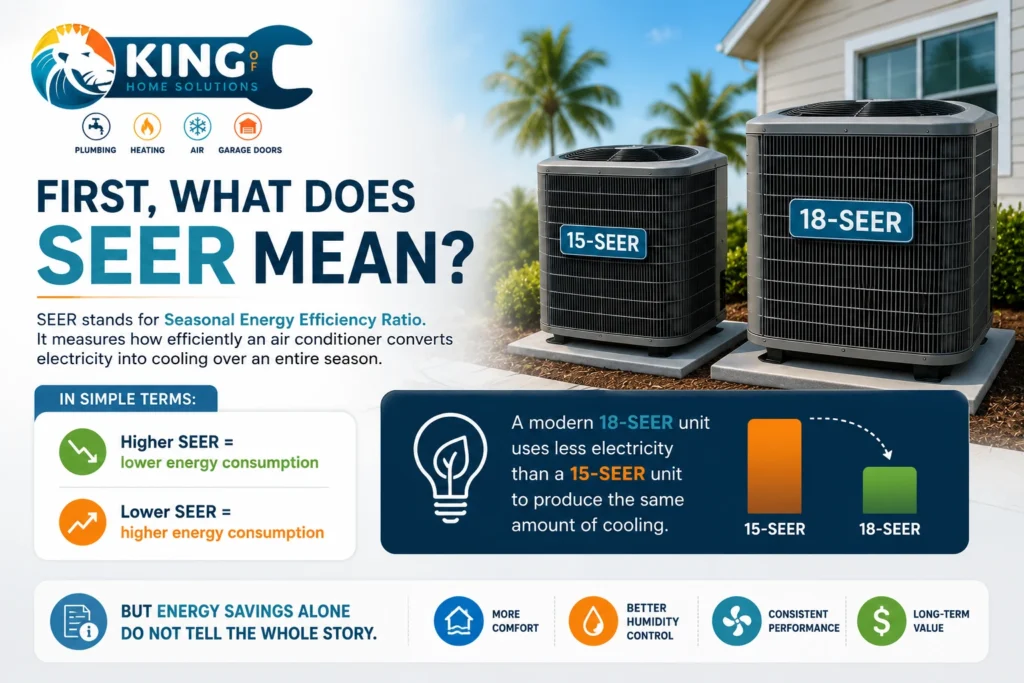
SEER stands for Seasonal Energy Efficiency Ratio. It measures how efficiently an air conditioner converts electricity into cooling over an entire season.
In simple terms:
- Higher SEER = lower energy consumption
- Lower SEER = higher energy consumption
A modern 18-SEER unit uses less electricity than a 15-SEER unit to produce the same amount of cooling.
But energy savings alone do not tell the whole story.
The Upfront Cost Difference
For many Florida homeowners, the first surprise is the installation price.
Depending on the brand, size, and features, an 18-SEER system can cost $2,000 to $5,000 more than a comparable 15-SEER system.
The exact difference varies, but the higher-efficiency unit almost always comes with:
- More advanced components
- Variable-speed technology
- Sophisticated controls
- More expensive replacement parts
The question becomes:
Will the energy savings ever recover the additional investment?

Whole-Home Filtration vs. Reverse Osmosis: Price and Performance
You turn on the kitchen faucet and notice the chlorine smell again. Maybe your shower leaves your skin feeling dry.…
Read The BlogThe Energy Savings Are Often Smaller Than Expected
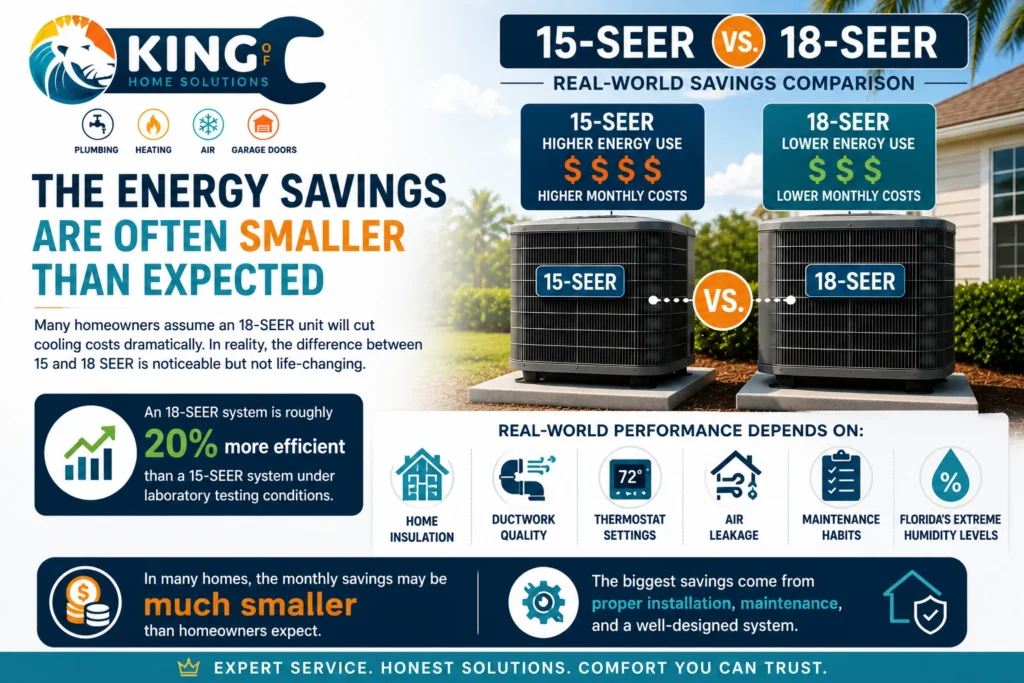
Many homeowners assume an 18-SEER unit will cut cooling costs dramatically.
In reality, the difference between 15 and 18 SEER is noticeable but not life-changing.
An 18-SEER system is roughly 20% more efficient than a 15-SEER system under laboratory testing conditions.
However, real-world performance depends on:
- Home insulation
- Ductwork quality
- Thermostat settings
- Air leakage
- Maintenance habits
- Florida’s extreme humidity levels
In many homes, the monthly savings may be much smaller than homeowners expect.
Florida Humidity Changes the Conversation
Florida isn’t just hot.
It’s humid.
And humidity is often what makes people uncomfortable even when the temperature is reasonable.
This is where the discussion gets more interesting.
A properly designed 18-SEER system often includes variable-speed technology that allows longer run cycles at lower speeds.
That can improve:
- Humidity removal
- Indoor comfort
- Temperature consistency
- Air circulation
In some Florida homes, the comfort improvement may be more valuable than the energy savings.
Homeowners frequently notice:
- Less sticky indoor air
- Fewer temperature swings
- Better sleep comfort
- Reduced hot and cold spots
Those benefits are difficult to measure on a utility bill but easy to feel every day.
The Hidden Cost: Repairs
Higher-efficiency equipment is usually more complex.
More technology often means:
- More sensors
- More circuit boards
- Variable-speed motors
- Advanced control systems
While these systems can perform exceptionally well, repairs are often more expensive when components fail outside warranty.
A 15-SEER system is typically simpler, which can sometimes translate into lower long-term repair costs.
That does not mean an 18-SEER unit is unreliable.
It simply means the ownership costs extend beyond the electric bill.
Which System Makes More Sense?
A 15-SEER unit may be the better value if:
- You plan to move within a few years
- Your budget is limited
- Your current utility bills are moderate
- You want lower upfront costs
- Simplicity is a priority
An 18-SEER unit may make sense if:
- You plan to stay in the home long-term
- Humidity control is a major concern
- You value comfort as much as efficiency
- Your cooling bills are extremely high
- You want premium system performance
The Bigger Factor Most Homeowners Ignore
Many HVAC professionals will tell you the same thing:
System installation quality often matters more than the SEER rating itself.
A perfectly installed 15-SEER system will usually outperform a poorly installed 18-SEER system.
Proper sizing, airflow, duct design, refrigerant charge, and humidity management have a tremendous impact on efficiency and comfort.
That’s why choosing the right contractor is often more important than chasing the highest SEER number available.
Final Thoughts
The real cost of a 15-SEER versus an 18-SEER AC unit in Florida is not just the purchase price or the monthly electric bill.
It’s the combination of:
- Installation cost
- Energy savings
- Humidity control
- Repair expenses
- Long-term comfort
For some homeowners, the 18-SEER upgrade pays off through better comfort and lower energy use.
For others, a properly installed 15-SEER system delivers the best overall value.
The smartest decision isn’t automatically the highest efficiency rating.
It’s the system that matches your home’s needs, your budget, and Florida’s demanding climate.
Not Sure Which AC Saves More?
Get expert advice on choosing the right SEER rating for Florida's humidity. Call today for honest recommendations and fast service.