Serving The Jacksonville Area


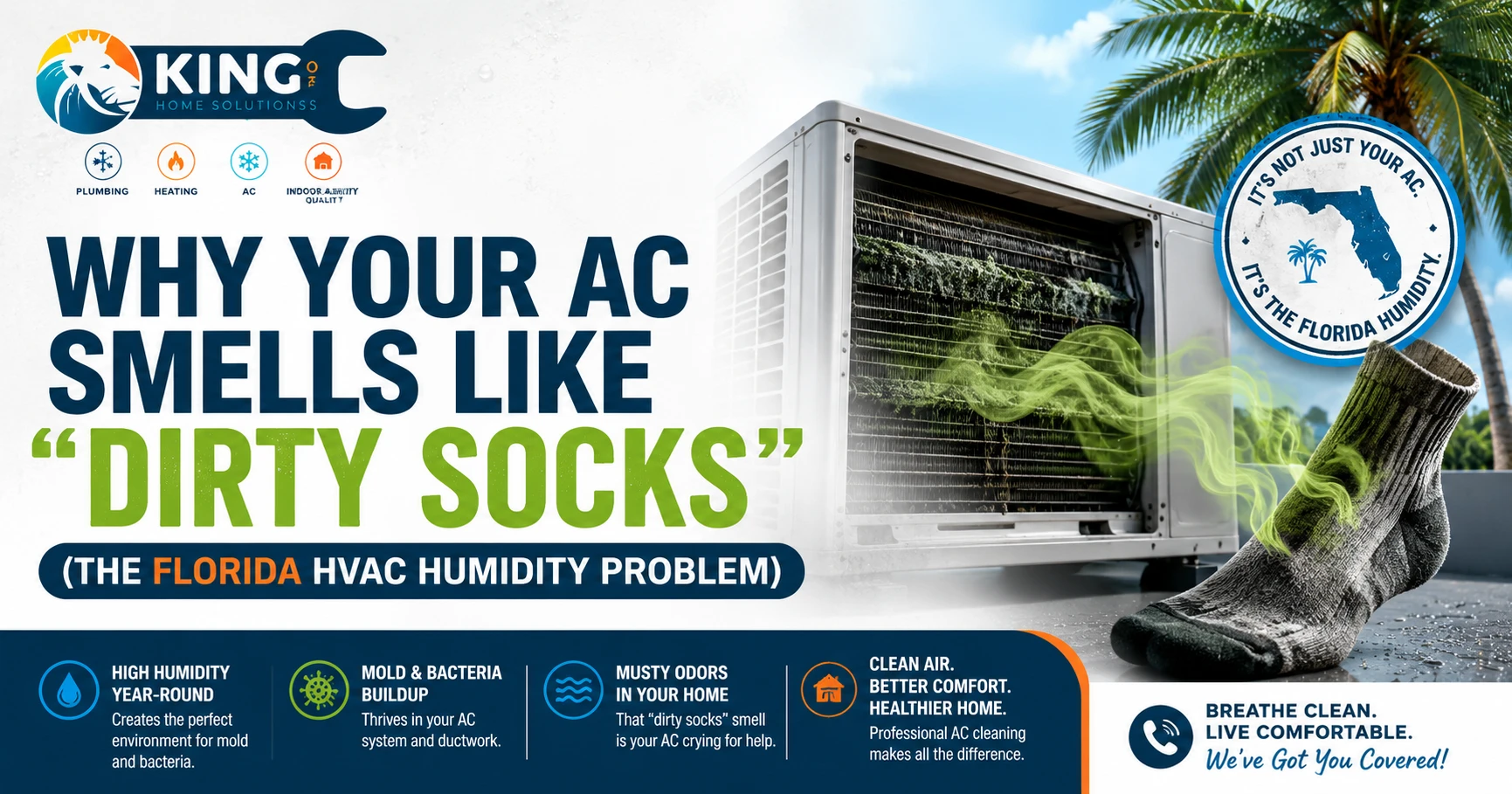
Why Your AC Smells Like “Dirty Socks” (The Florida HVAC Humidity Problem)
Why Your AC Smells Like “Dirty Socks” (The Florida HVAC Humidity Problem)
You walk into your home, and there it is.
That strange smell.
Not quite moldy. Not quite mildew. Not exactly a gym bag.
Just… dirty socks.
If you’re a Florida homeowner, you’re not imagining things and you’re definitely not alone.
The infamous “dirty sock syndrome” is one of the most common HVAC complaints in humid climates. While the odor may seem harmless at first, it’s often a warning sign that your air conditioning system is struggling with moisture and biological growth.
Here’s what’s really causing that smell and what you can do about it.
Is your AC giving off a dirty sock smell?
Don't ignore musty odors. Get fast, professional AC inspection and repair from Starnes Electric LLC. Call today and breathe cleaner air again.
What Is Dirty Sock Syndrome?
“Dirty sock syndrome” is the nickname HVAC technicians use when an air conditioner produces a musty, sour, or locker-room-like odor.
Many homeowners describe it as:
- Wet gym socks
- Damp laundry left too long
- Musty basement air
- Moldy towels
The smell often becomes strongest:
- When the AC first starts
- During mild weather
- In the morning
- During periods of high humidity
In Florida, those conditions are common nearly year-round.
Why Florida Homes Are More Vulnerable
Florida’s biggest HVAC challenge isn’t heat.
It’s moisture.
Your air conditioner does two jobs:
- Cool the air
- Remove humidity
When humidity levels remain high for long periods, moisture can accumulate inside parts of the HVAC system.
This creates the perfect environment for:
- Mold
- Mildew
- Bacteria
- Biofilm buildup
Once these contaminants begin growing on damp surfaces, unpleasant odors can circulate throughout the home every time the system runs.
The Evaporator Coil Is Usually the Culprit
The most common source of dirty sock syndrome is the evaporator coil.
This coil sits inside your indoor air handler and becomes cold as refrigerant flows through it.
As warm Florida air passes over the coil:
- Moisture condenses on the surface
- Water drains away through the condensate system
- Humidity is removed from your home
Over time, dust, pollen, pet dander, and other airborne particles can stick to the damp coil.
That combination of moisture and organic debris creates an ideal breeding ground for odor-causing microorganisms.
When the system cycles on, the smell spreads through your ductwork.
Oversized AC Systems Can Make the Problem Worse
Many homeowners assume a bigger air conditioner is better.
In reality, oversized systems are one of the leading causes of humidity problems.
When an AC unit is too large, it cools the house quickly and shuts off before removing enough moisture.
The result:
- Cool air
- High humidity
- Damp HVAC components
- Increased microbial growth
This is particularly common in Florida homes with improperly sized replacement systems.
Dirty Air Filters Contribute to the Problem
A clogged air filter restricts airflow across the evaporator coil.
Reduced airflow can create:
- Excess moisture
- Colder coil temperatures
- Poor humidity removal
- Increased buildup on HVAC components
Fortunately, this is one of the easiest issues to address.
Many dirty sock odor complaints improve significantly after routine maintenance and filter replacement.

Why Your AC Unit Is “Short Cycling” in the July Humidity
It is the middle of July. The air outside feels heavy. The humidity is high. Your air conditioner starts, runs…
Read The BlogCould It Be Mold?
Sometimes.
But not always.
The dirty sock smell is frequently caused by bacterial growth and biofilm rather than large mold infestations.
That said, persistent odors should never be ignored.
If moisture issues continue for long periods, mold can eventually develop inside:
- Air handlers
- Ductwork
- Drain pans
- Insulation near HVAC equipment
A professional inspection can determine whether the odor is a simple maintenance issue or something more serious.
How HVAC Professionals Fix Dirty Sock Syndrome

The solution depends on the underlying cause.
Common treatments include:
Evaporator Coil Cleaning
Removing accumulated debris and biological growth from the coil often eliminates the odor source.
Drain Line and Drain Pan Cleaning
Blocked condensate systems can trap standing water and create persistent smells.
Airflow Corrections
Improving airflow helps reduce moisture accumulation inside the system.
UV Light Installation
Many Florida homeowners install UV germicidal lights near the evaporator coil to help reduce microbial growth.
System Sizing Evaluation
If humidity problems are ongoing, an HVAC professional may evaluate whether the system is properly sized for the home.
How to Prevent Dirty Sock Syndrome
A few preventative measures can dramatically reduce the risk:
- Change air filters regularly
- Schedule annual HVAC maintenance
- Keep drain lines clean
- Address humidity issues promptly
- Avoid oversized AC systems
- Consider indoor humidity monitoring
Ideally, indoor humidity should remain between 40% and 60%.
Consistently higher levels can create comfort issues and increase the likelihood of odors.
Final Thoughts
If your air conditioner smells like dirty socks, the problem usually isn’t the air itself, it’s the moisture inside your HVAC system.
Florida’s humidity creates perfect conditions for biological growth on cooling coils and other components. Left untreated, that odor can become a recurring problem and may indicate larger humidity-control issues within the home.
The good news is that dirty sock syndrome is often fixable.
With proper maintenance, humidity management, and professional inspection when needed, your AC can go back to doing what it’s supposed to do: keeping your home cool, comfortable, and odor-free.
Stop the musty AC smell today.
Florida humidity can lead to mold and moisture inside your HVAC system. Schedule expert service now before the problem gets worse.