Serving The Jacksonville Area



5 Reasons Your Garage Door Won’t Close in the Jacksonville Heat
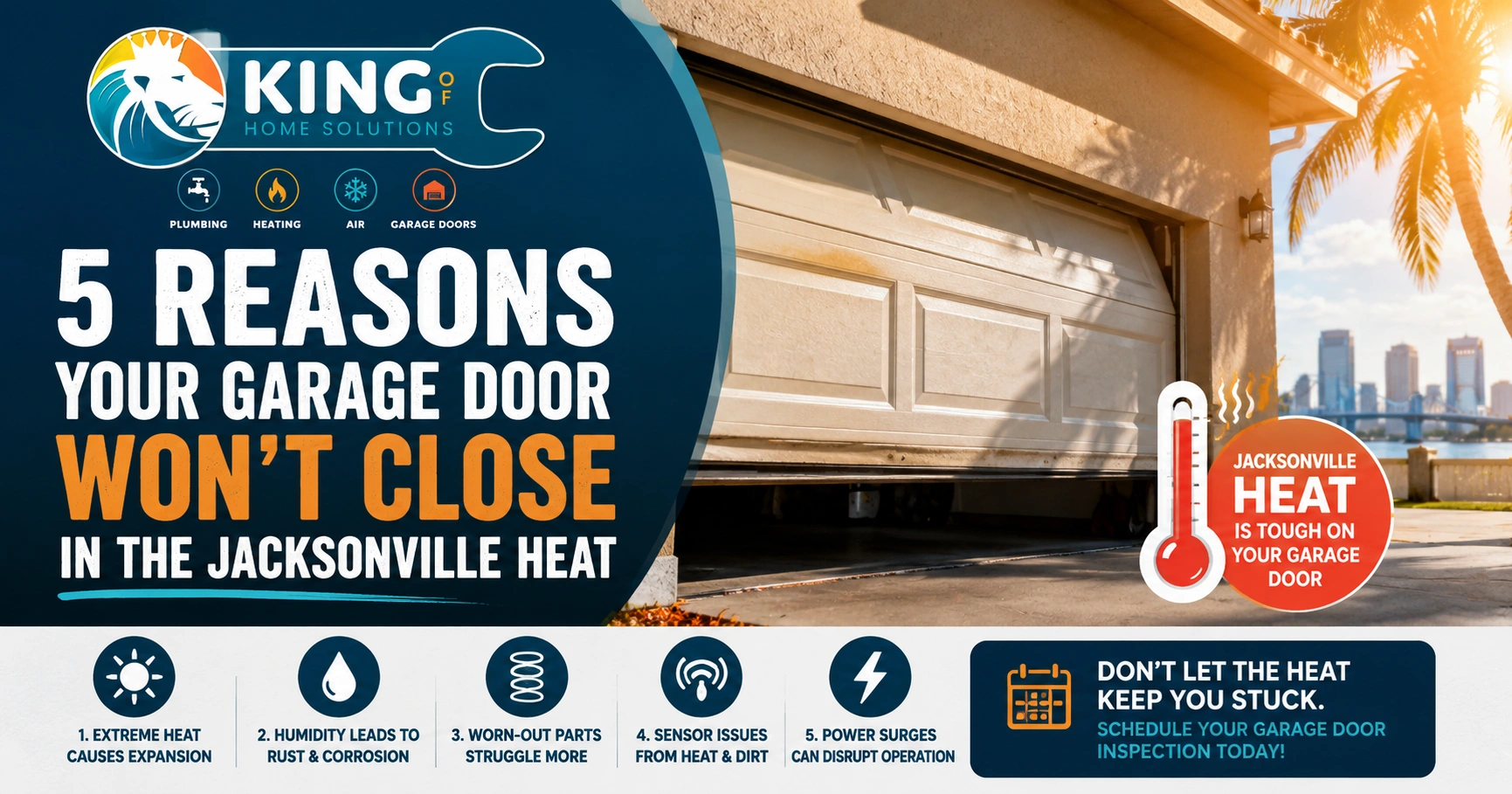
5 Reasons Your Garage Door Won’t Close in the Jacksonville Heat
You press the button.
The garage door starts moving.
Then it stops.
Or worse it closes halfway and immediately reverses.
If this sounds familiar, you’re not alone. Jacksonville homeowners frequently experience garage door issues during Florida’s hottest months. While many people blame the opener, the real problem is often the combination of extreme heat, humidity, and aging components.
Here are five common reasons your garage door won’t close when Jacksonville temperatures start climbing.
Garage door stuck in the heat?
Don't wait until you're locked in or out. Call now for fast, professional garage door repair in Jacksonville.
1. The Safety Sensors Are Struggling in Direct Sunlight
Modern garage doors rely on photo-eye sensors near the bottom of the door track.
These sensors create an invisible beam across the garage opening. If the beam is interrupted, the door automatically reverses to prevent accidents.
In Jacksonville’s intense afternoon sun, direct sunlight can sometimes interfere with the sensor’s ability to detect the beam properly.
Common signs include:
- The door starts to close but reverses
- The issue occurs only during certain times of day
- The door works normally after sunset
- Sensor lights appear to flicker
Sometimes a simple adjustment or protective sun shield can solve the problem.
2. Heat Expansion Is Affecting Door Components
Metal expands when temperatures rise.
During Jacksonville summers, garage doors, tracks, brackets, and hardware can expand slightly throughout the day.
While the changes are small, they can create enough misalignment to cause:
- Binding along the tracks
- Uneven door movement
- Increased strain on the opener
- Unexpected reversals
Older garage doors are especially susceptible because years of wear may have already reduced operating tolerances.
3. Your Garage Door Tracks Are Dirty or Misaligned
Heat and humidity often expose existing problems that may have gone unnoticed during cooler months.
Garage door tracks can collect:
- Dirt
- Dust
- Insects
- Rust buildup
- Wind-blown debris
When the rollers encounter resistance, the opener may interpret it as an obstruction and stop the door from closing.
Watch for:
- Grinding noises
- Jerky movement
- Door shaking during operation
- Visible debris in the tracks
Routine maintenance can often prevent these issues before they become costly repairs.
4. Humidity Is Affecting the Door Itself
Jacksonville homeowners with wood garage doors may notice seasonal changes more than those with steel or aluminum doors.
Florida’s humidity can cause wood to:
- Swell
- Warp
- Shift slightly out of alignment
Even insulated doors can experience expansion and contraction as temperatures fluctuate.
When the door no longer moves smoothly within the track system, closing problems can develop quickly.
If your garage door seems harder to operate during rainy or extremely humid periods, moisture may be contributing to the issue.
5. The Garage Door Opener Is Overheating
Garage door openers work harder in hot environments.
Many Jacksonville garages are not climate-controlled, which means temperatures inside can exceed outdoor temperatures significantly.
Over time, excessive heat can affect:
- Motor performance
- Circuit boards
- Capacitors
- Electronic controls
Some openers include thermal protection features that temporarily shut the system down when temperatures become too high.
Signs of an overheating opener include:
- Intermittent operation
- Delayed response
- Humming sounds without movement
- Complete shutdown during the hottest part of the day
If the opener works normally once temperatures cool, heat-related stress may be the cause.

When It’s Time to Call a Professional
While some garage door issues have simple solutions, others involve components under significant tension.
Garage door springs, cables, and certain opener repairs can be dangerous without proper tools and training.
Professional service is recommended if:
- The door closes unevenly
- Springs appear damaged
- Cables are frayed
- The opener repeatedly fails
- The door feels unusually heavy
- Safety sensors won’t stay aligned
Ignoring these warning signs can lead to larger repairs and potential safety risks.

Understanding Florida’s “Wind-Borne Debris Region” and Why It Affects Your Garage Door
If you own a home in Florida, you’ve probably heard terms like hurricane-rated, wind-rated, and impact-resistant used when talking about…
Read The BlogHow Jacksonville Homeowners Can Prevent Summer Garage Door Problems
Regular maintenance goes a long way in Florida’s climate.
A seasonal inspection should include:
- Cleaning sensor lenses
- Checking track alignment
- Lubricating moving parts
- Tightening hardware
- Testing safety features
- Inspecting weather seals
Addressing small issues early can help prevent inconvenient breakdowns during the hottest months of the year.
Final Thoughts
If your garage door won’t close in the Jacksonville heat, the problem is often tied to Florida’s unique climate rather than a complete system failure.
From sun-blinded sensors and expanding metal components to humidity-related swelling and overheating openers, summer weather can expose weaknesses throughout the system.
The good news is that many of these issues are identifiable and repairable before they turn into major expenses. A properly maintained garage door should operate smoothly regardless of how hot Jacksonville gets outside.
Jacksonville heat causing garage door problems?
Get reliable repairs before a minor issue becomes an expensive replacement. Call our team today.