Serving The Jacksonville Area



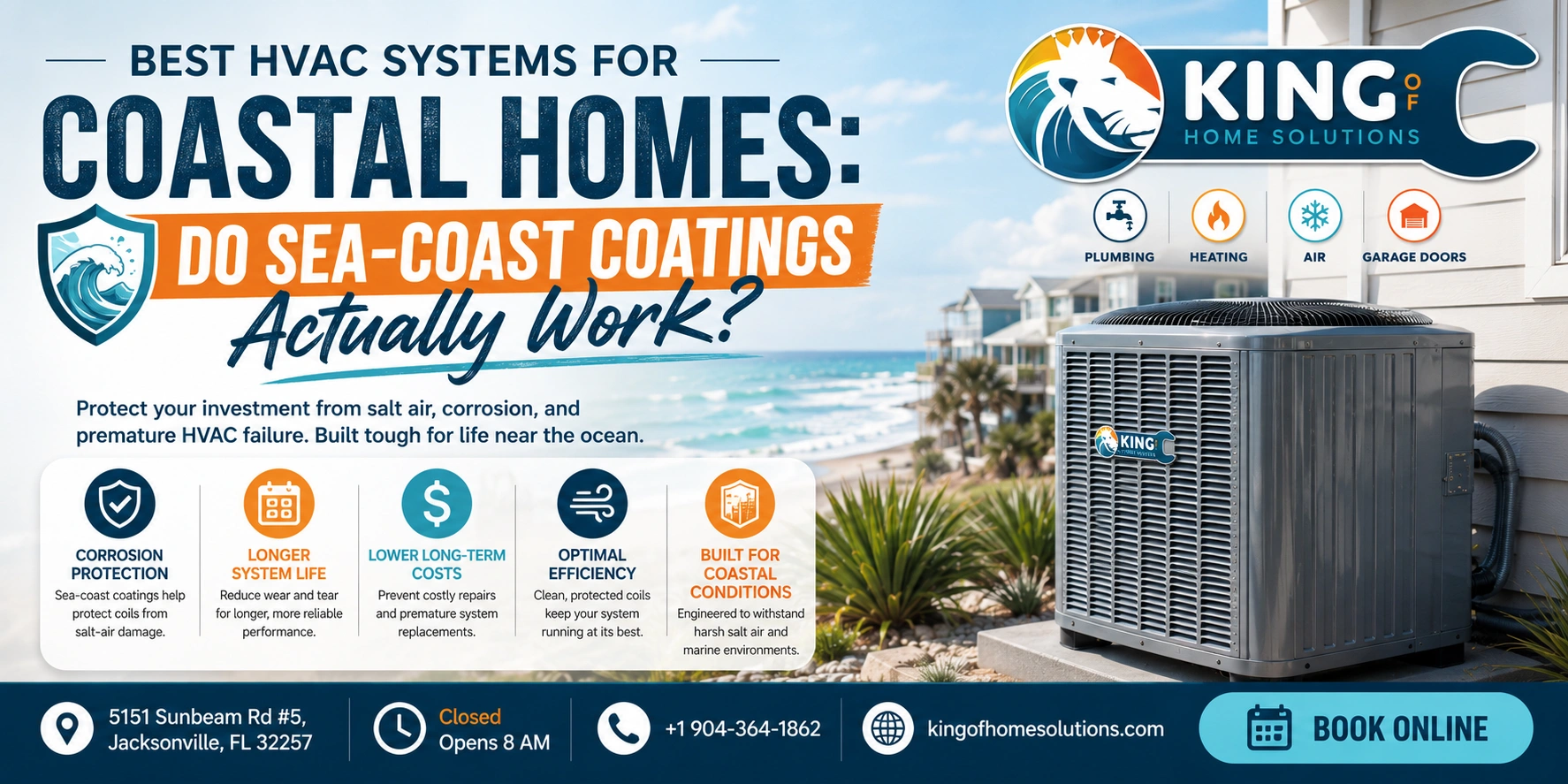
Best HVAC Systems for Coastal Homes: Do Sea-Coast Coatings Actually Work?
Best HVAC Systems for Coastal Homes: Do Sea-Coast Coatings Actually Work?
Living near the ocean comes with a hidden tax on homeownership.
Your roof feels it.
Your windows feel it.
Your vehicles feel it.
And your air conditioner may feel it more than anything else.
For homeowners in Jacksonville Beach, Atlantic Beach, Neptune Beach, Ponte Vedra, and other coastal communities, salt-air corrosion is one of the leading causes of premature HVAC failure. That’s why many manufacturers now offer coastal-rated systems, sea-coast coatings, and corrosion-resistant condenser coils designed specifically for marine environments.
The question is:
Are they worth the extra money?
For most beachside homeowners, the answer is often yes.
Salt air damaging your HVAC system?
Protect your coastal HVAC with expert recommendations and professional installation. Call today for trusted local service.
Why Coastal Homes Destroy Air Conditioners Faster
Salt particles suspended in ocean air don’t need direct contact with seawater to cause damage.
These microscopic particles settle on your outdoor condenser and begin attacking metal surfaces.
Over time, salt exposure can cause:
- Coil corrosion
- Refrigerant leaks
- Rusted fasteners
- Electrical component damage
- Reduced efficiency
- Premature system failure c
Inland homeowners might expect 12–15 years from an HVAC system.
Homes within a few miles of the ocean may see major coil issues much sooner if the equipment isn’t properly protected.
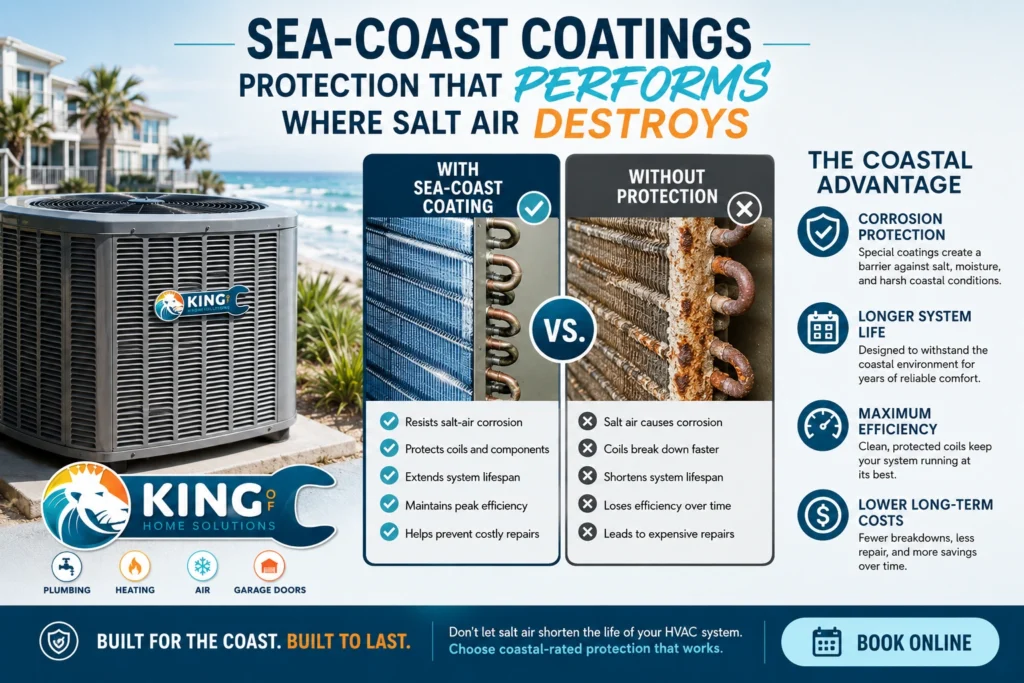
What Are Sea-Coast Coatings?
Sea-coast coatings are protective layers applied to HVAC coils and metal components.
Their purpose is simple:
Create a barrier between corrosive salt air and the metal surfaces of the system.
These coatings may be applied:
- At the factory
- During manufacturing
- As aftermarket treatments
The best systems typically include factory-applied protection that is engineered and tested by the manufacturer.
How Coastal Coatings Help
A quality coastal coating can:
Reduce Corrosion
The coating helps prevent salt from directly attacking aluminum and copper coil surfaces.
Extend Coil Life
Coils are often the first major component affected by salt exposure.
Protection can delay corrosion-related failures.
Preserve Efficiency
Clean, intact coils transfer heat more effectively.
Less corrosion generally means better performance over time.
Lower Long-Term Repair Costs
Preventing a refrigerant leak is usually less expensive than replacing an evaporator or condenser coil.

The Cost of Repiping a 1950s San Marco Home (PEX vs. Copper)
You’re washing dishes in your San Marco kitchen when the water pressure suddenly drops. Again. Maybe it started with rusty-looking…
Read The BlogThe HVAC Brands Most Commonly Considered for Coastal Applications
While specific product lines change over time, many manufacturers offer enhanced corrosion protection packages.
Common options include:
Trane
Known for durable outdoor units and available coastal protection packages.
Carrier
Offers corrosion-resistant options on select systems and premium equipment lines.
Lennox
Some models include enhanced coil protection and coastal upgrades.
Rheem
Offers systems with corrosion-resistant coil technologies and coastal recommendations.
Daikin
Certain product lines include advanced coil protection designed for challenging environments.
The key isn’t simply choosing a brand.
It’s choosing a model specifically configured for coastal conditions.
Not All “Coastal” Protection Is Equal
This is where homeowners often get surprised.
Some systems include:
- Basic protective coatings
Others feature:
- Epoxy-coated coils
- Enhanced aluminum protection
- Marine-grade finishes
- Comprehensive corrosion-resistant packages
The difference can be significant.
When comparing quotes, ask exactly what protection is included rather than assuming every premium system is coastal-rated.
Is the Extra Cost Worth It?
For a homeowner several miles inland, maybe not.
For a homeowner a few blocks from the beach, the equation changes dramatically.
Consider this:
A coastal package may add several hundred dollars to a system installation.
Replacing a failed condenser coil can cost thousands.
Replacing an entire system years early can cost even more.
When viewed through that lens, the upgrade often becomes easier to justify.
The Maintenance Mistake Many Beachside Homeowners Make
Even the best coating isn’t magic.
One of the biggest misconceptions is that coastal-rated equipment requires no maintenance.
Salt still accumulates.
Dirt still builds up.
Corrosion can still occur.
Homeowners should continue to:
Schedule Annual HVAC Maintenance
Routine inspections help identify corrosion before it becomes a major issue.
Rinse Outdoor Units
Fresh-water rinsing can help remove accumulated salt deposits.
Always follow manufacturer recommendations.
Replace Air Filters Regularly
Maintaining proper airflow reduces overall system stress.
Address Small Problems Early
Minor corrosion issues are often less expensive to manage than major coil failures.
What About Stainless Steel Components?
Some premium coastal systems include:
- Stainless steel fasteners
- Corrosion-resistant hardware
- Enhanced cabinet construction
These upgrades may not attract attention during the buying process, but they can improve long-term durability in marine environments.
The outdoor cabinet matters almost as much as the coil itself.
The Jacksonville Beach Reality
If your home is:
Oceanfront
Within a mile or two of the coast
Exposed to consistent sea breezes
Then corrosion resistance should be one of your top priorities—right alongside efficiency ratings and system size.
Many homeowners focus heavily on SEER2 ratings while overlooking the environmental conditions that may ultimately determine how long the system survives.
A slightly lower-efficiency system with superior corrosion protection can sometimes be the better long-term investment near the beach.
Bottom Line
For coastal homeowners, salt air is often a bigger threat to HVAC longevity than heat itself.
That’s why sea-coast coatings and corrosion-resistant HVAC systems have become increasingly important in communities like Jacksonville Beach, Neptune Beach, Atlantic Beach, and Ponte Vedra.
If you’re replacing an HVAC system near the ocean, don’t just compare brands and efficiency ratings. Ask about factory-applied coil coatings, marine-grade protection packages, and corrosion-resistant components.
Because on the coast, the best HVAC system isn’t always the one with the highest efficiency rating it’s often the one that’s still running strong after years of battling salt air every single day.
Ready for reliable cooling by the coast?
Trust experienced HVAC professionals for coastal installations, maintenance, and expert advice. Call today to get started.