Serving The Jacksonville Area


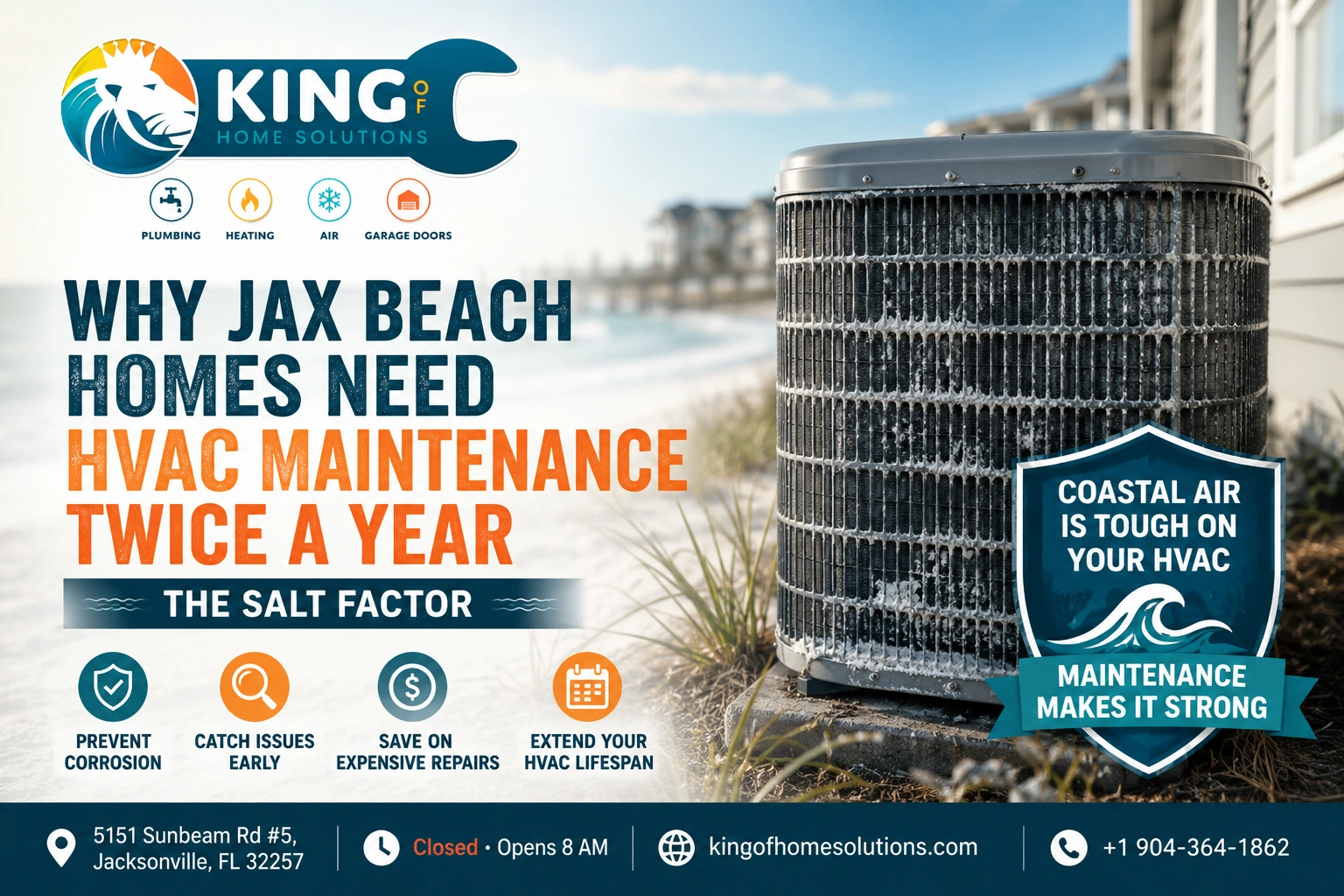
Why JAX Beach Homes Need HVAC Maintenance Twice a Year (The Salt Factor)
Why JAX Beach Homes Need HVAC Maintenance Twice a Year (The Salt Factor)
Most HVAC manufacturers recommend annual maintenance.
For homeowners in Jacksonville Beach, Neptune Beach, Atlantic Beach, and Ponte Vedra?
Once a year often isn’t enough.o
The reason isn’t the Florida heat.
It’s the salt.
Coastal homeowners face a challenge that inland properties rarely experience: a constant assault of salt-laden air that can quietly destroy HVAC components long before they reach their expected lifespan.
That’s why many HVAC professionals recommend twice-yearly maintenance for beachside homes not because they’re trying to sell more service visits, but because the environment demands it.
Here’s why.
Don't let salt damage your HVAC system.
Regular maintenance helps prevent unexpected breakdowns, lowers energy costs, and extends your system's life. Call today.
The Beachside HVAC Problem Nobody Sees
Every day, ocean breezes carry microscopic salt particles inland.
You may not notice them.
But your air conditioner does.
Those particles settle on:
- Condenser coils
- Fan blades
- Electrical connections
- Fasteners
- Outdoor cabinets
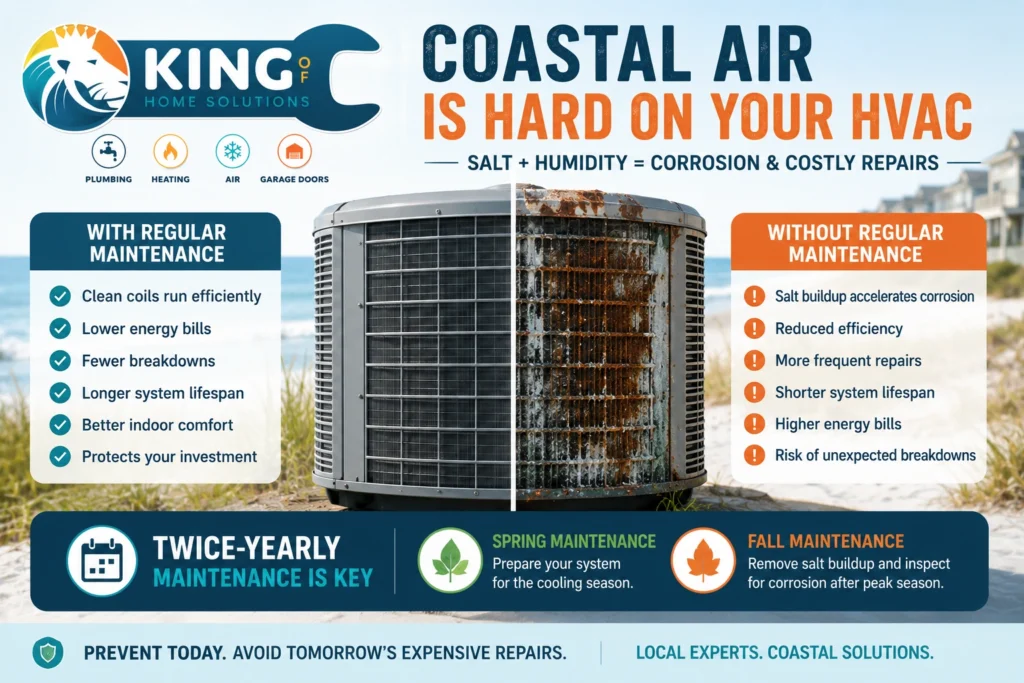
When combined with Northeast Florida’s humidity, salt creates an ideal environment for corrosion.
Unlike dust or pollen, salt doesn’t simply wash away on its own.
It accumulates.
And over time, it starts causing damage.
Why Salt Is So Destructive
Salt acts as a corrosion accelerator.
Once it settles on metal surfaces, it attracts moisture from the air and begins breaking down protective finishes.
Over time, this can lead to:
Coil Corrosion
One of the most expensive HVAC repairs homeowners face.
Corroded coils can develop:
- Pinhole leaks
- Refrigerant loss
- Reduced efficiency
Rusted Components
Salt exposure can damage:
- Mounting hardware
- Cabinet panels
- Structural supports
Electrical Problems
Corrosion doesn’t stop at metal panels.
It can affect:
- Wire connections
- Contactors
- Capacitors
- Circuit boards
These issues often cause unexpected breakdowns.
Why Annual Maintenance Often Falls Short
For inland homes, a yearly inspection may be sufficient.
Beachside systems operate in a much harsher environment.
Waiting 12 months between inspections means corrosion has an entire year to develop unnoticed.
By the time a technician discovers the problem, repairs may already be necessary.
Twice-yearly maintenance shortens that inspection window and helps identify issues before they become expensive failures.

Best Air Filters for Jacksonville’s Heavy Pollen Seasons
You walk outside in Jacksonville during spring and your car has turned yellow. Oak pollen coats the windshield. It collects…
Read The BlogThe Ideal Coastal HVAC Maintenance Schedule
For Jacksonville Beach-area homes, many HVAC professionals recommend:
Spring Maintenance
Before the cooling season begins.
This visit typically focuses on:
- Coil cleaning
- Refrigerant checks
- Electrical inspections
- Airflow verification
- System performance testing
The goal is ensuring the system is ready for Florida’s long summer.
Fall Maintenance
After the peak cooling season.
This visit often focuses on:
- Removing accumulated salt deposits
- Identifying corrosion
- Inspecting electrical components
- Checking coil condition
- Preparing the system for continued operation
Think of it as damage control after months of exposure to heat, humidity, and ocean air.
The Hidden Cost of Skipping Maintenance
Many homeowners delay service because the AC seems to be working fine.
That’s often the problem.
Salt damage develops slowly.
The system may cool normally while corrosion quietly progresses.
By the time symptoms appear, homeowners may face:
- Refrigerant leaks
- Coil replacement
- Compressor strain
- Major repair bills
- Reduced system lifespan
What could have been caught during routine maintenance becomes a much larger expense.
The Real Lifespan Difference
A properly maintained inland HVAC system may last:
- 12–15 years
- Sometimes longer
Beachside systems often experience significantly shorter lifespans when maintenance is neglected.
It’s not uncommon to see:
- Major coil issues in 5–8 years
- Premature system replacement
- Frequent refrigerant repairs
Regular maintenance helps slow that timeline.
While it can’t eliminate salt exposure, it can reduce its impact.
What Happens During a Coastal HVAC Service Visit?
A true coastal maintenance appointment often goes beyond a standard tune-up.
Technicians may:
Clean Salt and Debris from Coils
Salt buildup restricts heat transfer and accelerates corrosion.
Inspect Corrosion-Prone Components
Including:
- Fasteners
- Wiring
- Electrical terminals
- Coil surfaces
Check Refrigerant Levels
Early detection of leaks can prevent larger failures.
Evaluate System Efficiency
Identifying performance losses before utility bills increase.
The Salt-Air Warning Signs Homeowners Should Watch For
Even between maintenance visits, pay attention to:
Rising Energy Bills
Corrosion can reduce efficiency and increase run times.
Longer Cooling Cycles
Systems may struggle to transfer heat effectively.
Uneven Cooling
Damaged coils can affect performance throughout the home.
Frequent Refrigerant Service
Repeated refrigerant additions often signal developing coil problems.
Visible Rust
Any visible corrosion on the outdoor unit deserves attention.
Is Twice-Yearly Maintenance Really Worth It?
For a home several miles inland, maybe not.
For a home near the beach?
The math changes quickly.
Consider the cost of:
- Condenser coil replacement
- Evaporator coil replacement
- Compressor failure
- Early system replacement
Compared to:
- Two preventive maintenance visits annually
Most homeowners find prevention far less expensive than repair.
The Jacksonville Beach Reality
Living near the ocean means accepting that some systems simply require more care.
Your HVAC unit works harder than one located farther inland not because of the temperature, but because of the environment surrounding it every day. Salt never takes a season off.
Neither should your maintenance plan.
Bottom Line
For homeowners in Jacksonville Beach, Atlantic Beach, Neptune Beach, and Ponte Vedra, the biggest threat to HVAC longevity isn’t necessarily Florida’s heat, it’s the constant exposure to salt-laden air.
That’s why twice-yearly HVAC maintenance is often one of the smartest investments coastal homeowners can make. Regular inspections and cleanings help remove corrosive salt buildup, identify early signs of damage, and protect the components most vulnerable to coastal conditions.
Because near the ocean, the question isn’t whether salt will affect your HVAC system.
It’s how much damage it will do before someone catches it.
Salt air wearing down your AC?
Don't wait for a breakdown. Schedule professional HVAC maintenance today and keep your JAX Beach home cool year-round.