Serving The Jacksonville Area



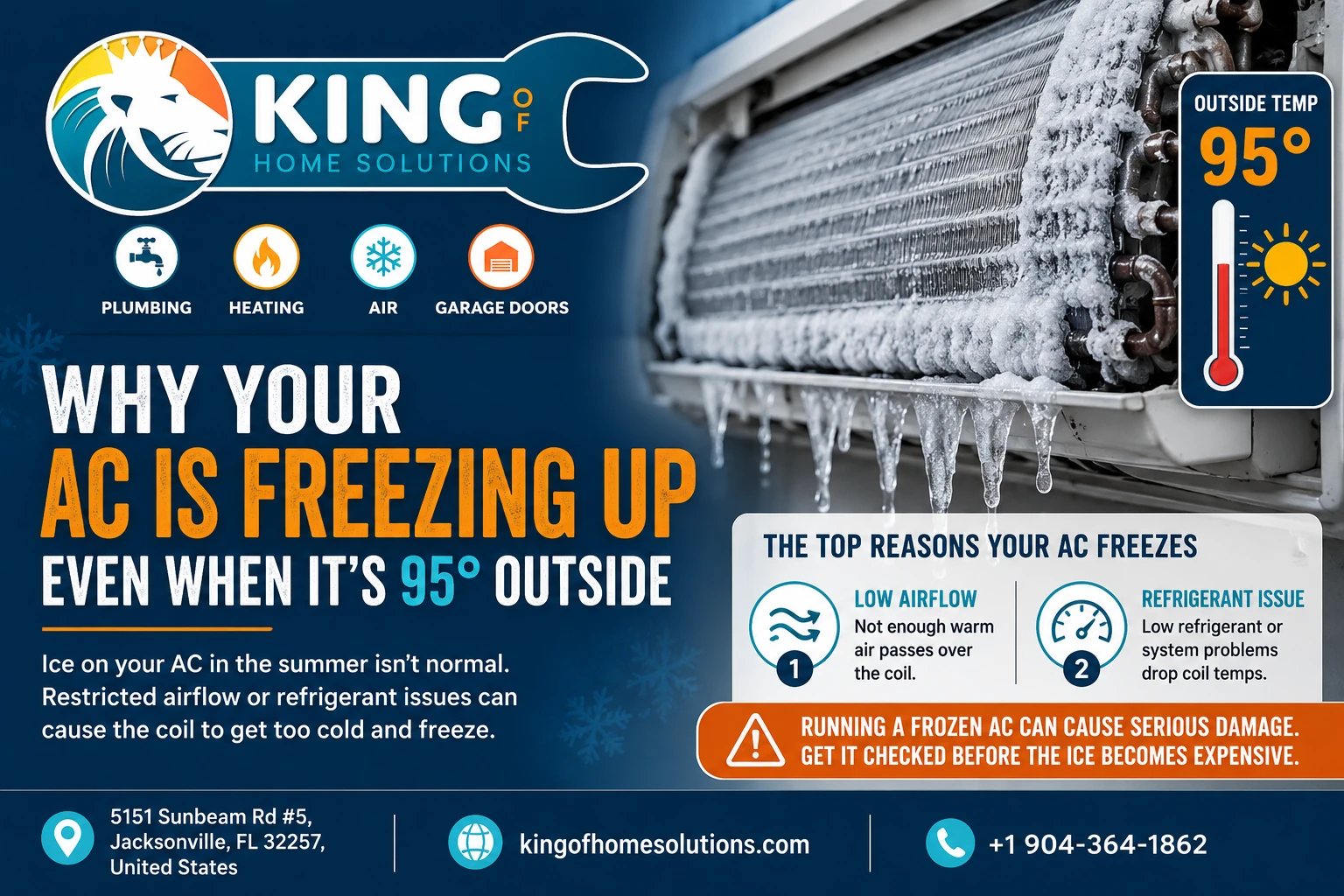
Why Your AC Is Freezing Up even When It’s 95 Degrees Outside
Why Your AC Is Freezing Up even When It’s 95 Degrees Outside
Seeing ice on your air conditioner during one of the hottest days of the year feels impossible.
The system is surrounded by hot air. Your home is getting warmer. Yet the refrigerant line, indoor coil, or air-handler cabinet is covered in frost.
The outside temperature is not what causes the freezing. An air conditioner freezes when the indoor evaporator coil becomes too cold and the moisture collecting on it turns to ice.
In most cases, the underlying problem is one of two things:
- Not enough warm air is moving across the coil.
- The refrigerant system is not operating correctly.
Continuing to run a frozen AC can turn a manageable repair into a much more expensive problem.
Ice on Your AC When It’s 95° Outside?
Restore your cooling and comfort with expert AC troubleshooting and dependable repairs. Call today.
How Can an Air Conditioner Freeze in Hot Weather?
Your air conditioner does not create cold air. It removes heat from the air inside your home.
Warm indoor air passes through the return vents and moves across the evaporator coil. Refrigerant inside the coil absorbs heat, and the blower sends the cooled air back through your home.
Moisture in the indoor air also condenses on the cold coil. Under normal conditions, that water drips into the drain pan and exits through the condensate line.
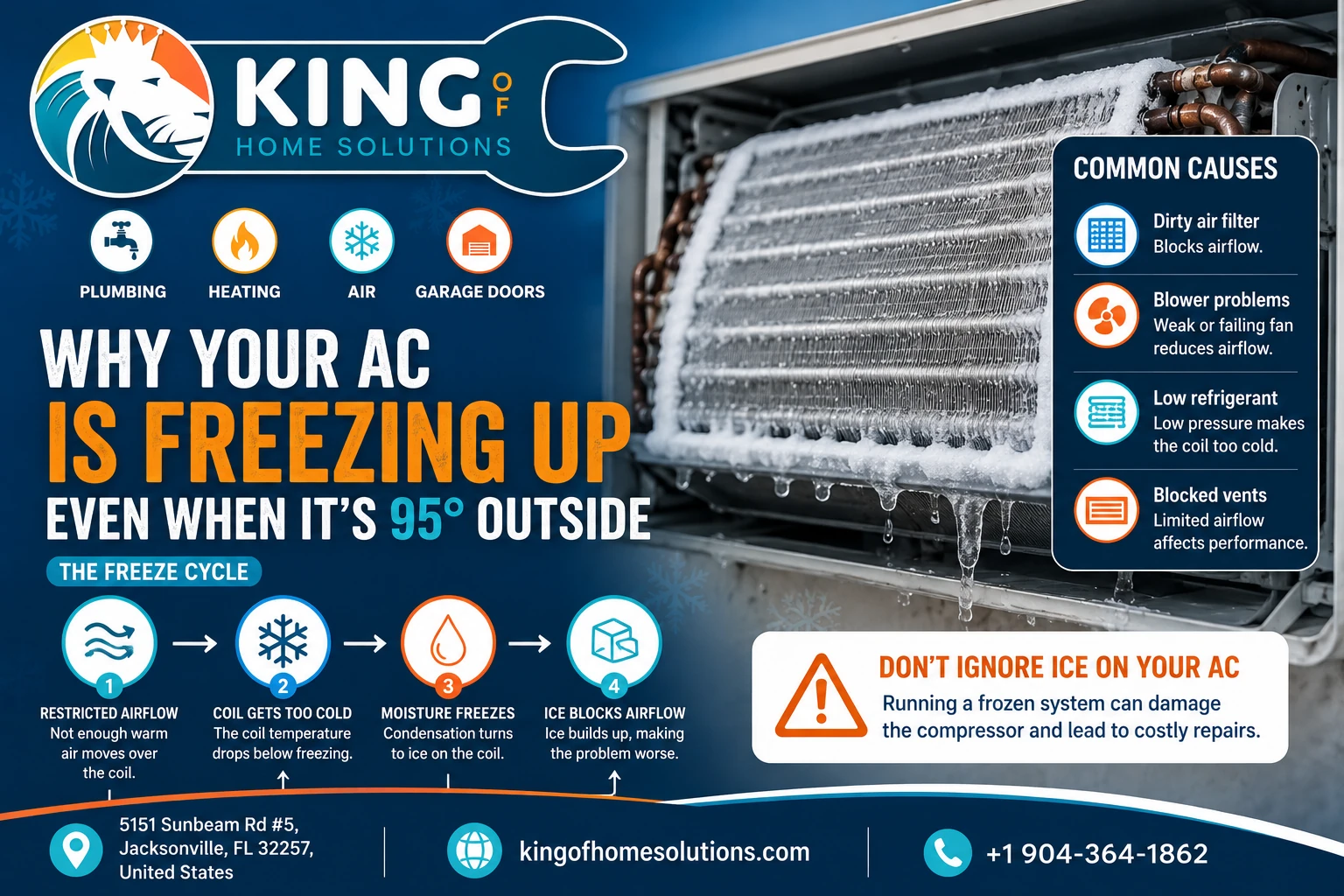
If airflow becomes restricted or refrigerant pressure drops too low the coil can fall below freezing. The condensation then freezes instead of draining away.
Once a thin layer of ice forms, it blocks even more airflow. That creates a cycle in which the coil becomes colder and the ice becomes thicker.
Common Signs of a Frozen AC
The ice may not always be visible because the evaporator coil is usually located inside the air handler.
Watch for these warning signs:
- Warm or barely cool air coming from the vents
- Weak airflow
- Ice on the copper refrigerant line
- Frost around the indoor unit
- Water pooling near the air handler
- An AC that runs constantly without cooling the home
- Unusually high electricity use
- A hissing or bubbling sound near the equipment
A frozen evaporator coil can also create excessive water when the ice begins to melt. Carrier identifies inadequate cooling, ice on refrigerant lines, and unusual condensate drainage as common signs of a frozen coil.
1. A Dirty Air Filter Is Restricting Airflow
A clogged air filter is one of the most common and easiest to correct causes of a frozen air conditioner.
Your system needs a steady supply of warm indoor air moving across the coil. When a dirty filter restricts that airflow, the coil may become too cold.
ENERGY STAR recommends checking the filter monthly during heavy cooling or heating seasons and replacing it when it appears dirty. At minimum, filters generally should be changed every three months, although homes with pets, allergies, construction dust, or heavy system use may need more frequent replacement.
Check the filter before assuming the system has a major mechanical failure.
However, simply replacing the filter will not immediately remove existing ice. The coil must thaw before normal cooling can resume.
2. Too Many Supply Vents Are Closed
Closing vents in unused rooms may seem like a smart way to redirect cool air, but it can disrupt airflow through the system.
Residential HVAC equipment is designed to move a certain volume of air. When several supply registers are closed, pressure can increase inside the ductwork while total airflow across the evaporator coil decreases.
That reduced airflow may contribute to freezing.
Keep most supply vents open and confirm that furniture, rugs, curtains, or storage boxes are not blocking return-air grilles.
3. The Return-Air Path Is Blocked
Your air conditioner cannot cool properly if it cannot pull enough air back into the system.
A blocked return grille, heavily contaminated filter, collapsed duct, closed interior door, or undersized return duct can reduce airflow.
You may notice:
- Strong airflow in some rooms but almost none in others
- Whistling around the return grille
- Doors that move when the system starts
- A filter being pulled tightly into its frame
- Rooms that remain warmer than the rest of the home
A technician may need to measure static pressure and airflow to determine whether the duct system is contributing to the freeze-up.
4. The Evaporator Coil Is Dirty
Even with a clean filter, dirt can accumulate on the evaporator coil over time.
Dust, pet hair, biological buildup, and other debris can create a barrier between the warm air and the cold coil. The system may run longer while transferring less heat, allowing the coil temperature to fall too low.
ENERGY STAR notes that dirty indoor and outdoor coils reduce cooling performance, increase operating time, raise energy use, and may shorten equipment life.
Evaporator-coil cleaning is not always a simple homeowner task. The coil may be difficult to access, and aggressive brushing or chemical use can damage the fins, drain pan, or surrounding components.
5. The Blower Motor Is Not Moving Enough Air
The indoor blower is responsible for pushing air across the evaporator coil and through the ductwork.
If the blower motor is failing or if its capacitor, control board, relay, wheel, or speed setting is defective the coil may not receive enough airflow.
Possible warning signs include:
- Little or no air from the vents
- Intermittent airflow
- Grinding, squealing, or buzzing sounds
- A blower that starts and stops unexpectedly
- Ice returning soon after the coil thaws
- The outdoor unit running while the indoor fan does not
Electrical and motor problems should be diagnosed by a qualified HVAC technician.
6. The Refrigerant Level Is Low
Low refrigerant does not mean the system has “used it up.”
Air-conditioning refrigerant circulates through a closed system. When the charge becomes low, there is often a leak somewhere in the coil, refrigerant lines, valves, or connections.
Low refrigerant can reduce pressure inside the evaporator coil, causing its temperature to drop below freezing. Carrier notes that low refrigerant can interfere with heat absorption and lead to ice forming on the evaporator coil.
Adding refrigerant without finding the source of the leak may provide only temporary relief.
A proper diagnosis may involve:
- Measuring system pressures
- Checking refrigerant temperatures
- Inspecting for oil residue
- Performing electronic leak detection
- Using dye or another approved testing method
- Determining whether the leak can be repaired
Refrigerant diagnosis and handling should be left to a trained professional.
7. The Refrigerant Metering Device Is Malfunctioning
The expansion valve or other metering device controls how refrigerant enters the evaporator coil.
If it allows too much or too little refrigerant through, the coil may not operate at the correct temperature. A faulty expansion valve can contribute to improper refrigerant flow and evaporator-coil freezing.
Because the symptoms can resemble low refrigerant, poor airflow, or a dirty coil, technicians usually need to test the system rather than diagnose the valve from appearance alone.
8. The Thermostat or Fan Controls Are Malfunctioning
A thermostat problem can cause the cooling system to run longer than necessary or operate incorrectly.
The issue could involve:
- An inaccurate temperature reading
- Incorrect wiring
- A failing thermostat
- Improper fan settings
- A control-board problem
- A blower that shuts off while the compressor continues running
Check that the thermostat is set to COOL and that the selected temperature is reasonable.
Setting the thermostat dramatically lower will not cool the home faster. It may simply force an already struggling system to run longer.
9. The AC Is Running During Cool Outdoor Conditions
Freeze-ups can also happen when an air conditioner is operated in unusually cool weather.
Standard residential cooling systems are generally not designed to operate when outdoor temperatures fall below their approved operating range. Under those conditions, system pressures may change enough to contribute to coil freezing.
This is more common when homeowners want extra cooling at night, when businesses have high internal heat loads, or when a thermostat is set unusually low.
Special controls may be required when year-round cooling is necessary.
What Should You Do When Your AC Freezes?
The safest response is to stop the cooling cycle.
Turn cooling off
Set the thermostat from COOL to OFF.
Continuing to run a frozen system can worsen the ice buildup and potentially damage the compressor or other components. Carrier and Trane both recommend shutting the system down when a frozen evaporator coil is suspected.
Set the fan to ON
When the blower is still working, changing the thermostat fan setting from AUTO to ON may help move warm indoor air across the coil and speed up thawing.
Do not use the fan if the blower is making unusual noises, not moving air, or appears electrically damaged.
Check the filter
Remove and inspect the air filter. Replace it if it is visibly dirty, wet, collapsed, or heavily clogged.
Make sure the replacement filter is:
- The correct size
- Installed in the proper direction
- Properly seated
- Not excessively restrictive for the system
Open the vents
Confirm that supply registers and return grilles are open and unobstructed.
Protect the area from water
A heavily frozen coil can release a significant amount of water as it thaws.
Place towels near the air handler if needed, and monitor the drain pan and surrounding area. Water near electrical components should be treated as a safety concern.
Let the system thaw completely
A light frost may disappear relatively quickly, while a solid block of ice can take several hours to melt.
Do not restart cooling while ice remains on the coil or refrigerant line.

Whole-Home Filtration vs. Reverse Osmosis: Price and Performance
You turn on the kitchen faucet and notice the chlorine smell again. Maybe your shower leaves your skin feeling dry.…
Read The BlogWhat Not to Do
Never chip, scrape, or strike the ice.
The evaporator coil contains delicate fins and refrigerant tubing. A screwdriver, knife, heat gun, or other tool can puncture the coil and create a refrigerant leak.
Trane specifically advises homeowners not to chip ice away because doing so can damage the coil.
Also avoid:
- Pouring boiling water onto the equipment
- Using an open flame
- Bypassing safety switches
- Opening refrigerant lines
- Repeatedly restarting the system
- Replacing electrical parts without proper testing
Can You Restart the AC After It Thaws?
You may be able to restart the system after the ice has completely melted if:
- The filter was clearly clogged
- You installed a clean replacement
- The vents are open
- The blower is operating normally
- No electrical burning smell is present
- Water is draining correctly
Set the thermostat several degrees above the indoor temperature, return the fan to AUTO, and then lower the temperature gradually.
Watch the system closely.
If the refrigerant line begins frosting again, airflow remains weak, or the home does not cool, turn the system off and schedule professional service.
A recurring freeze-up means the original problem has not been corrected.
When Should You Call an HVAC Technician?
Schedule professional diagnosis when:
- The AC freezes again after replacing the filter
- The blower is not running
- Airflow remains weak
- You hear hissing, bubbling, grinding, or electrical buzzing
- The coil is visibly dirty
- Water is overflowing from the air handler
- The refrigerant line freezes repeatedly
- The system runs constantly
- The AC has stopped cooling
- You suspect a refrigerant leak
- The breaker repeatedly trips
A technician may inspect the filter, blower assembly, evaporator coil, ductwork, condensate system, electrical controls, metering device, and refrigerant charge.
How to Prevent Your AC From Freezing Again
The best prevention strategy is to protect airflow and keep the system maintained.
Helpful steps include:
- Check the filter every month during heavy use
- Replace dirty filters promptly
- Keep return grilles and supply vents clear
- Avoid closing multiple vents
- Keep the area around the indoor unit accessible
- Schedule professional maintenance
- Have recurring drainage or airflow problems investigated
- Address refrigerant leaks rather than repeatedly adding refrigerant
- Clean indoor and outdoor coils when needed
Regular maintenance cannot prevent every failure, but it can identify airflow, coil, drain, electrical, and refrigerant problems before they lead to a complete loss of cooling. ENERGY STAR recommends checking refrigerant level, cleaning coils, inspecting the condensate drain, and testing system controls as part of cooling-system maintenance.
The Bottom Line
Your AC can freeze when it is 95 degrees outside because the problem is occurring at the cold indoor coil not in the outdoor air.
The most common causes are:
- A dirty filter
- Restricted airflow
- A dirty evaporator coil
- A failing blower
- Low refrigerant
- A refrigerant leak
- A defective metering device
- A thermostat or control problem
Turn the cooling system off, allow the ice to melt, check the filter, and make sure the vents are open.
Do not keep restarting a system that freezes repeatedly. The ice is a symptom. Until the airflow, refrigerant, or mechanical problem is corrected, it will probably return and continued operation may cause more expensive damage.
AC Freezing Up in the Summer Heat?
Don’t let a frozen AC leave you sweating. Call now for fast, professional AC service you can trust.