Serving The Jacksonville Area

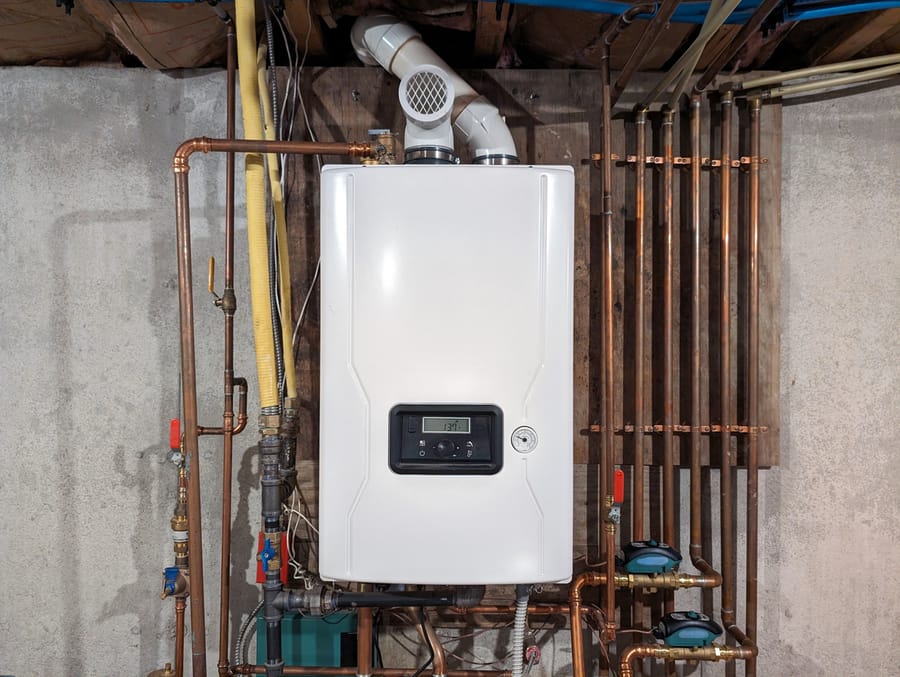
Tankless Water Heater in Jacksonville, FL
Tankless water heaters can provide hot water as it is needed, save floor space, and support longer periods of use. They also require the right sizing, compatible utilities, regular maintenance, and professional troubleshooting when performance changes.
King of Home Solutions provides tankless water heater service in Jacksonville, FL, for homeowners considering a new system and those who already have tankless equipment. Our residential plumbing team handles installation, tank-to-tankless conversions, repairs, descaling, maintenance, and replacement.
Tankless Water Heater Support for Every Stage
New tankless installation and conversion planning
Diagnosis of error codes and inconsistent temperatures
Professional descaling and filter service
Tankless replacement when repairs are no longer practical
4.9 ⭐
Google Rating
BBB
Accredited Business
Locally-Owned & Operated
Same-Day Service Available
Proudly Serving the Jacksonville Area
5151-5 Sunbeam Road Jacksonville, FL 32257
Call 904-865-4663
RELIABLE TANKLESS WATER HEATER BACKED BY HAPPY CLIENTS
See how our dependable tankless water heater services have helped local homeowners restore reliable hot water, comfort, and peace of mind.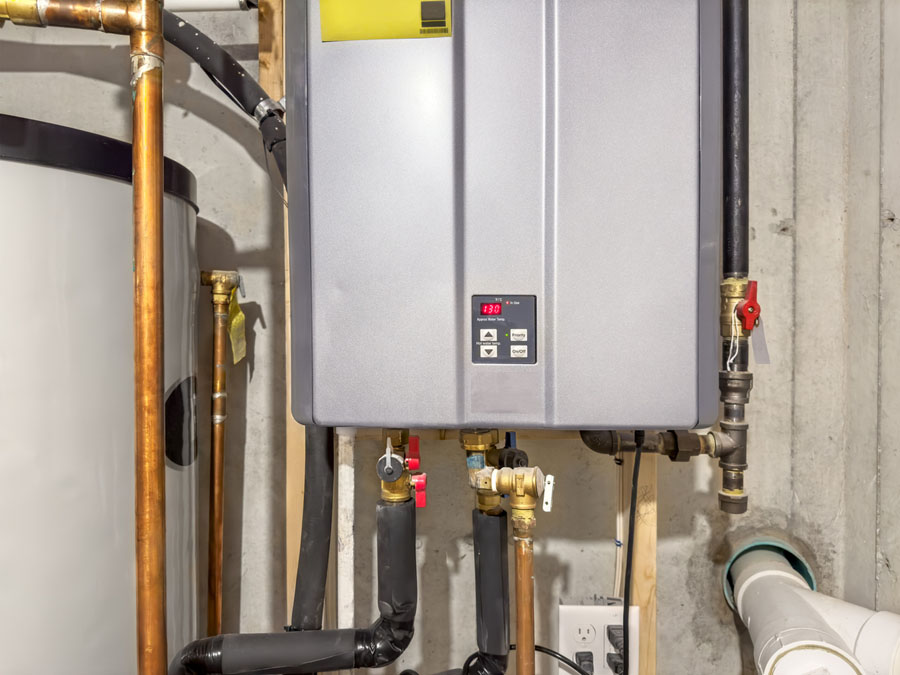

Which Tankless Water Heater Service Do You Need?
Tankless equipment can support different homeowner goals, but the right service depends on whether the system is being added, repaired, or maintained.
Install or Convert to Tankless
This service is for homeowners replacing a storage tank, upgrading an existing tankless unit, or adding a new hot-water system.
The property must be evaluated for flow demand, gas or electrical capacity, venting, drainage, mounting space, and service access before equipment is selected.
Repair a Tankless Water Heater
Repair is appropriate when an existing unit displays error codes, loses heat, fails to ignite, cycles repeatedly, or no longer maintains the expected temperature.
Testing helps determine whether the problem involves a sensor, ignition component, filter, flow condition, control, heat exchanger, venting system, or utility supply.
Maintain and Descale the System
Tankless maintenance helps address mineral buildup, restricted filters, performance changes, and visible connection concerns.
Periodic service can support heat transfer, water flow, and dependable operation, although it cannot prevent every mechanical failure.
How Tankless Hot Water Works in a Jacksonville Home
A storage water heater keeps a tank of water heated and ready for use. A tankless system activates when water begins flowing through the unit and heats it before sending it to the fixture.
That design can work well for homes that want to reduce the space used by a large tank or avoid reheating stored water throughout the day. It may also support longer periods of hot-water use when the equipment is selected correctly.
Tankless does not mean unlimited output or immediate hot water at every fixture.
Each unit has a maximum flow capacity. The amount of hot water it can deliver depends on the number of fixtures running, incoming water temperature, desired output temperature, and the system’s heating power.
For example, a unit may supply one shower without difficulty but struggle when another shower, dishwasher, and washing machine begin operating at the same time. The system must be selected for peak household use rather than average daily consumption.
Jacksonville’s warmer climate may reduce the temperature increase needed during parts of the year, but actual water conditions and fixture demand still need to be measured. Climate alone should not determine equipment size.
Warning Signs Your Tankless Water Heater Needs Repair
The Water Turns Cold in the Middle of Use
A shower that suddenly loses heat may indicate excessive demand, low flow, ignition loss, mineral buildup, or a system shutdown.
If an error code appears at the same time, note the code rather than repeatedly resetting the unit.
Error Codes Keep Returning
Tankless systems monitor ignition, exhaust, temperature, flow, combustion, and other operating conditions.
A code that returns after a reset usually means the underlying issue remains. Professional testing is needed to identify the affected system.
The Unit Does Not Activate at Low Flow
Some tankless systems need a minimum amount of water movement before heating begins.
A restricted inlet filter, partially closed valve, low-flow fixture, weak water pressure, or sensor issue may prevent the unit from activating consistently.
Hot Water Temperature Changes Between Fixtures
The water may remain stable at one faucet but fluctuate when several fixtures are used together.
This can happen when total demand exceeds the unit’s output or when flow, scaling, controls, or fixture mixing components affect performance.
The System Starts and Stops Repeatedly
Frequent cycling may be caused by changing water flow, low demand, sensor trouble, overheating, or unstable ignition.
Repeated starting and stopping can affect comfort and should be inspected when it becomes a regular pattern.
Hot Water Output Has Gradually Weakened
A slow decline in temperature or flow may indicate mineral accumulation, a clogged filter, reduced fuel delivery, or a heating problem.
Gradual changes are easy to overlook but may become more noticeable during periods of high demand.
New Noises, Odors, or Visible Damage Appear
New vibration, clicking, combustion sounds, exhaust odors, corrosion, or moisture around the unit should be evaluated.
Stop using the system and request prompt service when there is a gas odor, scorching, damaged wiring, or visible venting damage.
What Commonly Causes Tankless Performance Problems?
Scale Inside the Heat Exchanger
Minerals carried through the water can collect inside the heat exchanger. As buildup increases, water flow and heat transfer may become less effective.
Professional descaling may be recommended based on equipment use, water conditions, and manufacturer guidance.
Restricted Water Flow
Dirty filters, partially closed valves, restricted plumbing, and low-flow fixtures can interfere with activation.
The unit may appear to have a heating problem when it is not receiving enough flow to remain on.
Ignition or Fuel Problems
Gas tankless systems rely on controlled ignition and a steady fuel supply.
Issues involving burners, flame sensors, gas pressure, valves, or ignition components can cause error codes, delayed startup, or a complete loss of hot water.
Venting and Combustion Concerns
Combustion equipment needs proper airflow and exhaust removal. Blocked, damaged, or incorrectly configured venting may trigger shutdowns and safety codes.
Exterior terminations should also remain clear and accessible for inspection.
Incorrect Sizing or Setup
A functioning unit can still disappoint when it was selected without accounting for simultaneous fixture demand.
This is a design or configuration problem rather than a simple part failure. The solution may involve changing usage patterns, adjusting the setup, adding capacity, or installing different equipment.
What is Required for a Tank-to-Tankless Conversion?
Replacing a storage tank with tankless equipment can involve more than removing one unit and mounting another.
The home may need to support:
- The required gas volume or electrical demand
- Dedicated circuits or compatible wiring
- Approved venting
- Condensate drainage for applicable models
- Adequate water-line size
- A suitable mounting location
- Service valves and maintenance access
- Expected simultaneous fixture flow
- Permit and inspection requirements where applicable
A conversion assessment should identify these requirements before equipment is purchased.
Some homes already have utilities that support the proposed system. Others may require gas, electrical, plumbing, or venting changes that affect the project scope.
Our Tankless Water Heater Service Process
Identify the Service Goal
The first step is determining whether the homeowner is planning a new installation, troubleshooting an existing unit, or scheduling routine maintenance.
For a performance problem, helpful information includes when the issue began, which fixtures are affected, and whether the system displays an error code.
Evaluate the Equipment and Home
The technician reviews the tankless unit, plumbing connections, energy supply, venting, drainage, controls, and service access.
For new installations, the evaluation also considers fixture demand and conversion requirements.
Test Operation
Testing may include:
- Water flow and activation
- Incoming and outgoing temperature
- Ignition or heating response
- Error-code history
- Fuel or electrical supply
- Filters and valves
- Sensors and controls
- Venting and exhaust
- Signs of scale
- Performance at multiple fixtures
The tests are selected according to the unit and reported symptoms.
Present the Appropriate Service Path
After the evaluation, the homeowner receives an explanation of what the system needs.
The recommendation may involve:
- Tankless installation
- Tank-to-tankless conversion
- Component repair
- Descaling
- Filter cleaning
- Control or temperature adjustment
- Venting or connection correction
- System replacement
- Continued use of a storage tank instead
The recommendation should reflect what the property supports rather than assuming tankless is always the best option.
Complete the Approved Work
The approved service is carried out based on the diagnosis or project plan.
Installation work may involve mounting, water connections, energy connections, venting, drainage, and startup. Maintenance may involve flushing, descaling, filter service, and condition checks. Repairs may involve sensors, controls, ignition components, valves, or other serviceable parts.
Check Performance Under Real Demand
The system is operated after service to confirm startup, temperature, flow, and visible connections.
When appropriate, several fixtures may be used to verify how the system responds under realistic household conditions.
What Does Tankless Maintenance Address?
Tankless water heaters do not store a large volume of water, but they still need periodic attention.
A maintenance appointment may involve:
- Inspecting visible water, gas, electrical, and venting connections
- Reviewing system history or stored error codes
- Cleaning accessible inlet filters
- Checking service valves
- Flushing and descaling the heat exchanger when appropriate
- Looking for moisture, corrosion, or exhaust concerns
- Testing startup and water temperature
- Confirming that the unit responds to normal flow
The required maintenance interval can vary based on the model, water conditions, and level of use.
Homeowners should consider service sooner when output declines, error codes recur, flow becomes inconsistent, or the unit takes longer to heat.
Tankless or Storage Tank: Which System Makes More Sense?
Tankless equipment is not automatically the better choice for every household.
Tankless May Fit the Home When:
- Longer periods of hot water use are common
- The household wants on-demand heating
- Floor space is limited
- The property can support the utility requirements
- The selected unit can handle expected simultaneous demand
- The homeowner is prepared for regular maintenance
- Conversion work fits the project budget
A Storage Tank May Be More Practical When:
- The current tank setup remains suitable
- A simpler replacement is preferred
- Stored hot water matches the household routine
- Existing utilities cannot support the desired tankless unit
- The home has short but intense periods of high demand
- A lower-complexity project is preferred
The best comparison considers total installation requirements, peak fixture use, space, maintenance, and equipment capacity.
Problems Tankless Water Heater Service Cannot Resolve
Weak Water Pressure Throughout the Home
A tankless system cannot correct poor incoming pressure, restricted household piping, or a failing pressure regulator.
Insufficient flow may actually make tankless activation less reliable.
Immediate Delivery at Distant Fixtures
The heater may produce hot water quickly, but the water still has to travel through the plumbing.
A bathroom far from the unit may continue to have a wait unless recirculation or plumbing-layout changes are considered.
More Output Than the Unit Is Designed to Provide
Tankless equipment can run continuously within its rated capacity. It cannot maintain the selected temperature when fixture demand exceeds that capacity.
A family in Nocatee may regularly use two showers while laundry is running. A unit selected only according to household size could fall short if simultaneous flow was not calculated.
Water Quality Issues Located Elsewhere
Odor, staining, or discoloration may originate in the incoming supply or household piping.
Servicing the tankless water heater will not correct a problem outside the unit.
Tankless Water Heater Considerations in Jacksonville
Tankless systems may be installed in garages, utility rooms, interior spaces, or approved outdoor locations depending on the model and property.
Each location affects service access, venting, drainage, weather exposure, and long-term inspection.
Near-coastal air may contribute to visible wear on exposed metal components in garage-adjacent or outdoor installations. Exterior vents and connections should remain accessible and free from obstruction.
Jacksonville homes also vary widely in fixture demand. A smaller home with one primary shower has different needs from a newer multi-bathroom property where several fixtures may operate together.
King of Home Solutions provides tankless water heater service in Jacksonville and nearby communities, including:
- St. Johns
- Nocatee
- Ponte Vedra
- World Golf Village
Residential service is available throughout Duval, Clay, and St. Johns counties.
Why Choose King of Home Solutions?
A tankless water heater depends on water flow, energy supply, controls, venting, sensors, and proper sizing. The complete system must be considered during installation, repair, or maintenance.
King of Home Solutions provides:
- Residential tankless water heater service
- Tankless installation and conversion assessments
- Repair and troubleshooting for existing systems
- Professional maintenance and descaling
- Experience with Rinnai tankless equipment
- Evaluation of household flow requirements
- Financing options for qualified installations
- Local service from a Jacksonville-based company
Related Services
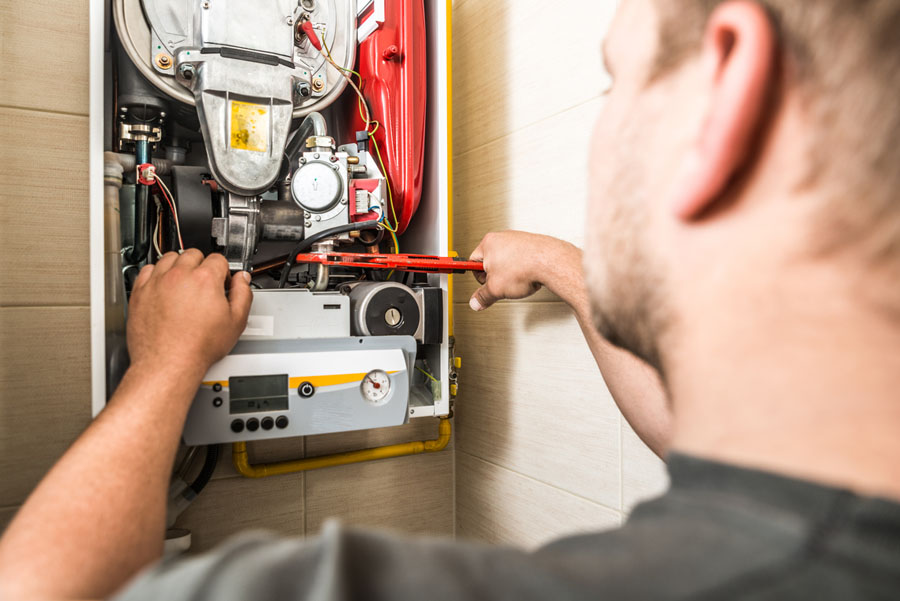
Heating Repair
Quick, Reliable Heating Repairs You Can Count On
A broken heating system can quickly turn your home into an uncomfortable space—especially when the temperatures drop unexpectedly.

Mini Split Installation
Efficient Ductless Installation Designed Around Your Home
Installing a ductless mini split system is one of the most efficient ways to control the temperature in specific areas of your home.
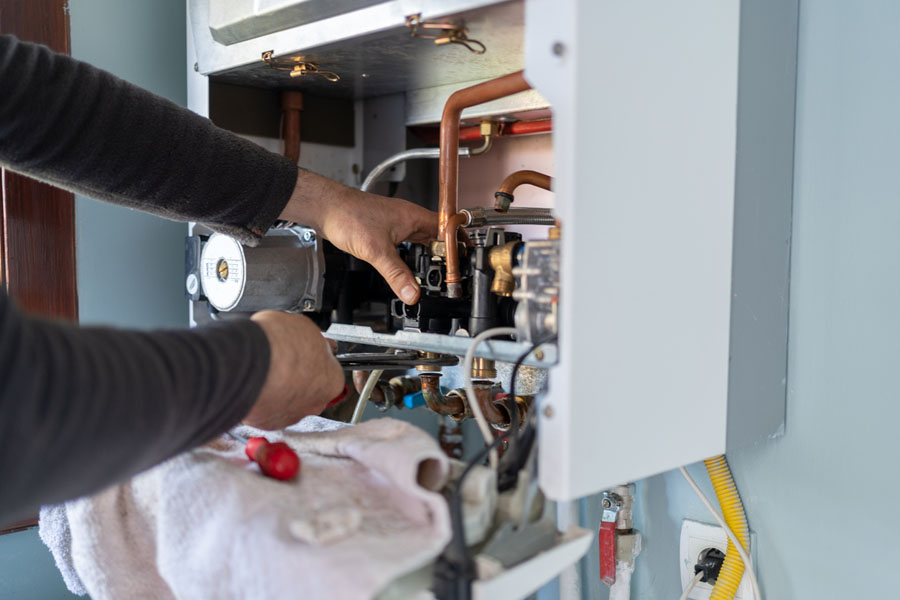
Heating Installation
Expert Heating Installation Services for Year-Round Comfort
Installing a new heating system is one of the most important investments you can make in your home’s comfort and energy efficiency.

Indoor Air Quality
Breathe Easier With Cleaner Air in Every Room
The air inside your home plays a major role in your comfort, health, and overall well-being.

Frequently Asked Questions

Choose the Right Tankless Service for Your Home
A tankless system should match the property, household demand, and available utilities. Existing equipment also needs proper diagnosis and maintenance to continue delivering reliable hot water. King of Home Solutions helps Jacksonville homeowners install new tankless systems, correct performance problems, and maintain equipment already in service. Call 904-865-4663 or schedule online for tankless installation, repair, or maintenance.