Serving The Jacksonville Area



Why Your Water Heater Is Making a Popping Sound: Mineral Sludge Explained
Why Your Water Heater Is Making a Popping Sound: Mineral Sludge Explained
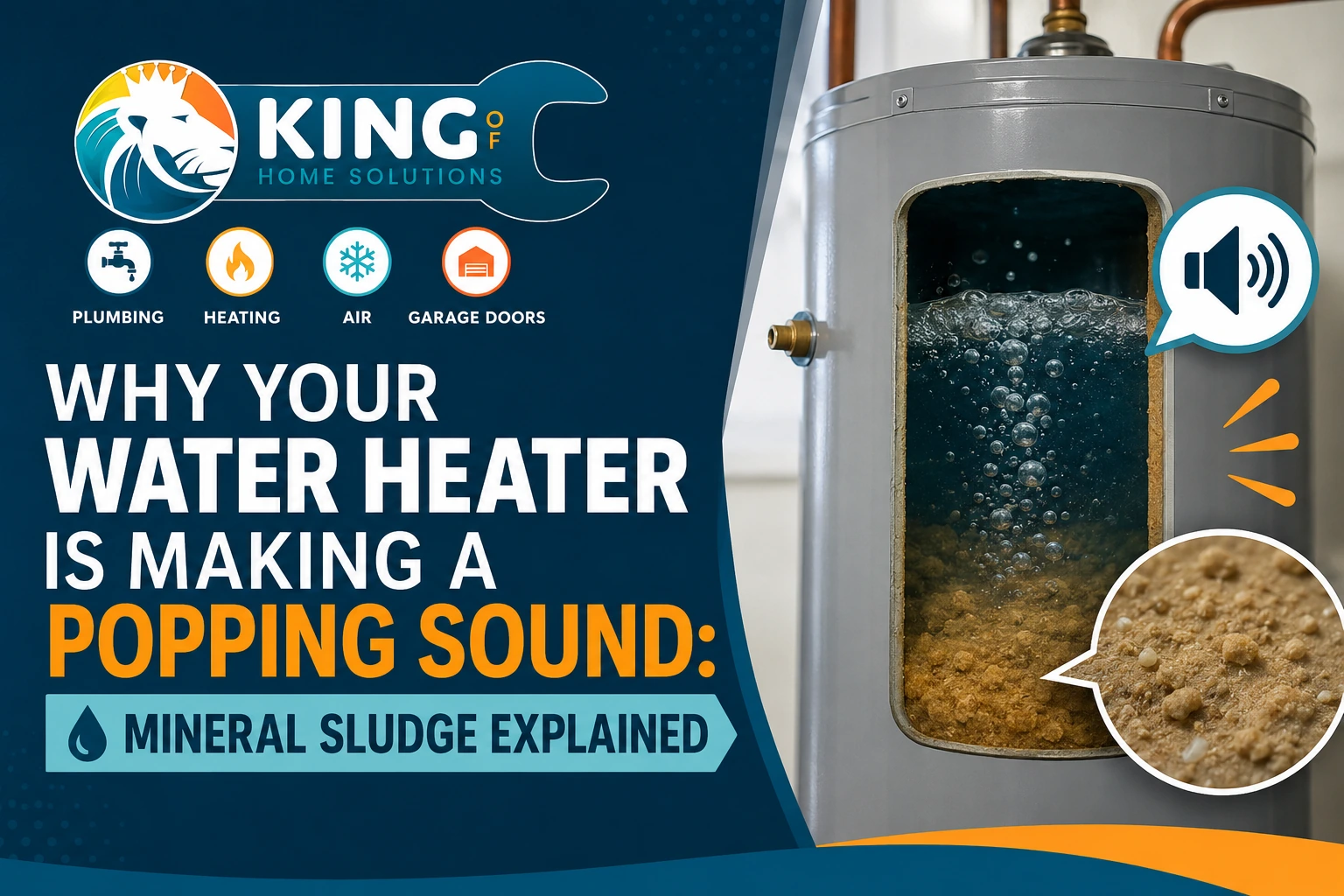
A popping sound from your water heater usually means mineral sediment has collected at the bottom of the tank. As the burner heats the water, trapped steam bubbles push through that layer of sediment, creating popping, cracking, or rumbling noises.
The sound may seem harmless at first, but it can be an early warning that the water heater is working harder than it should. Over time, sediment buildup may reduce efficiency, increase energy use, damage internal components, and shorten the life of the unit.
At King of Home Solutions, we remind homeowners that water heaters are not completely maintenance-free. They may sit quietly in a garage, utility room, closet, or attic, but they still need attention. When a tank begins making unusual sounds, it usually means something inside has changed.
Stop That Popping Before It Gets Worse
Mineral sludge could be stressing your water heater. Call now for professional inspection and reliable service.
What Causes a Water Heater to Make a Popping Sound?
The most common cause is mineral sediment settling at the bottom of the tank.
Water naturally contains dissolved minerals. The amount depends on the local water supply and whether the home has hard water. Calcium, magnesium, sand, rust particles, and other debris may enter the water heater and settle over time.
As the heater operates, those materials can harden into a thick layer. This buildup is often described as sediment, scale, or mineral sludge.
In a gas water heater, the burner is located beneath the tank. Heat must travel through the bottom of the tank and then through the sediment before warming the water above it.
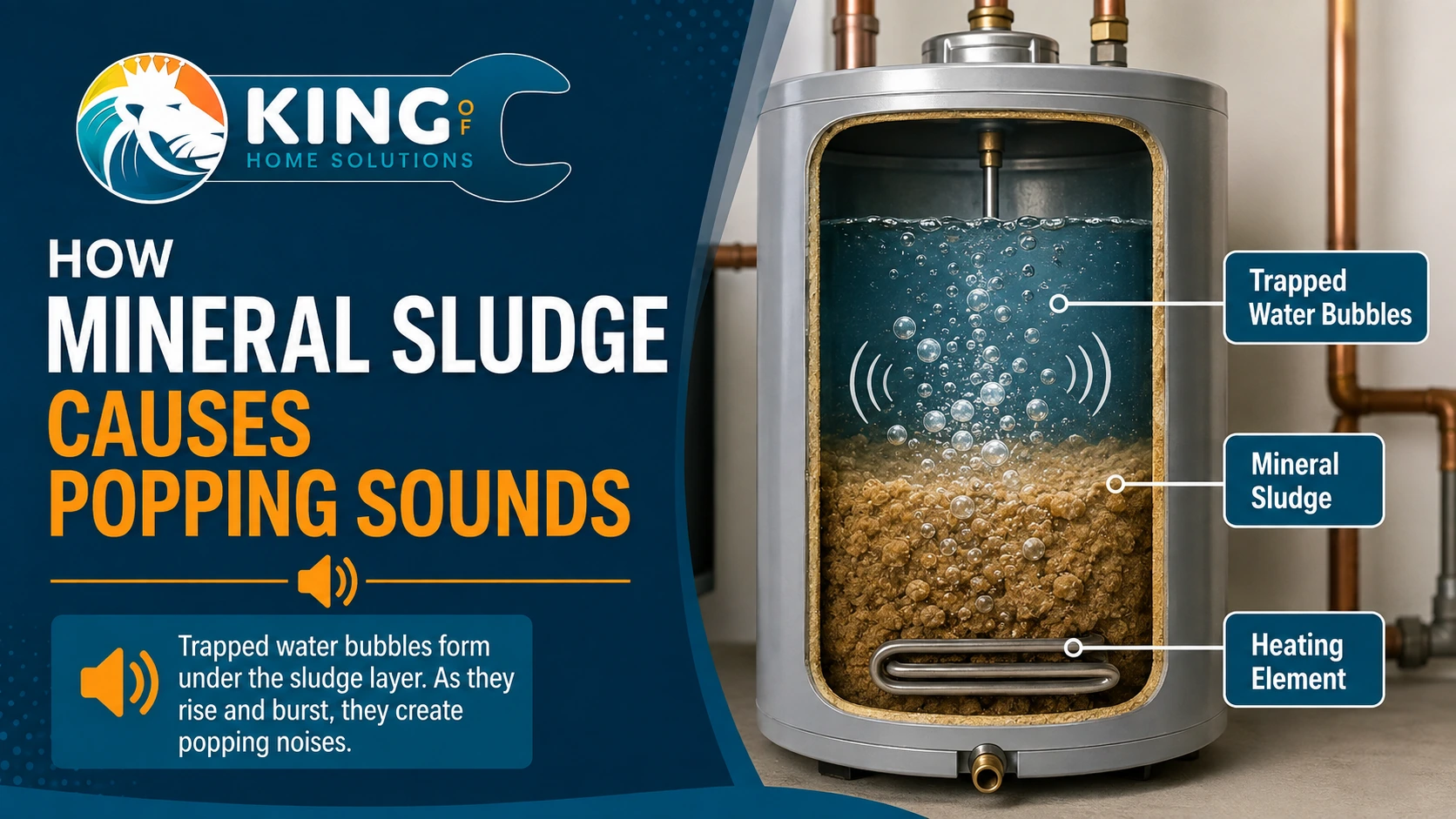
Small pockets of water can become trapped beneath or inside the mineral layer. When the burner heats those pockets, the water turns to steam. The steam eventually pushes through the sediment and releases into the tank, creating the popping sound.
Electric water heaters can also develop sediment problems. Minerals may collect around the heating elements and create crackling or hissing sounds when the elements turn on.
Is a Popping Water Heater Dangerous?
The noise itself does not always mean the water heater is about to fail. However, it should not be ignored.
A popping or rumbling tank often indicates that sediment has been accumulating for some time. That buildup can interfere with normal heating and place additional stress on the system.
Possible problems include:
- Reduced heating efficiency
- Longer recovery times
- Higher energy use
- Overheating near the bottom of the tank
- Premature burner or heating-element wear
- Tank damage
- Leaks
- Water-heater failure
Some tanks may continue operating for years while making noise. Others may develop a leak or breakdown sooner, depending on their age, condition, maintenance history, and the amount of sediment present.
The safest approach is to have the system evaluated before the sound becomes louder, more frequent, or is joined by other warning signs.
Why Mineral Sludge Builds Up
Sediment buildup happens gradually because mineral-containing water enters the tank every day.
Each time someone takes a shower, runs the dishwasher, washes clothes, or uses hot water at a sink, the tank refills. That new water carries another small amount of minerals and debris.
As the water is heated, some of those materials separate and settle.
Over months and years, the sediment layer becomes thicker. It may begin as loose particles that are relatively easy to flush out. Eventually, repeated heating can bake the minerals into a dense, hardened coating at the bottom of the tank.
Several conditions can speed up this process.
Hard Water
Hard water contains elevated levels of calcium and magnesium. These minerals can leave chalky deposits on faucets, showerheads, dishes, and plumbing fixtures.
The same buildup can develop inside the water heater. Homes with hard water may require more frequent maintenance than homes with softer water.
High Water-Heater Temperature
Higher temperatures can encourage minerals to separate from the water more quickly. A water heater set unnecessarily high may experience faster scale buildup.
Very hot water can also increase the risk of scalding. The thermostat should be set at a safe, practical temperature for the household.
Lack of Tank Flushing
Many traditional tank water heaters benefit from periodic flushing. If the tank has never been drained or maintained, sediment may remain inside for years.
By the time the popping becomes noticeable, the buildup may already be significant.
Aging Plumbing
Older pipes may release rust flakes, corrosion, or small amounts of debris into the water supply. These particles can collect at the bottom of the water heater along with minerals.
Well Water
Private well systems may contain sand, silt, iron, or other materials, depending on the well and filtration setup. These particles may settle inside the tank and contribute to sludge buildup.
Other Noises a Water Heater May Make
Not every water-heater noise has the same cause. The type of sound can provide useful clues.
Rumbling
A deep rumbling noise is often associated with heavy sediment buildup. Water may move unevenly through the mineral layer as the tank heats.
Crackling
Crackling is common in electric water heaters when sediment surrounds the lower heating element. It may also occur as water and steam move through mineral deposits.
Hissing
Hissing may happen when water touches a hot surface. It can be related to sediment, condensation, or a small leak near the burner area.
Ticking
Ticking may come from heat traps, check valves, pipe expansion, or pressure changes. It is not always a sign of a serious problem.
Banging or Hammering
A loud banging sound in the plumbing may be caused by water hammer rather than the water heater itself. Water hammer happens when fast-moving water suddenly stops or changes direction.
Sizzling
Sizzling near a gas water heater may indicate water dripping onto the burner. It should be checked promptly because it may point to a leak or condensation problem.
Because different issues can produce similar sounds, a professional inspection is often the best way to identify the cause.
Can Flushing the Tank Stop the Popping?
Flushing may help when the sediment is still loose enough to drain from the tank.
During a proper flush, the water heater is turned off, allowed to cool, and connected to a hose through the drain valve. Water is then released from the tank to carry sediment out.
However, flushing is not always a complete solution.
If the tank has gone many years without maintenance, the sediment may have hardened into a solid layer. Water may drain from the tank while much of the scale remains behind.
The drain valve may also be clogged with debris. On an older water heater, operating a valve that has not been used in years may sometimes lead to leakage or valve failure.
There is another concern: sediment may be covering small areas of corrosion inside an aging tank. Flushing can disturb that material and expose an existing weak point.
For these reasons, homeowners should be cautious about flushing an older, neglected tank without first understanding its condition.
At King of Home Solutions, we consider the water heater’s age, maintenance history, condition, and symptoms before recommending flushing. In some cases, maintenance is appropriate. In others, replacement may offer better long-term value.
How Sediment Affects Water-Heater Efficiency
A clean water heater transfers heat directly into the water. A sediment-filled tank must transfer heat through the mineral layer first.
That extra barrier can make the system work harder.
A gas burner may need to run longer to bring the tank up to temperature. An electric heating element may stay energized longer or operate under greater stress.
Homeowners may notice:
- Hot water taking longer to recover
- Water not getting as hot as it once did
- Higher gas or electric bills
- A shorter supply of hot water
- More frequent heating cycles
- Uneven water temperatures
Efficiency loss often happens gradually, which makes it easy to overlook. The popping sound may be the first obvious sign that the system’s performance has changed.
Can Mineral Sludge Damage the Tank?
Heavy sediment buildup can contribute to tank damage.
The bottom of the tank is designed to transfer heat. When a thick mineral layer blocks that transfer, some metal surfaces may become hotter than intended.
Repeated overheating can place stress on the tank lining and metal. Sediment may also trap moisture and contribute to conditions that encourage corrosion.
If the tank is already old, that added stress may increase the likelihood of failure.
A leaking storage tank usually cannot be repaired. Once the main tank has rusted through, the water heater generally needs to be replaced.
That is why unusual sounds are worth investigating early.

Is a Tankless Water Heater Worth It for a Family of 4 in Jacksonville?
If you’re a Jacksonville homeowner staring at a water heater replacement quote and wondering whether a tankless water heater is…
Read The BlogSigns the Problem May Be Getting Worse
Popping alone deserves attention, but additional symptoms may suggest a more advanced problem.
Watch for:
- Rust-colored hot water
- Water pooling around the tank
- Moisture near the drain valve
- A metallic smell
- Reduced hot-water volume
- Fluctuating temperatures
- Repeated burner shutdowns
- Visible corrosion
- A heater that runs constantly
- Rising energy costs
- Water taking much longer to heat
If water is leaking from the tank, turn off the water supply and energy source only if it is safe to do so, then call for professional help.
Even a small leak can quickly cause significant water damage.
Should You Repair or Replace the Water Heater?
The answer depends on the condition of the unit.
Flushing or servicing may be reasonable when:
- The water heater is relatively young
- The tank is not leaking
- The sediment buildup appears manageable
- The unit still heats effectively
- The main components are in good condition
- Maintenance has been performed regularly
Replacement may make more sense when:
- The tank is nearing the end of its expected service life
- The popping is loud or persistent
- The tank is leaking
- Corrosion is visible
- Hot-water performance has declined
- Repairs are becoming frequent
- Energy use has increased
- The system no longer meets the household’s needs
A repair should provide reasonable value. Spending heavily on an aging tank with corrosion and severe sediment buildup may only delay replacement.
We help homeowners compare both options based on safety, cost, performance, and expected remaining service life.
How to Reduce Future Sediment Buildup
Mineral sediment cannot always be prevented completely, but regular care may slow it down.
Schedule Routine Maintenance
Periodic inspection and flushing can remove loose sediment before it hardens. The appropriate maintenance schedule depends on water quality, water-heater type, and household use.
Check the Temperature Setting
Keeping the thermostat at a reasonable setting may reduce mineral separation and energy use. It can also help lower the risk of scalding.
Address Hard Water
A water softener or treatment system may reduce mineral buildup throughout the plumbing system. The right solution depends on the home’s water quality.
Replace the Anode Rod When Needed
Traditional tank water heaters contain an anode rod designed to attract corrosive elements and help protect the tank.
Once the rod is depleted, the tank may become more vulnerable to corrosion.
Inspect the Drain Valve
A functioning drain valve makes maintenance easier. If the valve becomes clogged, damaged, or corroded, it may require professional attention.
Do Not Ignore Small Changes
A little noise, slightly longer heating times, or mild temperature fluctuations may be early signs of a developing problem.
Early service is often easier and less disruptive than an emergency replacement.
Why Professional Diagnosis Matters
It is tempting to assume that every popping water heater simply needs to be flushed. Sometimes that is true, but not always.
A trained technician can check:
- The age and condition of the water heater
- Whether the tank is leaking
- The burner or heating elements
- The thermostat
- The temperature and pressure relief valve
- The anode rod
- The drain valve
- Visible corrosion
- Venting on gas models
- Electrical connections on electric models
- Hot-water output
- Signs of excessive pressure
This broader inspection helps determine whether sediment is the only issue or part of a larger problem.
A water heater involves electricity or gas, high temperatures, pressure, and a large volume of water. Incorrect maintenance can create safety risks or lead to water damage.
Professional service gives homeowners a clearer understanding of the problem before they decide how to proceed.
Quiet the Popping With Help From King of Home Solutions
A popping water heater is usually not making random noise. It is often signaling that mineral sludge has collected inside the tank and is interfering with the heating process.
Ignoring the sound may allow efficiency loss, internal stress, and corrosion to continue. Depending on the age and condition of the system, the right solution may involve flushing, repair, routine maintenance, water treatment, or replacement.
King of Home Solutions helps homeowners get clear answers without guessing. We inspect the water heater, identify the likely source of the noise, explain the available options, and provide pricing based on the job rather than an open-ended hourly rate.
If your water heater is popping, rumbling, crackling, leaking, or struggling to keep up with your household, contact King of Home Solutions. We can help determine whether the tank needs maintenance, repair, or replacement so you can restore dependable hot water and reduce the risk of a more disruptive breakdown.
Water Heater Popping and Rumbling?
Don’t ignore unusual tank noises. Get expert help to find the cause and protect your water heater.