Serving The Jacksonville Area



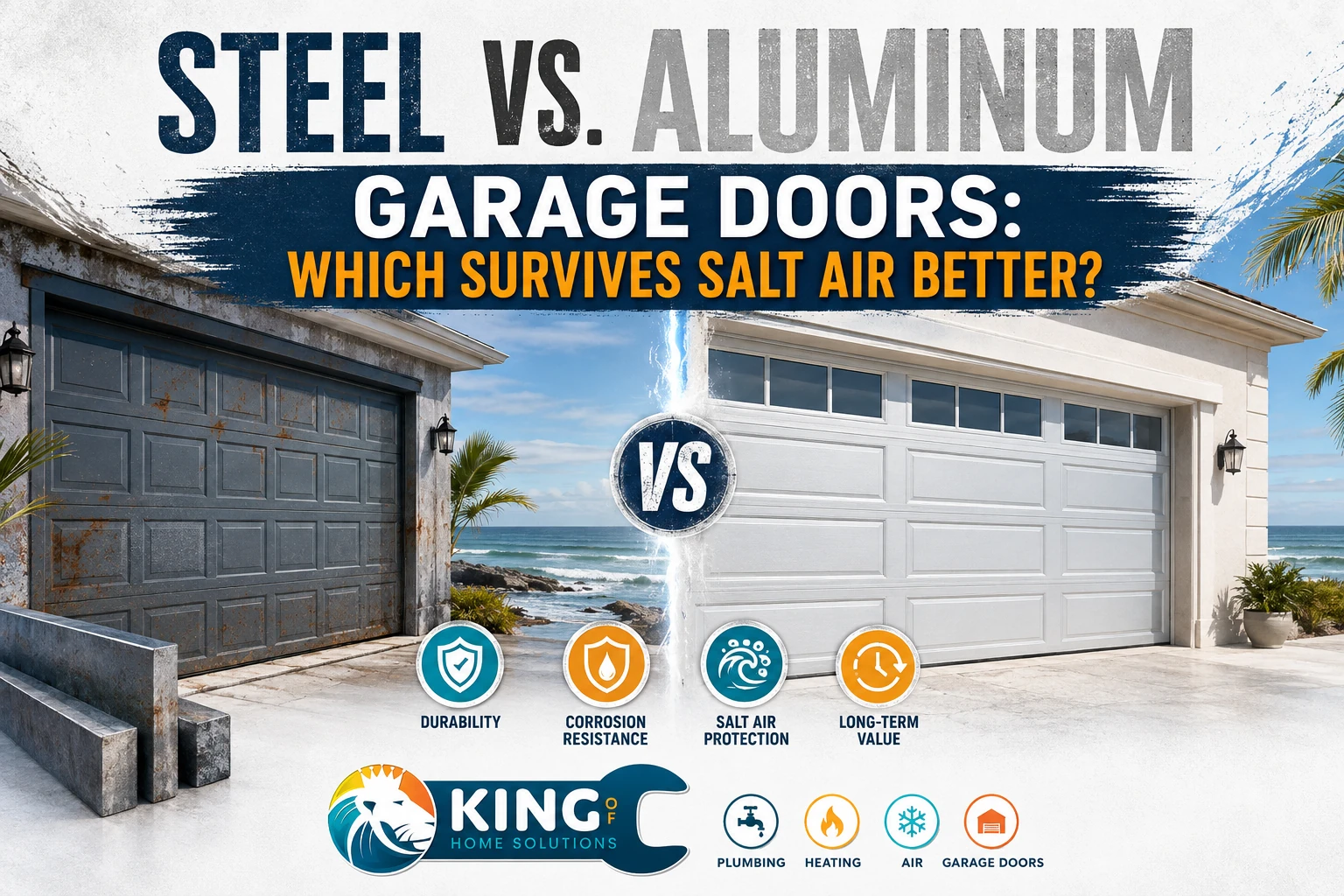
Steel vs. Aluminum Garage Doors: Which Survives Salt Air Better?
Steel vs. Aluminum Garage Doors: Which Survives Salt Air Better?
For Florida homeowners, especially those near the coast, salt air can shorten the life of almost any exposed metal surface. Garage doors are no exception. Moisture, humidity, wind-driven salt, and intense sunlight can all contribute to corrosion, fading, hardware damage, and reduced performance.
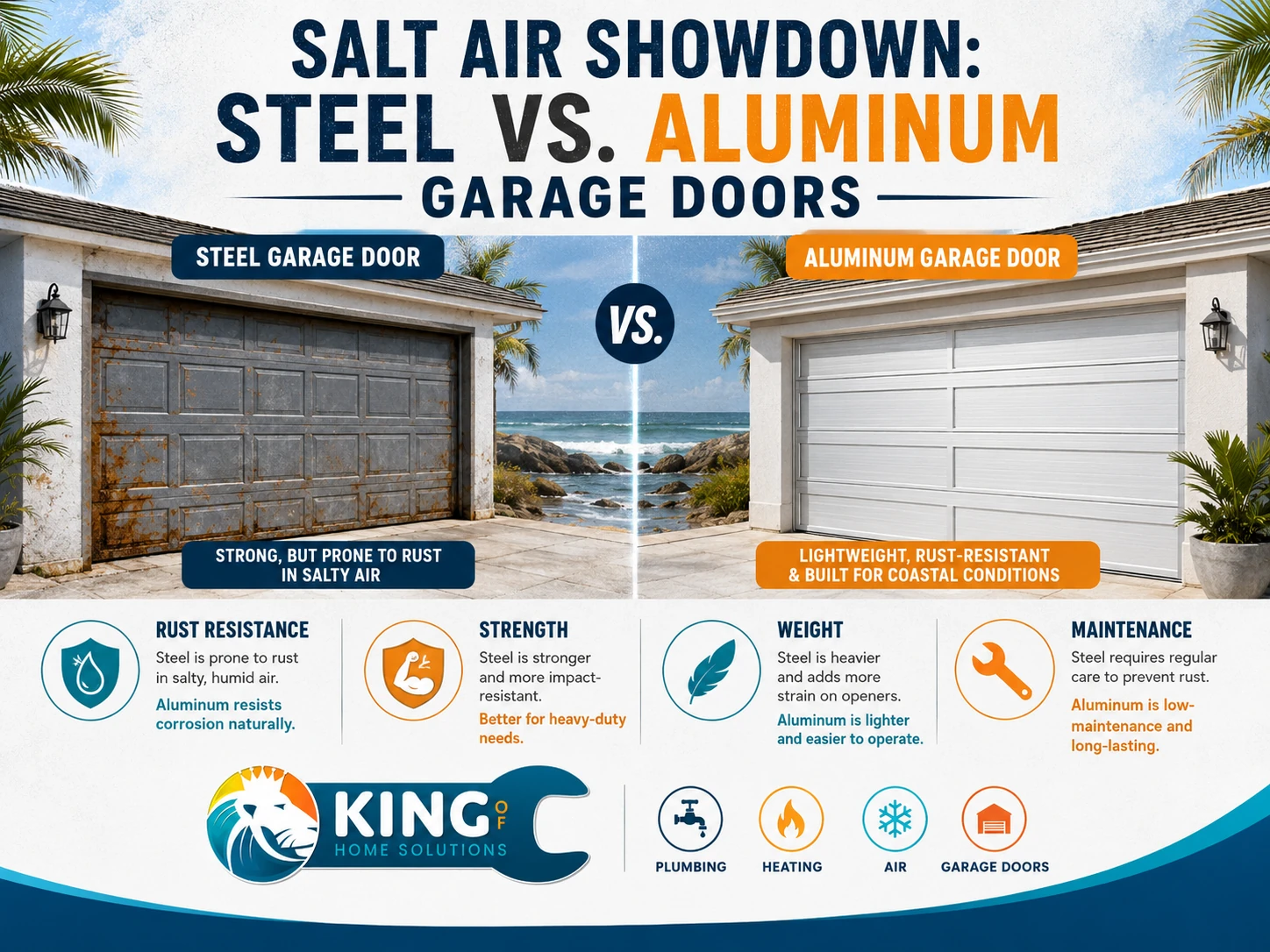
When comparing steel and aluminum garage doors, aluminum generally resists rust better because it does not contain iron. Steel is often stronger and more impact-resistant, but it depends on a protective finish and regular maintenance to resist corrosion in salty environments.
That does not automatically make aluminum the right choice for every Jacksonville home. The best option depends on the property’s distance from the coast, wind exposure, door size, design preferences, budget, insulation needs, and maintenance expectations.
At King of Home Solutions, we help homeowners look beyond appearance. A garage door is one of the largest moving parts of a home, so material choice can affect safety, durability, energy efficiency, and long-term repair costs.
Salt Air Tough on Garage Doors?
Choose the right material for better durability and lasting protection. Call now for expert garage door service.
Why Salt Air Damages Garage Doors
Salt air contains tiny particles of sodium chloride carried inland by coastal winds. These particles can settle on garage door panels, tracks, hinges, springs, fasteners, and other metal components.
Salt alone does not always cause immediate damage. The problem becomes more serious when it combines with moisture and oxygen. Florida’s high humidity keeps surfaces damp, while frequent rain and warm temperatures create conditions that accelerate corrosion.
Garage doors are especially vulnerable because they are exposed to outdoor air every day. Even when the door is closed, salty air can enter around the edges, collect in panel seams, and settle on interior hardware.
The risk may be greater for homes:
- Near the Atlantic Ocean
- Close to the Intracoastal Waterway
- Near rivers, marshes, or canals
- Exposed to strong coastal winds
- Without nearby buildings or trees to block salt spray
- With garages facing prevailing winds
- In areas that experience frequent storms
Salt damage usually begins gradually. Homeowners may first notice chalky residue, small rust spots, bubbling paint, dull finishes, squeaking hardware, or discoloration around hinges and fasteners.
Once corrosion penetrates a protective coating, it may continue spreading beneath the surface.
How Steel Garage Doors Handle Salt Air
Steel is one of the most common garage door materials because it is strong, widely available, and suitable for many architectural styles.
A steel garage door is typically made from galvanized steel panels covered with paint, powder coating, or another protective finish. Some models use multiple steel layers with insulation between them.
The protective coating is especially important in coastal areas. Bare steel contains iron, which reacts with moisture and oxygen to form rust. Salt accelerates that process.
When the finish remains intact, steel can perform well. Problems usually begin when the coating is scratched, chipped, worn, or damaged by impact.
Once the underlying metal is exposed, corrosion can begin.
Advantages of Steel Garage Doors
Steel offers several important benefits for Florida homeowners.
Greater Strength
Steel is generally stronger than aluminum. It resists bending and can provide better durability against everyday impact.
This may matter in households with children, bicycles, lawn equipment, sports gear, or busy garages where accidental contact is more likely.
Wind-Resistant Options
Many steel garage doors are available with reinforced construction designed for high-wind areas. Florida homeowners may need garage doors that meet applicable building and wind-load requirements.
The material itself is not the only factor, but steel is commonly used in reinforced garage door systems.
Better Dent Resistance
Steel can still dent, but thicker steel panels are usually more resistant to minor impacts than lightweight aluminum.
Performance depends partly on steel gauge. Lower-gauge steel is thicker and generally stronger than higher-gauge steel.
Insulation Choices
Steel doors are available in single-layer, double-layer, and triple-layer designs. Insulated models may include polystyrene or polyurethane between the panels.
Insulation can help reduce heat transfer into the garage, improve panel strength, and reduce outside noise.
Wide Design Selection
Steel garage doors come in many colors, panel patterns, window styles, and decorative finishes. They can also imitate wood without requiring the same level of maintenance as natural wood.
Competitive Pricing
Basic steel doors are often more affordable than premium aluminum, glass, or custom options.
These advantages make steel a practical choice, but coastal maintenance cannot be ignored.
Disadvantages of Steel in Coastal Environments
The main weakness of steel is its vulnerability to rust.
A small scratch from a ladder, bicycle, tool, or windblown object can expose the metal. Salt and moisture may then work beneath the coating.
Rust often begins around:
- Bottom panel edges
- Panel seams
- Hinges
- Fasteners
- Handle openings
- Window frames
- Scratches
- Dents
- Areas where paint has bubbled
- Locations where water collects
The bottom section is particularly vulnerable because it is closest to wet pavement, driveway runoff, and windblown debris.
Rust may begin as a cosmetic issue, but it can eventually weaken the panel. Severe corrosion may create holes, rough edges, and structural damage.
Steel garage doors near the coast usually require more frequent washing, inspection, touch-up painting, and protective care than doors in drier inland locations.
How Aluminum Garage Doors Handle Salt Air
Aluminum does not rust in the same way steel does because it does not contain iron.
When aluminum is exposed to oxygen, it forms a thin oxide layer on the surface. This layer helps protect the underlying metal from further damage.
That natural corrosion resistance gives aluminum an advantage in salty, humid environments.
However, aluminum is not immune to coastal damage. Salt can still cause oxidation, pitting, staining, and finish deterioration. Galvanic corrosion may also occur when aluminum contacts certain other metals in the presence of moisture.
The key difference is that aluminum does not develop the familiar orange-brown rust associated with steel.
Advantages of Aluminum Garage Doors
Aluminum can be a strong choice for coastal properties for several reasons.
Strong Rust Resistance
The main advantage is that aluminum does not rust like steel. This makes it appealing for homes exposed to salt air, high humidity, and frequent rain.
Lightweight Construction
Aluminum weighs less than steel. A lighter door may place less strain on springs, tracks, rollers, and the garage door opener.
This does not eliminate wear, but it can reduce the load on some operating components.
Modern Appearance
Aluminum is commonly used for contemporary garage doors, especially models with large glass panels and clean frames.
It can complement modern, coastal, and minimalist home designs.
Lower Corrosion Maintenance
Aluminum still needs cleaning and inspection, but homeowners do not have to manage iron rust in the same way they would with steel.
Moisture Resistance
Aluminum generally performs well in humid environments and is less likely to experience severe panel corrosion from ordinary moisture exposure.
Recyclability
Aluminum is highly recyclable, which may appeal to homeowners who prioritize material sustainability.
These benefits are significant, but aluminum also has limitations.
Disadvantages of Aluminum Garage Doors
Aluminum is generally softer than steel.
Easier to Dent
Lightweight aluminum panels may dent more easily from balls, tools, bicycles, branches, or minor impacts.
Dents may be especially noticeable on smooth, modern doors.
Greater Risk of Bending
A thin aluminum panel may flex or bend under force. Higher-quality doors often use stronger frames, thicker material, or reinforced construction to improve durability.
Higher Cost for Premium Designs
Basic aluminum doors may be reasonably priced, but architectural aluminum-and-glass doors can cost considerably more than standard steel models.
Less Insulation in Some Models
Many aluminum frame-and-glass doors prioritize appearance over insulation. Unless the system includes insulated panels or thermal breaks, the garage may gain more heat.
Oxidation and Pitting
Although aluminum does not rust, salt can still damage the surface. White, chalky oxidation may appear, and pitting can develop if salt deposits remain for long periods.
Galvanic Corrosion
When aluminum touches steel, copper, or certain other metals in a moist, salty environment, an electrochemical reaction may accelerate corrosion.
Proper fasteners, coatings, and material separation are important during installation.
Which Material Survives Salt Air Better?
Aluminum generally performs better when corrosion resistance is the main concern.
Because it does not rust, it is less likely to develop spreading orange corrosion after the finish is scratched. This can make it a practical option for homes close to the ocean or exposed to strong coastal winds.
However, long-term durability involves more than rust resistance.
Steel may be the better overall choice when a homeowner needs:
- Greater impact resistance
- A stronger-feeling panel
- More insulation options
- A wider selection of affordable styles
- Reinforced wind-load designs
- Less risk of visible dents
A high-quality galvanized steel door with a durable factory finish can perform well in coastal conditions when properly maintained. A low-quality aluminum door may resist rust but still become dented, loose, or damaged by repeated impact.
Material quality, coating, construction, installation, and maintenance matter just as much as the base material.
Does Galvanized Steel Prevent Rust?
Galvanizing adds a protective zinc coating to steel. Zinc helps shield the underlying metal from moisture and corrosion.
Most quality steel garage doors use galvanized steel, but the level of protection can vary. A thicker or higher-quality coating may provide better corrosion resistance.
Galvanized steel is not rust-proof.
If the surface is deeply scratched, cut, or otherwise damaged, the underlying steel may become exposed. Salt can then begin attacking the metal.
Edges, drilled holes, seams, and fastener locations may be more vulnerable than broad, flat panel surfaces.
A painted or powder-coated galvanized door provides multiple layers of protection, but it still needs regular inspection.

Why Your Garage Door Is “Shaking” When It Opens: Could Sand in the Tracks Be the Problem?
You press the garage door opener. Instead of rising smoothly, the door jerks. It rattles through the first few feet…
Read The BlogWhich Material Handles Jacksonville Weather Better?
Jacksonville weather presents several challenges beyond salt air.
Garage doors may face:
- High humidity
- Strong sunlight
- Heavy rain
- Tropical storms
- High winds
- Heat
- Sudden temperature changes
- Airborne sand and debris
Steel often provides stronger structural performance, especially when installed as part of a properly rated wind-resistant system.
Aluminum provides better natural rust resistance, but lightweight models may not offer the same strength unless they are specifically engineered and reinforced.
Homeowners should confirm whether a garage door meets applicable wind-load and building requirements.
Choosing aluminum does not automatically mean choosing a weak door, and choosing steel does not automatically mean the door is storm-rated.
The entire assembly matters, including:
- Panel construction
- Struts
- Tracks
- Rollers
- Hinges
- Brackets
- Fasteners
- Anchoring
- Door size
- Installation quality
Which Door Requires More Maintenance?
Steel usually requires more corrosion-focused maintenance in coastal areas.
Homeowners should inspect painted surfaces for scratches, bubbling, rust, and worn areas. Damage should be cleaned and touched up before corrosion spreads.
Aluminum requires less rust prevention, but it still needs care. Salt deposits can stain the finish, damage hardware, and cause surface oxidation.
Both materials benefit from regular washing.
A simple maintenance routine may include:
- Rinse the exterior with fresh water
- Wash the panels with mild soap and a soft cloth or sponge
- Rinse away all soap and salt residue
- Dry visible hardware where practical
- Inspect panel edges, seams, and fasteners
- Check for scratches, chips, oxidation, or rust
- Lubricate approved moving parts
- Schedule professional service when damage appears
Homeowners near the coast may need to wash the door more often, especially after storms or periods of strong onshore wind.
Avoid harsh chemicals, abrasive pads, and aggressive pressure washing that may damage the finish or force water into panel seams.
What About the Garage Door Hardware?
Even when the door panels are aluminum, the springs, hinges, tracks, cables, brackets, and fasteners may contain steel.
This means an aluminum garage door is not a completely rust-free system.
The panels may hold up well while the operating hardware begins to corrode. Springs are especially important because they operate under high tension and can weaken as rust develops.
Homeowners should inspect the complete system, not just the visible face of the door.
Coastal-rated hardware, stainless steel components, protective coatings, and corrosion-resistant fasteners may improve performance. Availability depends on the door design and manufacturer.
Professional maintenance should include the springs, cables, rollers, tracks, hinges, brackets, opener, seals, and safety features.
Is Steel or Aluminum More Energy Efficient?
The material alone does not determine energy efficiency. Insulation and door construction are more important.
An insulated steel door often performs better than a basic uninsulated aluminum door. Steel models are widely available with foam-filled cores that improve thermal resistance and panel strength.
Aluminum doors can also be insulated, but many modern aluminum-and-glass designs have lower insulation values.
For Jacksonville homeowners, insulation may help:
- Reduce heat entering the garage
- Make rooms above or beside the garage more comfortable
- Reduce strain on nearby cooling systems
- Protect stored items from extreme temperatures
- Reduce outside noise
If the garage is attached to the home, used as a workshop, or located beneath living space, insulation may be an important consideration.
Which Material Is Better for Hurricane-Prone Areas?
The answer depends on the specific door rating rather than the material alone.
Both steel and aluminum garage doors can be engineered for high-wind conditions. A properly reinforced aluminum door may outperform a standard steel door that lacks wind bracing.
Garage door openings are large, and failure during a severe storm can expose the home to pressure changes and wind-driven rain.
Homeowners should verify that the selected door and installation meet the required wind-load specifications for the property.
Do not assume that a thick-looking door is automatically rated for severe weather. Ask about the product’s design pressure, reinforcement, anchoring, and installation requirements.
How Long Can Steel and Aluminum Garage Doors Last?
A well-maintained garage door can last for many years, but coastal exposure may reduce the lifespan of both panels and hardware.
Steel doors may last a long time when the protective coating remains intact and rust is addressed early. Neglected corrosion can significantly shorten their useful life.
Aluminum doors may resist corrosion longer, but they can still develop dents, finish wear, loose framing, damaged glass, or oxidized hardware.
Factors that affect lifespan include:
- Distance from saltwater
- Wind direction
- Maintenance frequency
- Door quality
- Finish quality
- Hardware materials
- Installation quality
- Daily use
- Storm exposure
- Accidental impact
- Drainage around the garage
There is no single lifespan that applies to every door. Condition matters more than age alone.
Steel or Aluminum: Which Should You Choose?
Aluminum may be the better option when:
- The home is very close to saltwater
- Rust resistance is the top priority
- The homeowner prefers a modern design
- The door will be cleaned regularly
- Minor dent risk is acceptable
- A lightweight system is preferred
Steel may be the better option when:
- Strength and impact resistance matter most
- The homeowner wants more insulation options
- A traditional design is preferred
- Budget is a major consideration
- A reinforced wind-rated model is needed
- The homeowner is prepared to maintain the finish
For many Jacksonville homeowners, a high-quality, properly coated steel door offers a practical balance of strength, style, insulation, and price.
For homes with intense salt exposure, aluminum may provide better long-term corrosion resistance.
Choose the Right Coastal Garage Door With King of Home Solutions
Steel and aluminum garage doors can both perform well in Florida, but they handle salt air differently.
Aluminum offers better natural rust resistance, while steel generally provides greater strength, more insulation options, and better dent resistance.
The best choice depends on the home’s location, level of coastal exposure, maintenance expectations, and the performance features that matter most.
At King of Home Solutions, we help Jacksonville homeowners compare garage door materials, construction styles, insulation levels, hardware options, and wind-resistant features. We evaluate the complete system so the recommendation fits the home rather than relying on a simple material comparison.
If your current garage door is rusting, dented, noisy, difficult to operate, or showing signs of coastal wear, contact King of Home Solutions. Our team can inspect the door, explain your repair or replacement options, and help you choose a system suited to Jacksonville’s heat, humidity, storms, and salt air.
Protect Your Garage Door From Salt Air
Steel or aluminum? Get professional guidance and dependable installation for coastal conditions.