Serving The Jacksonville Area


Why “Sandy Pipes” Cause So Many Slow-Drain Problems in Southside Jacksonville
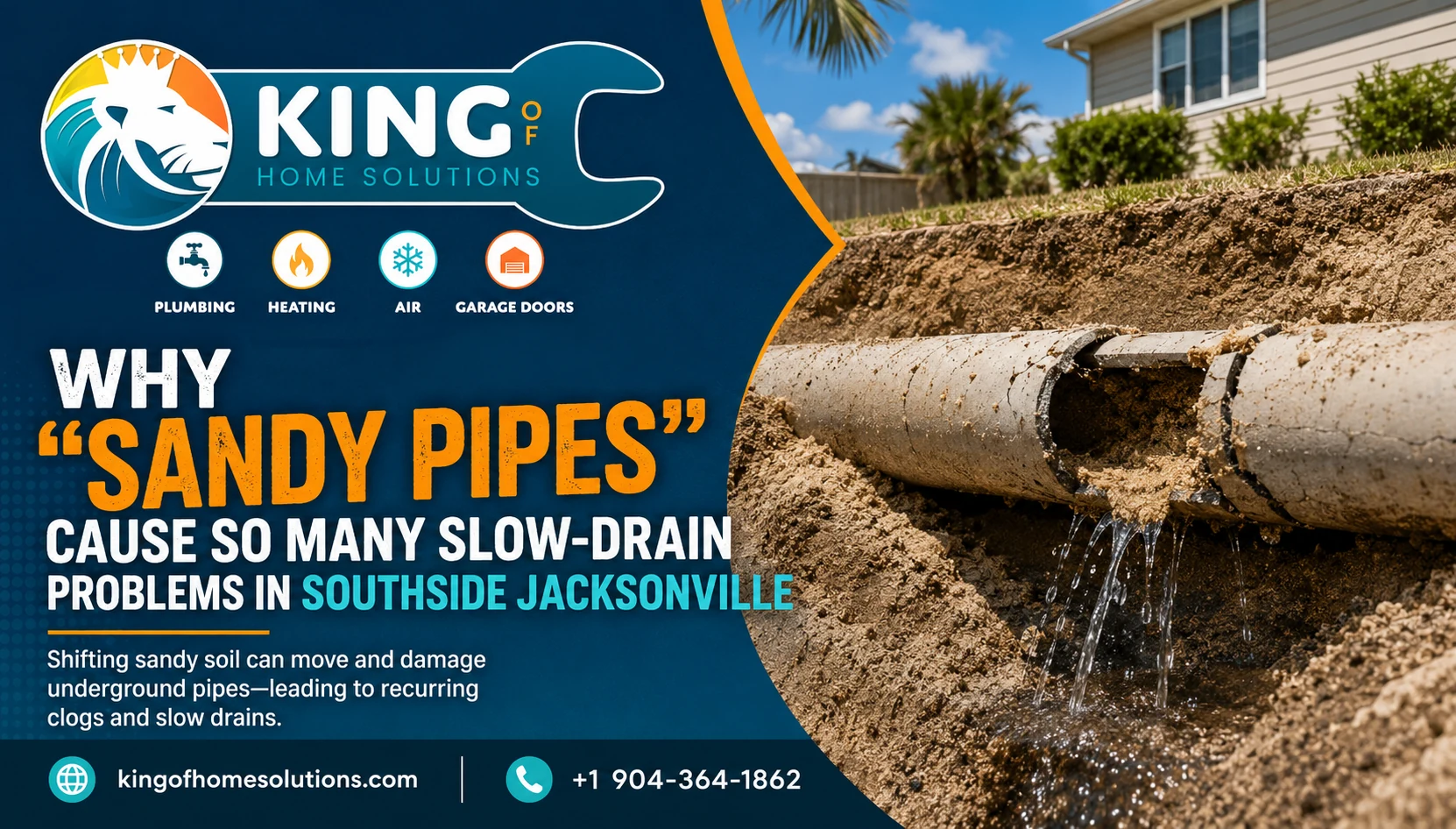
Why “Sandy Pipes” Cause So Many Slow-Drain Problems in Southside Jacksonville
You clear the drain.
It runs better for a while.
Then, a few weeks or months later, it starts slowing down again.
For homeowners in Southside Jacksonville, that pattern can be especially frustrating because the problem isn’t always a wad of hair, grease, or something somebody accidentally sent down the drain.
Sometimes, the real problem is under the yard.
Jacksonville sits on predominantly sandy and sandy-clay subsurface materials. USGS investigations in Duval County document substantial layers of sand, clayey sand, and sandy clay beneath the area.
That matters because buried drain and sewer lines depend on the soil around them for support.
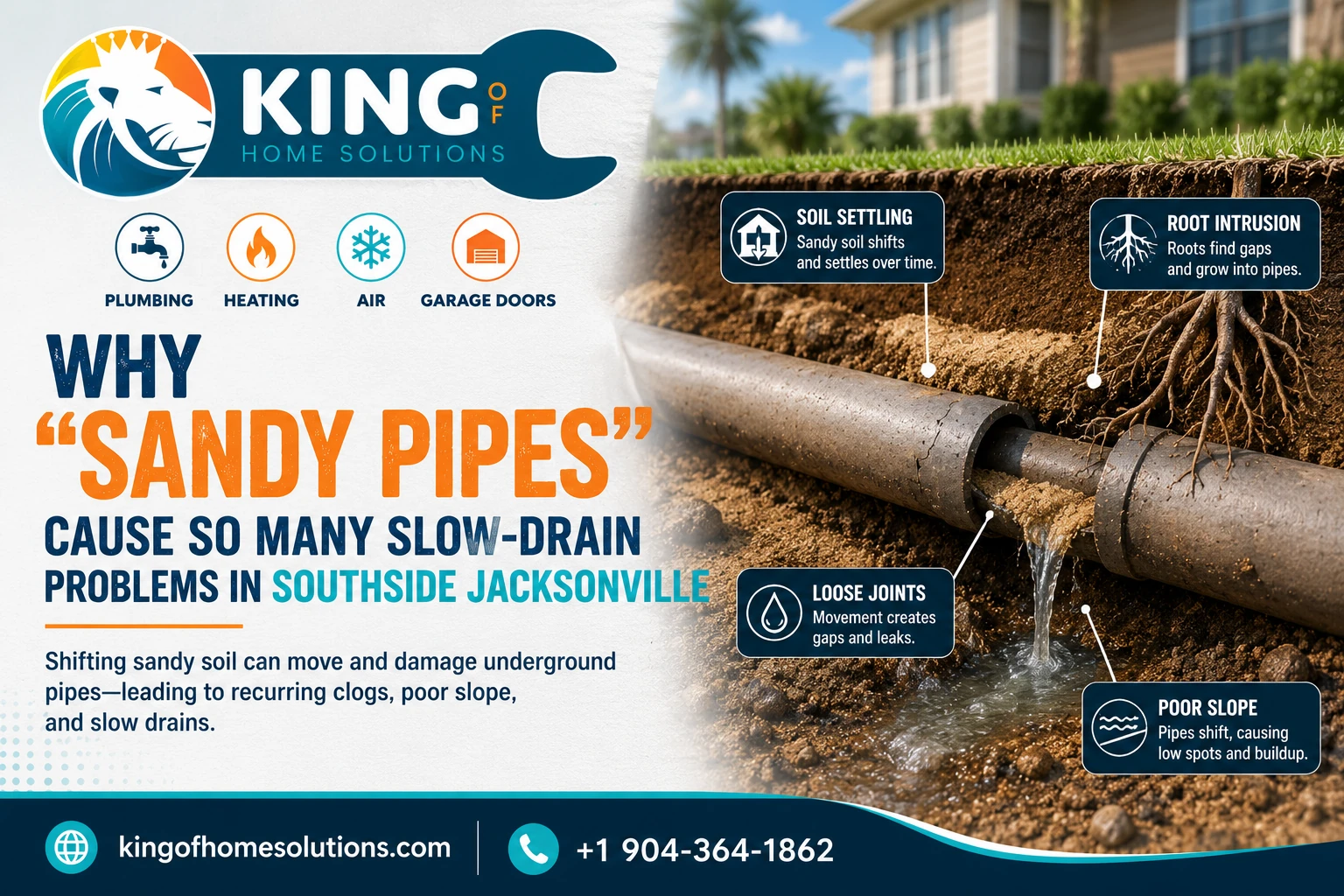
When that soil moves, washes away, or settles unevenly, the pipe can move with it.
Around here, plumbers sometimes describe the resulting problem informally as a “sandy pipe” problem: a sewer line affected by shifting sandy soil, loss of support, poor slope, or sand entering through a damaged connection.
And it can create a slow drain that no bottle of drain cleaner is going to permanently fix.
Slow Drains Keep Coming Back?
Get professional help for sandy pipe problems in Southside Jacksonville. Call now for reliable drain service.
First: Is Sandy Soil Really the “#1 Cause of Slow Drains?
It’s an attention-grabbing way to describe a very real Jacksonville plumbing problem, but there isn’t reliable public data proving sandy soil is literally the single most common cause of every slow drain in Southside.
A bathroom sink that drains slowly is still frequently caused by hair, soap, or buildup close to the fixture.
A slow kitchen sink may be grease or food debris.
But when multiple drains are slow, the problem keeps returning after cleaning, or an entire section of the house seems affected, the underground sewer line becomes much more important.
And in Southside Jacksonville, sandy ground conditions can be part of what turns an ordinary sewer line into a recurring problem.
Why Southside Jacksonville Is Different
A sewer line doesn’t pump wastewater away from your house.
For the most part, it relies on gravity.
The pipe is installed at a carefully controlled slope so wastewater continues moving toward the sewer connection.
That system works beautifully when the pipe stays where it was installed.
The trouble starts when the ground underneath it doesn’t.
Sandy soil drains water quickly and can shift or erode when subjected to heavy rainfall, leaks, construction disturbance, or inadequate compaction. Plumbing professionals working in Florida specifically identify pipe shifting, sagging, joint separation, and sand intrusion as potential consequences of these conditions.
That’s particularly relevant in a place that gets the kind of intense rain Jacksonville homeowners are accustomed to.
You don’t necessarily see anything happening above ground.
Underneath your lawn, however, a section of sewer pipe may gradually lose support.
And sometimes it only has to move a little.
The Problem Plumbers Call a “Belly”
Imagine holding a garden hose perfectly level and then pushing the middle downward.
Water collects in the low spot.
A sewer line can do something similar.
When a section of pipe settles, it can create a low point commonly called a belly or sag.
Instead of wastewater flowing cleanly through the line, water begins sitting in that section.
Then toilet paper catches.
Grease sticks.
Waste accumulates.
More material catches on that material.
Eventually, you have what feels like a traditional clog.
So somebody snakes the line.
The drain starts moving again.
Problem solved?
Not necessarily.
The snake may have removed the material blocking the pipe, but it didn’t lift the pipe back into position.
The low spot is still there.
And that helps explain one of the most common complaints we hear from homeowners with an underground drainage problem:
“We just had this drain cleaned. Why is it slow again?”
Sand Can Also Tell You the Pipe Has Been Compromised
There is another version of the problem.
Sand isn’t supposed to be inside your sanitary sewer line.
If a camera inspection shows sand, soil, or sediment collecting inside a buried pipe, that can indicate there is a place where the surrounding ground is entering the plumbing system.
Possible entry points include:
- A cracked pipe
- A separated joint
- A failed connection
- A damaged section of older piping
- A partially collapsed line
Sand intrusion can then make the drainage problem worse.
Debris has more material to catch on, the effective opening inside the pipe gets smaller, and the homeowner experiences increasingly sluggish drainage.
The important point is that the sand isn’t necessarily the original problem.
It may be evidence of the original problem.
Why Heavy Jacksonville Rain Can Make Things Worse
This is one reason a drainage problem can appear or become more noticeable after periods of heavy rain.
Water moving through sandy ground can alter the support around a buried sewer line. Florida plumbing sources note that erosion and settlement following heavy rain can leave underground pipes inadequately supported or cause sections to shift.
Now imagine the pipe already has a minor leak.
Water escapes.
The surrounding material moves.
A small void develops.
The pipe loses additional support.
The joint separates a little more.
More water escapes.
It can become a cycle in which the condition of the ground and the condition of the pipe make each other worse.
Jacksonville plumbing providers similarly identify sandy soil and void formation around compromised sewer laterals as a local concern.
Why Drain Cleaner Usually Doesn’t Solve This Problem
This is where homeowners can waste a lot of money.
If the obstruction is hair sitting underneath a shower drain, cleaning the drain makes perfect sense.
If grease has built up inside a kitchen branch line, clearing that buildup may solve the problem.
But chemicals can’t repair a separated underground joint.
A drain snake can’t correct the slope of a sagging sewer line.
Hydro jetting can’t permanently fix a cracked pipe that keeps allowing soil inside.
Those methods may restore flow.
Sometimes that’s exactly what the situation requires.
But if there’s an underlying structural defect, you’re treating the result rather than the cause.
That’s why recurring slow drains should get your attention.
One Slow Drain or Several? There’s a Big Difference
Here’s an easy way to start narrowing down the problem.
If one sink or shower drains slowly while everything else works normally, the blockage is more likely to be relatively close to that fixture.
If the toilet, tub, shower, and sinks are all behaving strangely, you may be dealing with a larger drain or sewer-line problem.
Watch especially for combinations such as:
The toilet flushes and the shower gurgles.
The washing machine drains and a nearby toilet bubbles.
The lowest shower or tub backs up when another fixture is used.
Several fixtures are getting slower at the same time.
Those symptoms suggest the water is encountering resistance farther downstream, where multiple plumbing fixtures share the same drain.
Recurring blockages and gurgling across fixtures are also commonly cited warning signs of sewer-lateral trouble in Jacksonville.
The Camera Usually Tells the Real Story
When a drain repeatedly backs up, guessing gets expensive.
A sewer camera inspection allows a plumber to see what is actually happening inside the line.
Depending on the condition, that camera may reveal:
- Standing water in a low section
- Sand or soil inside the pipe
- Separated joints
- Cracks
- Root intrusion
- Heavy scale or corrosion
- Foreign objects
- Grease buildup
- A partially collapsed pipe
This matters because several completely different problems can create almost identical symptoms inside your house.
Your shower doesn’t know whether the sewer line has grease, roots, or a belly.
It just knows the water isn’t leaving fast enough.
Don’t Forget About Tree Roots
Sandy soil isn’t the only underground issue Jacksonville homeowners deal with.
Roots deserve attention too.
Roots naturally seek moisture and can enter sewer lines through cracks and failed joints. Once inside, they create a web that catches toilet paper and other solids.
The interesting part is that these problems can overlap.
A pipe settles.
A joint separates.
Moisture escapes.
Roots find the opening.
Now you don’t just have a soil problem.
You have a root problem too.
That’s another reason simply cutting the roots may provide only temporary relief if nobody addresses the opening that allowed them inside.

3 Signs of a Slab Leak in a Mandarin Home (And How to Spot Them Before the Flood)
A slab leak is one of those plumbing problems most homeowners never think about—until it becomes a major headache. The…
Read The BlogOlder Pipe Materials Can Make the Situation Worse
Not every Southside home has the same plumbing.
Depending on when your property was built or renovated, portions of the drainage system may contain PVC, cast iron, or other materials.
Each fails differently.
Older cast-iron drain lines can develop heavy internal corrosion and rough surfaces that restrict flow.
Older jointed systems can develop gaps where roots or soil enter.
PVC generally resists corrosion, but poor bedding, installation problems, ground movement, or joint failure can still create drainage problems.
So when somebody tells you:
“You have a clog.”
The better question may be:
“Why did it clog there?”
That’s what separates a one-time stoppage from a problem you’re going to see again.
Five Signs Your Slow Drain May Be More Than a Clog
Pay closer attention if you’re seeing several of these at once:
- The same drain keeps slowing down after being cleared.
- Multiple drains are affected at the same time.
- Fixtures gurgle when another fixture drains.
- You notice sewage odors inside or outside.
- Drain problems seem to become worse after periods of heavy rain.
None of those symptoms automatically proves you have a damaged sewer line.
But they are good reasons to stop guessing.
Should You Snake It, Jet It, or Repair It?
That depends entirely on what is inside the pipe.
Snaking can be effective for physically breaking through an obstruction.
Hydro jetting can remove substantial buildup from the walls of a structurally sound pipe.
Spot repairs may make sense when damage is limited to one area.
Pipe lining or replacement may become appropriate when the pipe itself has significant structural defects.
There isn’t one correct solution for every slow drain.
And that’s exactly why diagnosis matters.
If the pipe is perfectly healthy and simply clogged, you don’t want somebody selling you a sewer replacement.
If the pipe is broken and filling with sand, you also don’t want to pay to have it snaked every three months for the next five years.
Who Is Responsible for the Sewer Line?
Another surprise for homeowners is that a sewer problem near the street doesn’t automatically mean the utility is responsible for repairing it.
Public utilities generally maintain their sewer mains, while property owners are commonly responsible for their private sewer laterals. Responsibility can depend on exactly where the problem is located, so the location of a blockage or break needs to be identified before assuming who should repair it.
JEA directs customers experiencing severe sewage backups to contact the utility so the situation can be evaluated.
The Southside JAX Takeaway
When a Southside Jacksonville drain slows down once, you may simply have a clog.
When it slows down again and again, start asking a different question.
Don’t just ask:
“What’s blocking my pipe?”
Ask:
“Why does material keep collecting there?”
Jacksonville’s sandy subsurface conditions are real, and underground pipes can be affected by shifting soil, erosion, inadequate support, separated joints, and settlement.
Sometimes the solution is straightforward drain cleaning.
Sometimes a camera finds a sagging line, roots, damaged pipe, or sand where sand absolutely shouldn’t be.
The important thing is knowing the difference.
Because if your slow drain is being caused by the pipe itself, clearing the clog over and over isn’t fixing the plumbing.
It’s resetting the clock until the next backup.
Think Sand Is Clogging Your Pipes?
Don’t wait for a complete blockage. Get your drain lines checked by a professional today.