Serving The Jacksonville Area


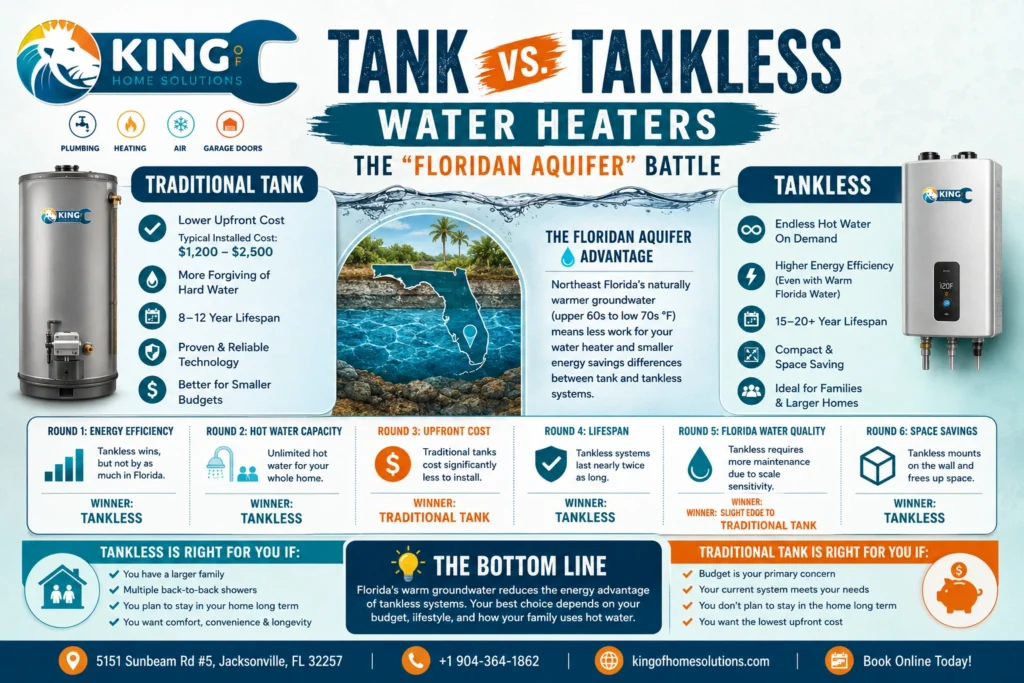
Tank vs. Tankless Water Heaters: The “Floridan Aquifer” Battle
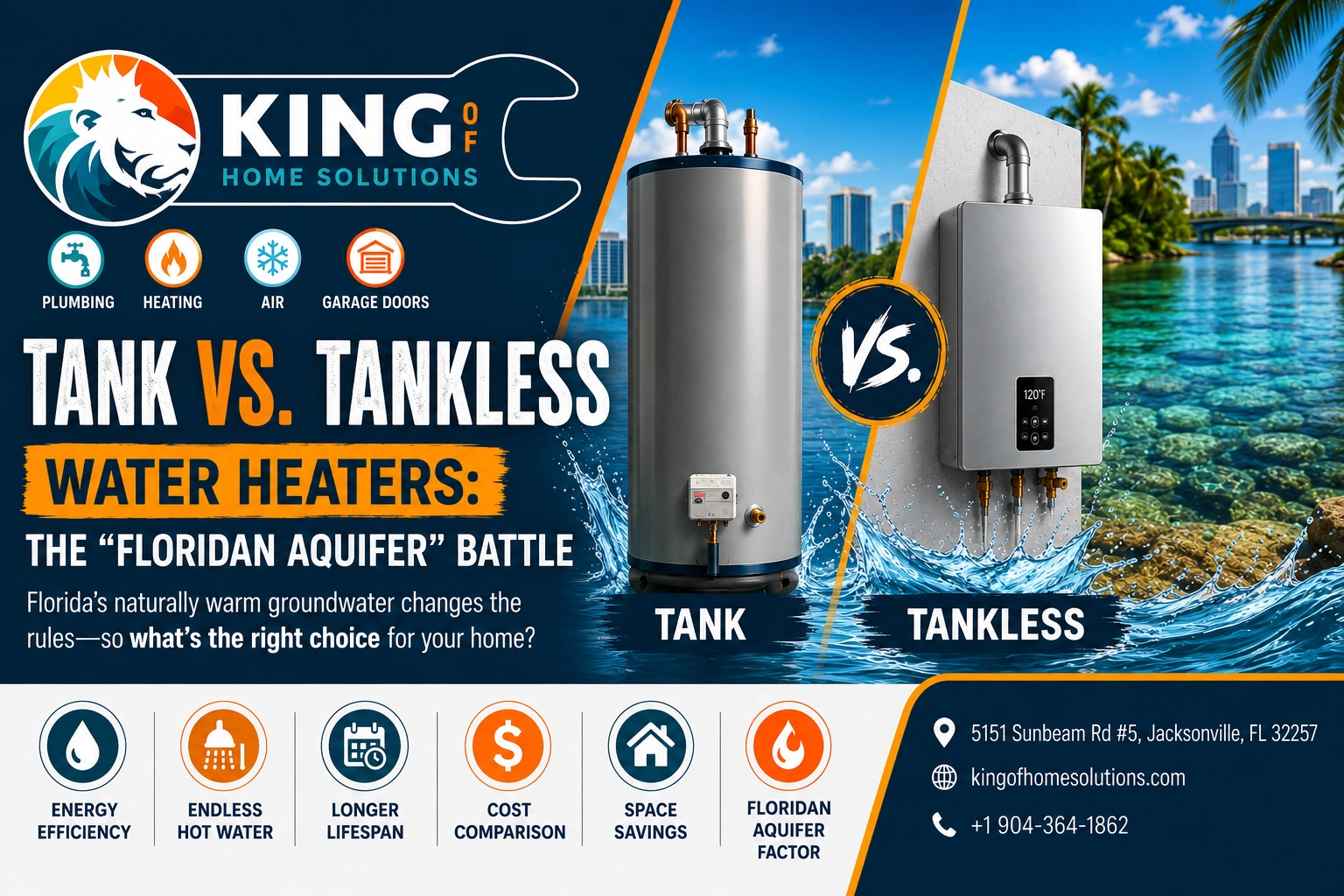
Tank vs. Tankless Water Heaters: The “Floridan Aquifer” Battle
When homeowners compare traditional tank water heaters to tankless systems, the conversation usually centers around energy efficiency, installation costs, and endless hot water.
But in Florida, there’s another factor that rarely gets discussed:
The Floridan Aquifer.
The Floridan Aquifer supplies much of the water used throughout Jacksonville and Northeast Florida. And because the water coming from the aquifer is naturally warmer than groundwater in many northern states, it changes the economics and performance of water heating in ways many homeowners don’t realize.
If you’re trying to decide between a tank and tankless water heater, understanding Florida’s unique water conditions can help you make a smarter decision.
Upgrade Your Water Heater Today
Enjoy reliable hot water and better efficiency. Schedule your installation before your current system fails.
Why Florida Is Different
In places like Michigan, Minnesota, or Pennsylvania, groundwater temperatures can dip into the 40s and 50s during colder months.
That means water heaters must raise water temperatures significantly before it reaches your shower.
In Northeast Florida, groundwater temperatures are typically much warmer, often hovering around the upper 60s to low 70s throughout much of the year.
The result?
Your water heater starts with a head start.
Less temperature lift means less work required to produce hot water.
Round 1: Energy Efficiency
Tankless Wins But Not by as Much
Tankless water heaters are often marketed as highly efficient because they only heat water when needed.
Traditional tank systems continuously maintain a reservoir of hot water, even when nobody is using it.
On paper, tankless systems are more efficient.
However, Florida’s warmer groundwater narrows the gap.
Because incoming water from the Floridan Aquifer already starts relatively warm, traditional systems don’t lose as much efficiency as they would in colder climates.
What This Means for Jacksonville Homeowners
In many northern states, tankless systems can generate significant utility savings.
In Northeast Florida, those savings often exist—but they’re usually smaller.
The difference may be enough to lower monthly utility costs, but often not enough to quickly recover a multi-thousand-dollar installation premium.
Winner: Tankless
Margin of Victory: Smaller than many advertisements suggest.
Round 2: Hot Water Capacity
Tankless Takes the Belt
This is where tankless systems shine.
A traditional 50-gallon tank can only provide a finite amount of hot water before recovery is needed.
For busy families, that can mean:
- Cold showers
- Morning scheduling battles
- Running out of hot water during laundry and dishwashing
Tankless systems heat water on demand.
As long as the unit is properly sized, you can enjoy:
- Consecutive showers
- Simultaneous appliance use
- Unlimited hot water supply
For larger Jacksonville households, this can be a game-changer.
Winner: Tankless
Round 3: Upfront Cost
Traditional Tanks Dominate
This category isn’t particularly close.
Typical installed costs:
| Water Heater Type | Typical Installed Cost |
| Traditional Tank | $1,200–$2,500 |
| Tankless | $3,500–$5,500+ |
Additional costs for tankless installations may include:
- Gas line upgrades
- Electrical upgrades
- Venting modifications
- Permit requirements
For many homeowners, the price difference becomes the deciding factor.
Winner: Traditional Tank
Round 4: Lifespan
Tankless Pulls Ahead
Average life expectancy:
| System Type | Typical Lifespan |
| Traditional Tank | 8–12 Years |
| Tankless | 15–20+ Years |
Tankless systems often last nearly twice as long when properly maintained.
Some components can even be serviced or replaced without replacing the entire unit.
Winner: Tankless
Round 5: Florida Water Quality
A More Complicated Fight
Many areas of Northeast Florida experience moderate mineral content in the water supply.
Over time, scale buildup can affect both systems.
However, tankless units tend to be more sensitive to mineral accumulation because of their smaller internal passages and heat exchangers.
Without periodic flushing and maintenance, efficiency can decline.
Traditional tanks aren’t immune to scale issues, but they’re often more forgiving.
Winner: Slight Edge to Traditional Tanks
Round 6: Space Savings
Tankless by a Knockout
Traditional tanks occupy valuable floor space in:
- Garages
- Utility rooms
- Closets
Tankless systems mount on a wall and have a much smaller footprint.
For homeowners seeking extra storage space, this can be a surprisingly valuable benefit.
Winner: Tankless

The Jacksonville Homeowner’s Guide to the Floridan Aquifer
Most Jacksonville homeowners never see the source of their water, yet it affects everything from plumbing lifespan and water quality…
Read The BlogThe Floridan Aquifer Factor Nobody Talks About
Here’s the reality:
Florida’s naturally warm groundwater reduces one of the biggest financial advantages often used to sell tankless systems.
The energy savings are real.
They’re just not usually as dramatic as homeowners in colder climates experience.
That’s why many Jacksonville homeowners choose tankless not because of utility savings—but because of:
- Endless hot water
- Longer lifespan
- Convenience
- Space savings
In other words, they’re buying comfort as much as efficiency.
Who Should Choose a Tankless Water Heater?
Tankless often makes sense if:
You have a family of four or more
Multiple people shower back-to-back
You plan to stay in your home long term
You value unlimited hot water
You want a longer-lasting system
Who Should Stick With a Traditional Tank?
A traditional tank may be the better choice if:
Budget is your primary concern
Your current system meets your hot water needs
You don’t expect to stay in the home for many years
You want the lowest upfront cost
Bottom Line
In the battle between tank and tankless water heaters, the Floridan Aquifer changes the rules.
Because Northeast Florida’s groundwater is naturally warmer, the energy-efficiency advantage of tankless systems is less dramatic than many homeowners expect. That means the decision often comes down to lifestyle rather than utility savings.
If you want endless hot water, longer equipment life, and a more compact system, tankless can be a worthwhile upgrade. If your goal is maximizing value and minimizing upfront costs, a modern high-efficiency tank water heater remains a strong contender.
For most Jacksonville homeowners, the winner isn’t determined by the aquifer alone it’s determined by how your family uses hot water every day.
Need a New Water Heater Fast?
Don't wait for a complete breakdown. Call now for trusted installation, replacement, and expert advice.