Serving The Jacksonville Area


Best Smart Home Tech for Jacksonville Homeowners: Water Leak Sensors and Smart AC Controls
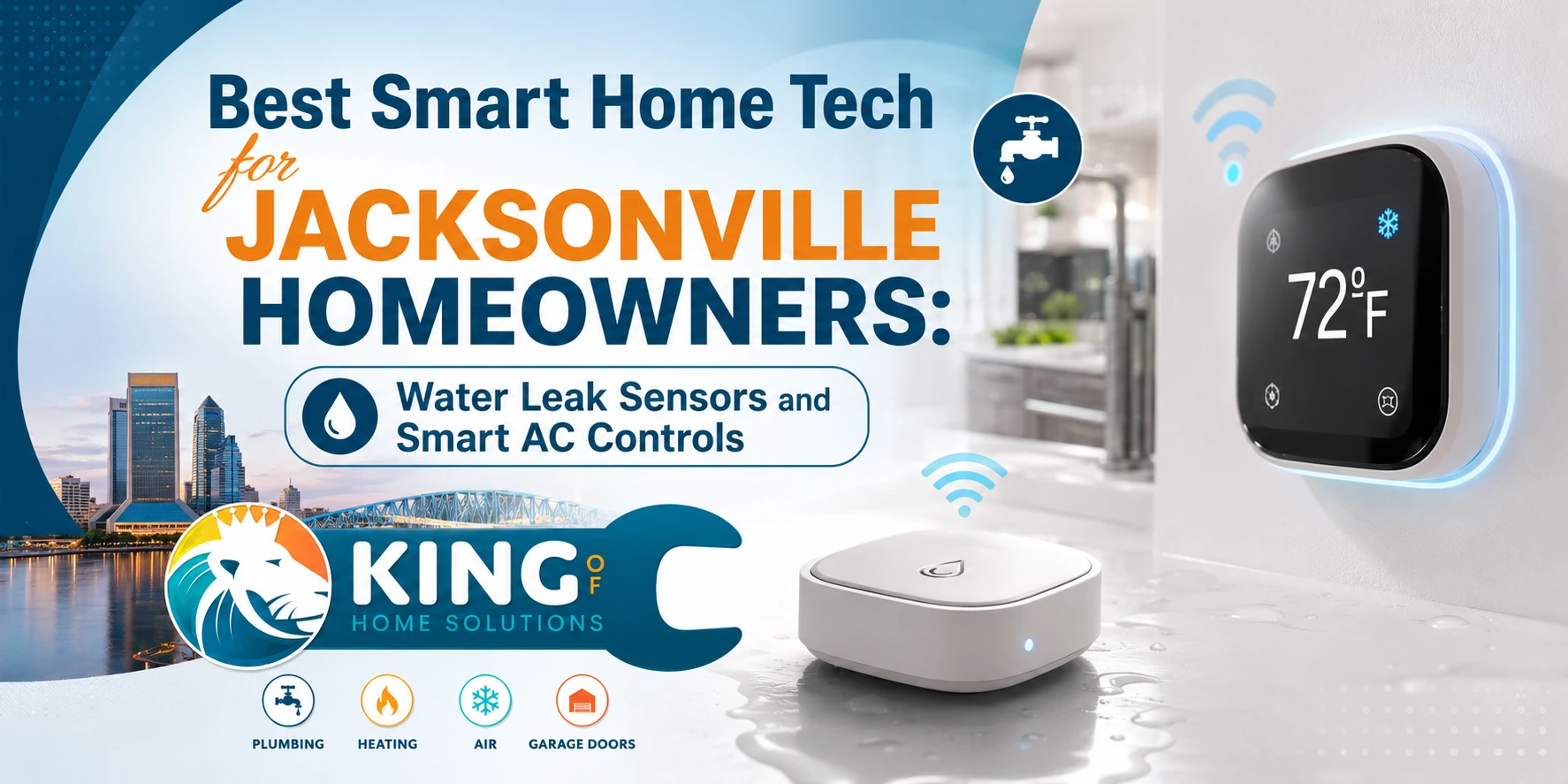
Best Smart Home Tech for Jacksonville Homeowners: Water Leak Sensors and Smart AC Controls
The best smart home technology for Jacksonville homeowners solves practical problems instead of simply adding another app to a phone.
Water leak sensors can provide an early warning before a small plumbing failure causes major damage. Smart AC controls can help homeowners manage cooling costs, humidity, and indoor comfort during Florida’s long cooling season.
At King of Home Solutions, we believe smart home products should make a house safer, easier to manage, and more efficient. A device is only useful when it fits the home, works with the existing equipment, and alerts the homeowner when action is needed.
For many Jacksonville households, smart water protection and intelligent air-conditioning controls are two of the most valuable places to begin.
Stop Leaks Before They Become Expensive
Protect your Jacksonville home with smart leak sensors and AC controls. Call today for professional smart home solutions.
Why Smart Home Technology Makes Sense in Jacksonville
Jacksonville homes face heat, humidity, storms, heavy air-conditioning use, and the risk of water damage. These conditions can place constant pressure on plumbing and HVAC systems.
An air conditioner may operate for much of the year, especially during hot and humid weather. A leaking pipe, failed water heater, overflowing drain pan, or damaged appliance hose can release water while the homeowner is sleeping, working, traveling, or simply in another part of the house.
Smart technology cannot prevent every mechanical failure, but it can provide useful information earlier.
The sooner homeowners know about an unusual temperature, moisture problem, or water-flow pattern, the sooner they can respond. In some cases, a smart device may also take limited automatic action, such as adjusting the thermostat or closing a compatible water shutoff valve.
That early response may be the difference between a manageable service call and a much larger repair.
What Is a Smart Water Leak Sensor?
A smart water leak sensor is a small device designed to detect moisture or standing water. It is usually placed on the floor near plumbing fixtures, appliances, water heaters, or other areas where leaks may occur.
When water touches the sensor contacts, the device may sound an alarm and send a notification to the homeowner’s phone.
Basic sensors detect water only where they are installed. More advanced systems can monitor water flow through the home’s main plumbing line and identify unusual usage patterns.
The U.S. Environmental Protection Agency separates these products into two broad categories: point-of-use leak detectors and whole-home flow-monitoring devices.
Point sensors watch specific locations. Whole-home systems track water moving through the household supply.
Both can be valuable, but they protect the home in different ways.
Where Should Water Leak Sensors Be Installed?
A leak sensor should be placed where water is likely to appear first.
Useful locations include:
- Beneath the water heater
- Under kitchen sinks
- Inside bathroom vanities
- Behind washing machines
- Near refrigerators with water lines
- Beneath dishwashers
- Near water-filtration equipment
- Beside a sump or condensate pump
- Under attic HVAC equipment
- Near toilets
- Around accessible plumbing connections
Jacksonville homeowners with water heaters or HVAC equipment in the attic should pay special attention to those areas. A leak above finished ceilings can damage drywall, insulation, flooring, and electrical components before water becomes visible downstairs.
Some systems use a small sensing puck. Others include a cable that detects moisture along a larger area.
A cable-style sensor may be useful around the base of a water heater or along the edge of an HVAC drain pan.
The sensor should remain accessible so its batteries, contacts, and connection can be checked.
Why Water-Heater Leak Sensors Are Worth Considering
Traditional tank water heaters hold a large volume of water. If the tank corrodes or a connection fails, water may continue leaking until someone notices it or shuts off the supply.
A sensor placed beside the tank can provide an immediate local alarm. Connected models may also send a mobile notification when no one is home.
More advanced protection may combine a leak detector with an automatic shutoff valve. When moisture is detected, the system can close the home’s main water supply or a dedicated valve serving the appliance.
Automatic shutoff capability can provide stronger protection, but it must be installed and configured correctly.
Homeowners should understand:
- Which valve will close
- How the system behaves during a power outage
- Whether internet access is required
- How to reopen the valve safely
- Whether the system can be operated manually
A sensor is not a replacement for water-heater maintenance. It is an additional layer of protection.
Whole-Home Water Monitoring Goes Beyond Floor Sensors
A point sensor can only detect water that reaches its location. It may not detect a leak inside a wall, beneath a slab, or in another part of the home.
Whole-home monitoring devices evaluate water flow through the main supply line.
Depending on the system, they may track:
- Water usage
- Flow duration
- Pressure changes
- Continuous low-volume use
- Sudden high-volume flow
- Possible pipe failures
- Unusual overnight consumption
Some devices learn the household’s normal water-use patterns and alert the homeowner when activity falls outside those patterns.
For example, continuous water use during the middle of the night could indicate a running toilet, damaged irrigation connection, leaking fixture, or another hidden problem.
Whole-home systems may also include remote shutoff capability. The best option depends on the home’s plumbing layout and the level of protection the homeowner wants.
Features to Look for in a Smart Leak Detector
Not all leak sensors offer the same features. Jacksonville homeowners should compare practical functions rather than choosing a device based only on price.
A Loud Local Alarm
A phone notification is useful, but someone inside the home should also be able to hear the warning.
A strong built-in alarm provides protection when Wi-Fi or mobile notifications are unavailable.
Reliable Mobile Notifications
The app should deliver alerts promptly and clearly identify which sensor detected moisture.
Naming sensors by location, such as “upstairs water heater” or “laundry room,” makes alerts easier to understand.
Battery-Status Alerts
A leak sensor cannot help when its battery has been dead for months. Look for equipment that reports low battery status.
Temperature Monitoring
Some sensors also monitor temperature.
Freeze alerts are less important in Jacksonville than in colder climates, but temperature monitoring may still help identify unusual conditions in garages, utility rooms, attics, or vacant homes.
Automatic Shutoff Compatibility
Homeowners seeking stronger protection should consider whether the sensor can communicate with a compatible shutoff valve.
Smart Home Compatibility
Compatibility affects whether the device can work through the homeowner’s preferred app or smart home platform.
Supported features may vary by ecosystem, so homeowners should confirm exactly what functions will be available before purchasing.
Local Operation
Some homeowners prefer equipment that can sound an alarm or carry out essential functions even when the internet is unavailable.
Cloud-based features can be convenient, but the core safety function should remain dependable.
What Is a Smart Thermostat?
A smart thermostat is an internet-connected control that manages compatible heating and cooling equipment.
Depending on the model, it may support:
- Scheduling
- Remote adjustments
- Energy reports
- Occupancy detection
- Humidity information
- Automated temperature changes
- Equipment alerts
- Room sensors
For Jacksonville homeowners, the main benefit is not simply changing the temperature from a phone. It is gaining better control over a system that may account for a large share of household energy use.
Why Smart AC Controls Are Useful in Jacksonville
Cooling demand in Northeast Florida can remain high for much of the year. Small changes in temperature settings, schedules, airflow, and humidity management can affect both comfort and operating costs.
A smart thermostat may help homeowners:
- Adjust temperatures remotely
- Create cooling schedules
- Reduce unnecessary cooling when the home is empty
- Receive temperature or equipment alerts
- Monitor energy-use patterns
- Manage vacation settings
- Track indoor humidity
- Use compatible room sensors
- Avoid constant manual adjustments
These features can be especially useful for homeowners with changing work schedules, vacation properties, rental homes, or family members who prefer different temperatures.
Look for More Than Phone Control
Almost any connected thermostat can offer app-based control. The better question is whether the thermostat supports the features the household will actually use.
ENERGY STAR Certification
Choosing an ENERGY STAR-certified smart thermostat can provide evidence that the device has met established energy-saving criteria.
Actual savings still depend on the home, HVAC equipment, climate, schedule, and thermostat settings.
Humidity Display
Humidity strongly affects comfort in Jacksonville.
A room can feel uncomfortable even when the temperature appears reasonable if indoor moisture is too high.
A thermostat that displays humidity can help homeowners recognize when the AC system is cooling but not dehumidifying effectively.
Remote Room Sensors
The main thermostat may be located in a hallway that does not represent the warmest room in the home.
Remote sensors can help prioritize bedrooms, living areas, home offices, or additions at different times.
Equipment Alerts
Some thermostats can warn homeowners about unusual indoor temperatures, extended system operation, filter reminders, or possible equipment problems.
These alerts are not a professional diagnosis, but they may provide an early reason to schedule an inspection.
Vacation and Away Modes
A smart thermostat can maintain a more economical setting while the home is empty and restore comfort before the homeowner returns.
Usage Reports
Monthly reports may show temperature patterns, run times, and changes in energy use.
A sudden increase in cooling time may be caused by hot weather, a changed schedule, dirty filters, duct leakage, or equipment performance problems.
Smart Thermostat Compatibility Must Be Checked First
A smart thermostat is not automatically compatible with every HVAC system.
Before purchasing one, homeowners should identify:
- The type of heating and cooling system
- Whether the system is single-stage, multi-stage, or variable-capacity
- Whether the home has a heat pump
- Whether auxiliary or emergency heat is present
- The number and type of thermostat wires
- Whether a common wire is available
- Whether humidity equipment is controlled through the thermostat
- Whether the manufacturer requires a proprietary controller
- Whether the system uses zoning
Some high-efficiency or communicating HVAC systems require their original manufacturer controls for full operation.
Replacing that control with a general smart thermostat may disable advanced features or reduce performance.
A professional compatibility check can help prevent wiring errors, loss of features, short cycling, or equipment damage.
Smart Thermostats Do Not Repair AC Problems
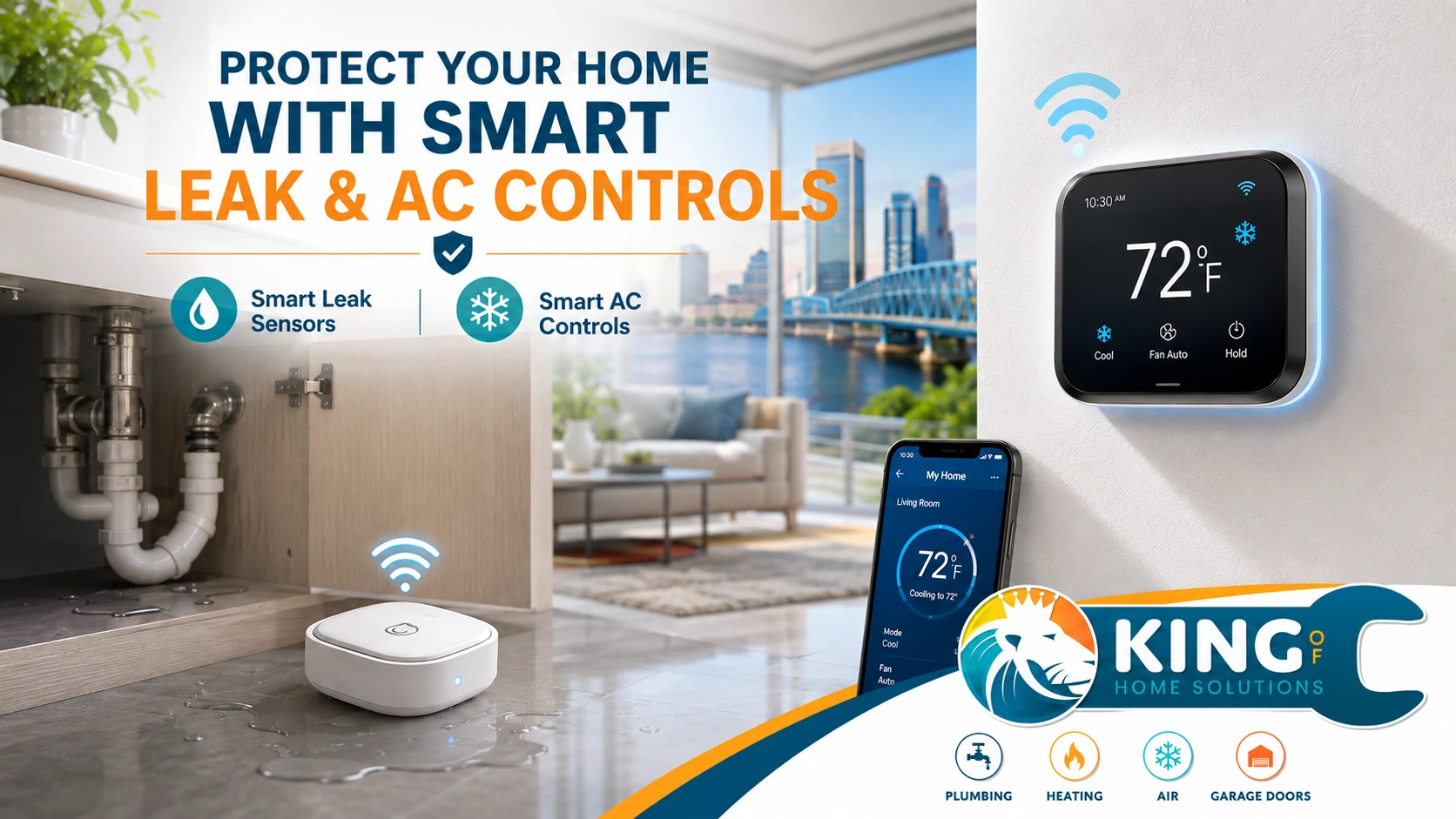
A smart control can improve scheduling and provide useful information, but it cannot correct mechanical problems.
It will not fix:
- Low refrigerant
- Dirty evaporator coils
- A clogged condensate drain
- Weak airflow
- Damaged ductwork
- An incorrectly sized system
- A failing capacitor
- A worn blower motor
- Poor insulation
- Excessive air leakage
If a Jacksonville home remains hot or humid after a smart thermostat is installed, the problem may involve the HVAC system or the building itself.
The thermostat can help manage healthy equipment. It cannot make a failing or poorly designed system operate properly.

How to Flush a Water Heater in Jacksonville: Step-by-Step With JAX Water
If you live in Jacksonville and your water heater has started popping, rumbling, taking longer to recover, or giving you…
Read The BlogCan Smart AC Controls Reduce Cooling Costs?
Smart thermostats may help reduce unnecessary heating and cooling by adjusting settings according to schedules, occupancy, or remote commands.
The actual savings in a specific home depend on:
- Previous thermostat habits
- HVAC equipment
- Climate
- Occupancy
- Insulation
- Air leakage
- Chosen settings
- Maintenance condition
A homeowner who already follows an efficient schedule may see a smaller difference. Someone who regularly leaves the AC running at the same low temperature while away may have more opportunity to reduce energy use.
The device creates an opportunity for savings. Household behavior and system condition determine the result.
How Leak Sensors and Smart AC Controls Work Together
Water detection and HVAC controls may seem unrelated, but they can form a practical home-protection system.
Air conditioners remove moisture from indoor air. That moisture drains through a condensate line. If the line clogs or the drain pan cracks, water may overflow near the air handler.
A leak sensor placed in or near an approved secondary drain pan can provide an early warning. An HVAC float switch may also shut the system off when water rises.
These devices serve different purposes:
- The float switch helps prevent continued condensate overflow.
- The leak sensor alerts the homeowner that water is present.
- The smart thermostat may report that the AC has stopped or the indoor temperature is rising.
Together, they can provide a clearer picture of what is happening.
A homeowner may receive a leak notification near the air handler, followed by a temperature alert because the safety switch stopped the cooling system.
That information can help the homeowner avoid repeatedly restarting the equipment and arrange service sooner.
Do You Need One Smart Home App or Several?
Using one ecosystem can simplify control, but homeowners should not sacrifice equipment quality simply to keep everything inside one app.
Compatibility standards are intended to improve interoperability among supported devices. However, available features can vary by product and platform.
A practical setup should prioritize:
- Reliable detection or control
- Correct compatibility
- Clear notifications
- Local safety functions
- Easy maintenance
- Reasonable app support
It is better to have two dependable apps than one convenient system that does not properly protect or control the home.
Smart Home Technology Still Needs Maintenance
Connected devices can create a false sense of security when they are installed and then forgotten.
Leak sensors should be tested according to the manufacturer’s instructions. Batteries should be replaced, sensing contacts kept clean, and notifications checked.
Automatic valves should be exercised and inspected to confirm that they still move properly. Homeowners should also know how to operate the valve manually.
Smart thermostat software, Wi-Fi connections, schedules, and time settings should be reviewed periodically.
HVAC filters and routine maintenance still need attention, even when the thermostat provides reminders.
A device that has lost power, Wi-Fi access, or app permissions may not send the expected warning.
The Best Smart Home Setup for Many Jacksonville Homes
A practical starter system may include:
- Leak sensors near the water heater, washing machine, sinks, refrigerator, and HVAC drain pan
- A whole-home flow monitor for broader plumbing protection
- An automatic main water shutoff valve where appropriate
- An ENERGY STAR-certified smart thermostat
- Remote temperature sensors for problem rooms
- A properly installed HVAC condensate safety switch
- Reliable smoke and carbon monoxide alarms
- Strong home Wi-Fi coverage
- Surge protection for sensitive equipment
Not every home needs every device.
The right setup depends on the plumbing layout, HVAC system, home size, equipment locations, and how often the property is vacant.
Build a Smarter, Better-Protected Home With King of Home Solutions
Smart technology should solve real household problems.
Water leak sensors can warn homeowners about moisture before it spreads. Whole-home monitoring can identify unusual water use that small floor sensors may miss.
Smart AC controls can improve scheduling, provide remote access, track humidity, and offer useful system alerts.
The best products are the ones that are compatible with the home and installed in the right locations.
At King of Home Solutions, we help Jacksonville homeowners evaluate the systems behind the technology. We can inspect plumbing risks, check water-heater and appliance connections, evaluate HVAC compatibility, and explain where smart monitoring may provide the greatest benefit.
Before purchasing a smart thermostat, leak sensor, or automatic shutoff system, contact King of Home Solutions. Our team can help you avoid incompatible equipment, poor sensor placement, and installation mistakes while creating a practical setup that supports comfort, efficiency, and faster response to household emergencies.
Make Your Jacksonville Home Smarter
Upgrade with water leak detection and smart AC technology for better protection and comfort. Call now to get started.