Serving The Jacksonville Area



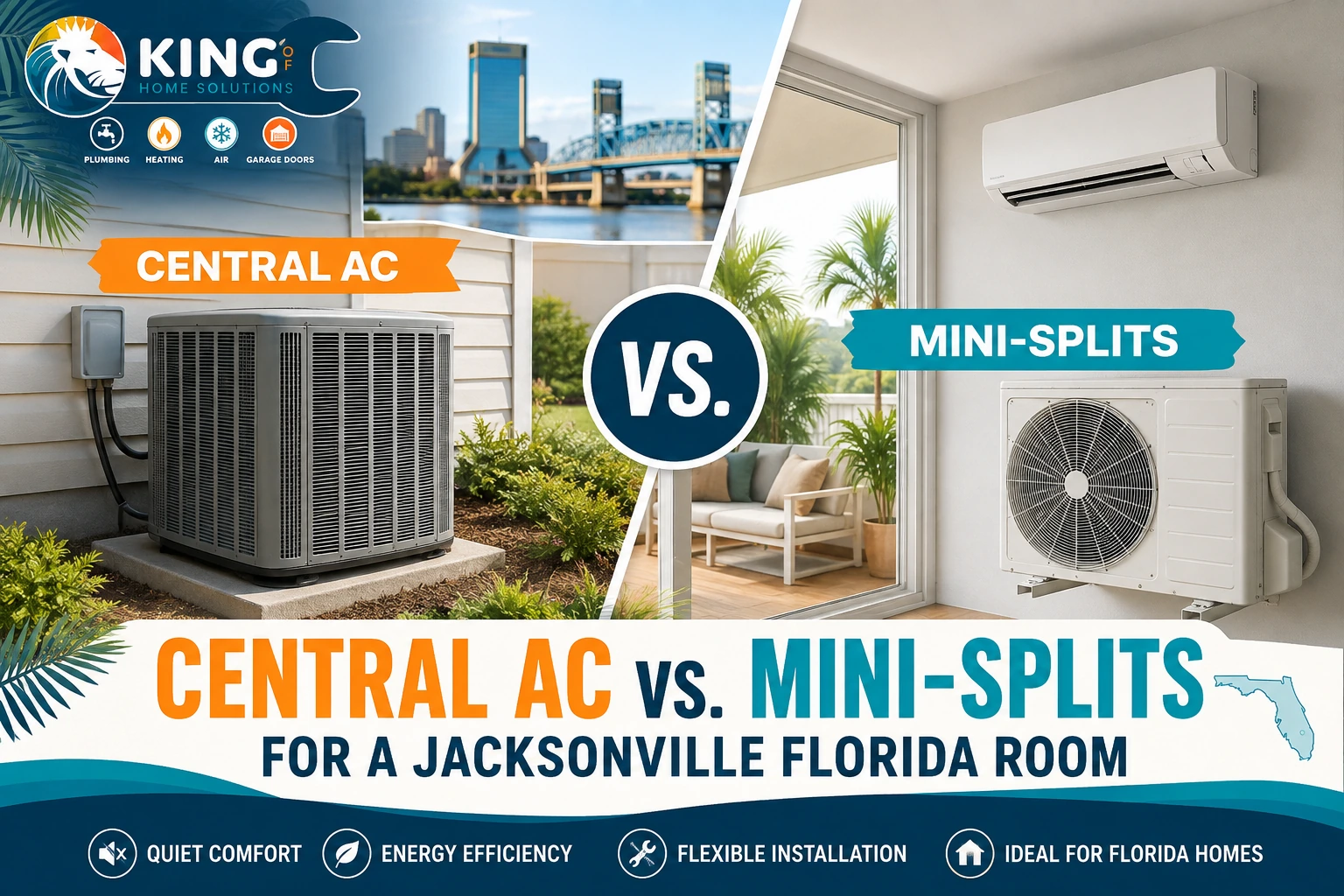
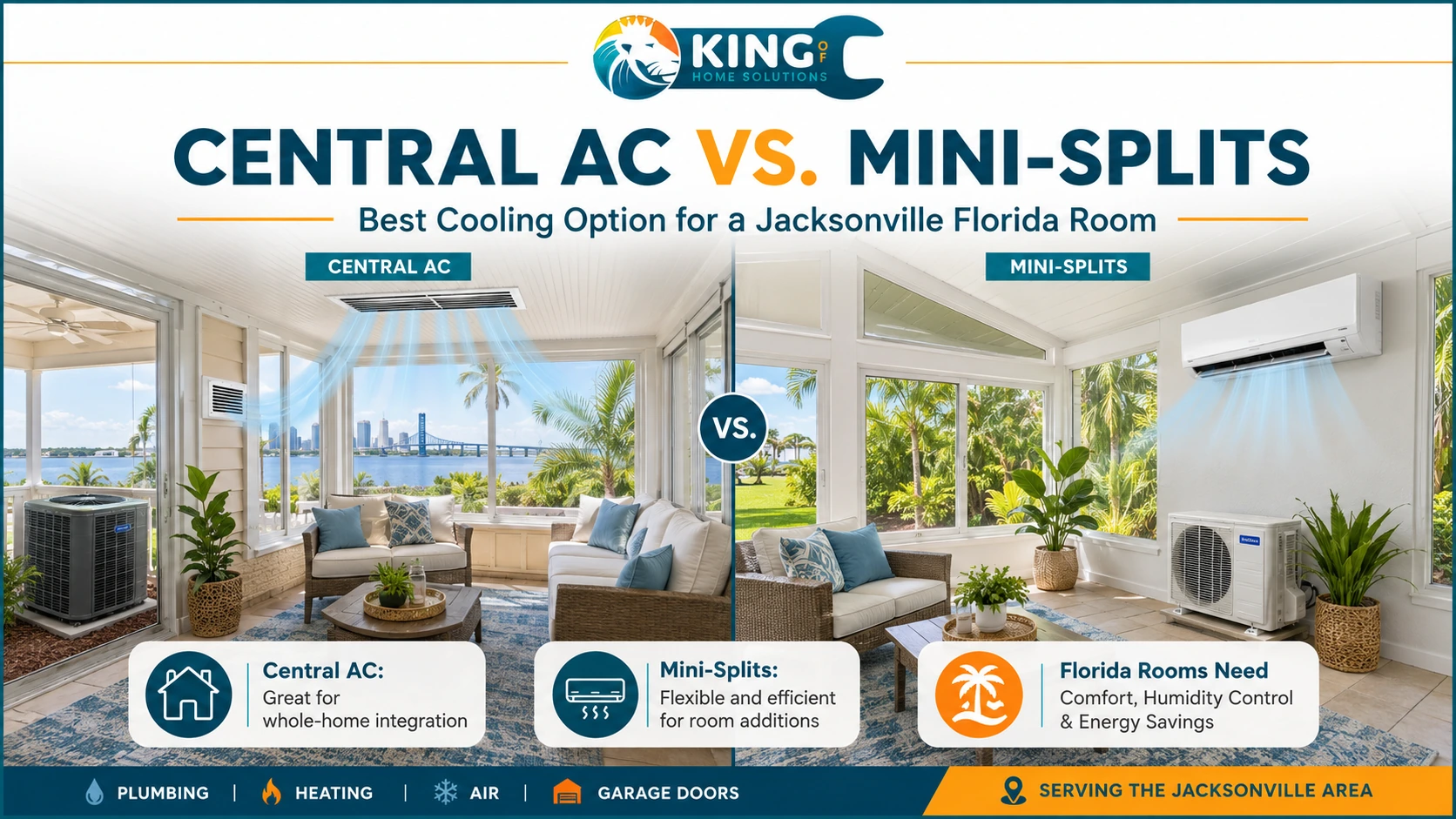
Central AC vs. Mini-Splits for a Jacksonville Florida Room
Central AC vs. Mini-Splits for a Jacksonville Florida Room
A Jacksonville Florida room can be one of the most enjoyable spaces in a home, but it can also be one of the hardest to keep comfortable. Large windows, direct sunlight, limited insulation, and exposure to humid outdoor air can make the space feel much warmer than the rest of the house.
When homeowners decide to cool a Florida room, the two most common options are extending the central air-conditioning system or installing a ductless mini-split. Both can work, but they are not equally suitable for every room.
At King of Home Solutions, we help Jacksonville homeowners look beyond the equipment itself. The right decision depends on the room’s size, construction, insulation, sun exposure, existing ductwork, electrical capacity, and how often the space is used.
Find the Right Cooling Solution
Central AC or mini-splits? Call now for expert help choosing the best system for your Florida room.
What Is a Florida Room?
A Florida room is an enclosed living area designed to bring in natural light while providing some protection from heat, rain, insects, and other outdoor conditions. It may include large windows, sliding glass doors, screened sections, or converted porch walls.
Some Florida rooms are built as part of the original home. Others begin as screened patios or lanais and are enclosed later.
That difference matters because not every Florida room was originally designed as conditioned living space.
A room included in the original construction may have:
- Insulated walls
- Insulated roofing
- Energy-efficient windows
- Proper air sealing
- Existing ductwork
- Adequate electrical service
A converted porch may have:
- Thin walls
- Single-pane windows
- An uninsulated roof
- Air leaks around doors and panels
- A concrete slab that absorbs heat
- No connection to the home’s HVAC system
Before choosing an air-conditioning option, homeowners need to understand how much heat and humidity enter the room.
Why Florida Rooms Are Difficult to Cool
Jacksonville summers are hot and humid, and Florida rooms tend to collect heat quickly. Windows allow sunlight to warm the floor, furniture, walls, and other surfaces. That stored heat can continue radiating into the room even after the sun shifts.
Poor insulation allows heat to move through the roof and walls. Air leaks introduce humid outdoor air, forcing the cooling system to work harder.
The room may also face west or south, exposing it to strong afternoon sunlight. A Florida room that feels comfortable in the morning may become difficult to use later in the day.
Common comfort problems include:
- High indoor temperatures
- Sticky or humid air
- Condensation on windows
- Uneven temperatures
- Hot spots near glass
- Long cooling cycles
- Musty odors
- Mold or mildew concerns
Choosing the right system requires more than matching the room’s square footage to an equipment size. The full cooling load must be considered.
How Does Central Air Conditioning Work in a Florida Room?
Central air conditioning uses one main system to cool multiple rooms through a network of ducts. To cool a Florida room, an HVAC contractor may extend the existing ductwork and install one or more supply vents.
In some cases, a return vent or another return-air path may also be needed to move air back toward the central system. Without proper return airflow, the room can become pressurized and may not cool evenly.
Extending central AC may seem simple, especially when the home already has a working system. However, the existing unit was likely sized for the original conditioned space.
Adding a Florida room increases the area the system must cool. It also adds a room that may have a much higher heat load than a typical bedroom or living room.
If the system does not have enough available capacity, connecting the Florida room may create comfort problems throughout the home.
Advantages of Extending Central AC
Central air can be a practical choice when the Florida room is well insulated and the existing system has enough capacity.
Consistent Appearance
Central air uses ceiling, wall, or floor vents rather than a visible indoor air handler. Homeowners who prefer a clean, built-in appearance may like this option.
One Thermostat and One System
The Florida room becomes part of the home’s main cooling system. There is no separate controller or additional indoor unit to operate.
Quiet Indoor Operation
Most of the main mechanical equipment is located outside or in an attic, closet, or garage. Air moving through the vents is usually the only sound noticed in the room.
Potentially Lower Installation Cost
If ductwork is nearby and the central system has sufficient capacity, extending the ducts may cost less than installing a completely separate cooling system.
Familiar Maintenance
The room is cooled by the same equipment that already serves the rest of the house. Homeowners can continue using the same maintenance schedule and filter arrangement.
These benefits can make central air appealing, but only when the existing system and ductwork are suitable.
Disadvantages of Using Central AC
Connecting a Florida room to the main HVAC system can create problems when the project is not properly evaluated.
The Existing Unit May Be Too Small
Air conditioners are sized for a calculated cooling load. Adding more space does not automatically give the unit more capacity.
If the system is already working hard during hot Jacksonville weather, adding a Florida room may cause longer run times, poor cooling, and additional wear.
The Room May Need More Cooling Than the Rest of the House
A Florida room with large windows may heat up much faster than nearby rooms. The main thermostat may be satisfied while the Florida room remains uncomfortable.
Lowering the thermostat to cool one hot room can make the rest of the home too cold and increase energy use.
Ductwork May Be Difficult to Install
The path from the existing air handler to the Florida room may cross an attic, crawlspace, garage, or exterior wall. Long duct runs can lose cooling and reduce airflow if they are not designed correctly.
Airflow Problems Can Develop
Adding new supply vents changes airflow throughout the system. Some rooms may receive less air than before, while the Florida room may receive too much or too little.
Humidity May Remain High
If the central system cannot run long enough or distribute air correctly, the room may feel cool but damp. Humidity control is a major part of comfort in Jacksonville.
What Is a Ductless Mini-Split?
A ductless mini-split is a separate heating and cooling system that does not require traditional ductwork.
It generally includes an outdoor compressor and an indoor air-handling unit. Refrigerant lines, electrical wiring, and a condensate drain connect the two components through a small wall opening.
The indoor unit is usually mounted high on a wall, although ceiling cassette and floor-mounted options may also be available.
Mini-splits are commonly used for additions, garages, workshops, converted porches, bonus rooms, and other spaces that are difficult to connect to a central HVAC system.
Because the mini-split serves the Florida room independently, the homeowner can set a temperature for that space without changing conditions throughout the rest of the house.
Advantages of a Mini-Split for a Florida Room
For many Jacksonville Florida rooms, a ductless mini-split offers several practical advantages.
Independent Temperature Control
The Florida room receives its own thermostat or remote control. Homeowners can cool the room when it is being used and adjust the temperature without affecting the rest of the home.
This is especially helpful for spaces used only during certain times of the day or week.
No Major Ductwork
Mini-splits do not require a large duct extension. This can reduce construction work and avoid cutting into ceilings, soffits, or attic areas.
Dedicated Cooling for High-Heat Spaces
A properly sized mini-split can be selected specifically for the Florida room’s cooling load. It does not depend on the remaining capacity of the central system.
Improved Energy Control
Homeowners do not need to cool the entire house more aggressively just to make the Florida room comfortable. The mini-split focuses its output on one area.
Dehumidification
Mini-splits can help remove moisture as they cool. Proper sizing is important because oversized equipment may cool too quickly without running long enough to control humidity effectively.
Heating Capability
Many mini-splits are heat pumps, which means they can provide heating during cooler Jacksonville weather. This can make the Florida room more useful throughout the year.
Flexible Placement
The indoor unit can often be positioned so airflow reaches the main seating or activity area. This is useful when the room has an unusual layout.
Disadvantages of a Mini-Split
A mini-split is not automatically the best option for every homeowner.
Visible Indoor Equipment
The most common indoor unit is wall-mounted. Some homeowners may not like its appearance, particularly in a carefully designed living space.
Separate Maintenance
The mini-split has its own filters, drain line, outdoor unit, and maintenance requirements. It must be maintained in addition to the central HVAC system.
Upfront Installation Cost
Installing a complete mini-split system may cost more than adding a short duct run to a central system with sufficient capacity.
Electrical Work May Be Needed
The system requires a dedicated electrical circuit and appropriate disconnect. Homes with limited panel capacity may require electrical upgrades.
Condensate Drainage Must Be Planned
The moisture removed from the air must drain safely. Poor drain placement can lead to leaks, staining, or moisture problems.
Improper Sizing Can Cause Problems
A mini-split that is too small may run constantly without keeping up. One that is too large may cycle too quickly and leave the room humid.
Professional load calculations and proper placement are important.
Which Option Costs Less?
The lower-cost choice depends heavily on the existing home.
Extending central AC may cost less when:
- The central unit has available capacity
- Ductwork is already close to the Florida room
- The room is properly insulated
- Only a short duct extension is required
- Airflow can be balanced without major changes
- Electrical upgrades are not needed
A mini-split may provide better value when:
- The room is far from existing ducts
- The central system is already near capacity
- Major ceiling or wall work would be required
- The room has a much higher cooling load
- Independent temperature control is important
- The room is used only occasionally
- The homeowner wants both heating and cooling
Homeowners should compare the complete project, not just the equipment price. Duct modifications, insulation improvements, electrical work, permits, wall repairs, and long-term energy use may all affect the actual cost.
Which System Is More Energy Efficient?
A mini-split can be highly efficient because it cools only the Florida room when needed. It also avoids duct losses along a long path through a hot attic.
This zoning advantage can be significant when the room is used for only a few hours at a time. The main thermostat does not need to be lowered to compensate for the Florida room.
However, a well-designed central system can also operate efficiently when the room is part of the home’s normal living area and is used every day.
Efficiency depends on several factors:
- Equipment rating
- Correct system sizing
- Insulation quality
- Window performance
- Air sealing
- Thermostat settings
- Maintenance
- Duct condition
- How often the room is used
An efficient system cannot fully overcome a poorly sealed room. Improving the building envelope may reduce cooling demand and operating costs regardless of which system is installed.
The Ultimate Jacksonville HVAC Buyer’s Guide: What to Know Before You Buy
Buying a new HVAC system in Jacksonville is a significant investment in your home’s long-term comfort and value. In our…
Read The BlogHow Insulation Changes the Decision
Before installing new cooling equipment, homeowners should evaluate the Florida room itself.
Adding insulation, sealing air leaks, installing better shades, improving weatherstripping, or upgrading windows may significantly improve comfort.
A room with little insulation may force either system to run excessively. The cooling equipment may lower the air temperature, but hot surfaces and incoming humidity can still make the room uncomfortable.
Important areas to inspect include:
- Ceiling or roof insulation
- Exterior wall insulation
- Window type and condition
- Door seals
- Sliding-door tracks
- Gaps around electrical outlets
- Wall penetrations
- Connection points to the main house
- Floor or slab heat gain
Correcting these issues may allow homeowners to install a smaller system and achieve better humidity control.
Does a Florida Room Need a Return-Air Vent?
If the Florida room is connected to central air, return airflow must be considered.
Supply vents push conditioned air into the room. That air needs a path back to the main return system. Without one, pressure can build and reduce airflow.
A return vent may be installed in the room, or air may travel through a transfer grille, jumper duct, or properly sized opening beneath a door.
Simply adding a supply vent without planning the return path is a common mistake. The room may receive limited airflow, and the rest of the system may become unbalanced.
A mini-split does not use a traditional return duct. The indoor unit pulls room air through its own filter, cools and dehumidifies it, and returns it to the same space.
Which Option Controls Humidity Better?
Both systems can control humidity when they are designed correctly, but a mini-split often provides more direct control for a Florida room that operates independently from the rest of the house.
The system runs based on the conditions in that room rather than the temperature near the main thermostat.
However, equipment size matters. An oversized mini-split may quickly lower the temperature and shut off before removing enough moisture.
Central air may struggle if the main thermostat is located in a cooler part of the house. The system may stop running before the Florida room reaches a comfortable humidity level.
In Jacksonville, moisture control should be treated as a central part of system design, not an extra feature.
Central AC or Mini-Split: Which Should You Choose?
Central AC may be the better choice when the Florida room is well built, used daily, located near existing ductwork, and supported by a central system with enough available capacity.
A mini-split may be the stronger option when the room has high sun exposure, is used on a separate schedule, lacks nearby ductwork, or needs independent temperature and humidity control.
There is no universal answer. The best choice comes from evaluating the entire space.
At King of Home Solutions, we consider:
- Room dimensions
- Window area and direction
- Roof and wall construction
- Insulation levels
- Air leakage
- Existing HVAC capacity
- Duct access
- Electrical availability
- Intended room use
- Homeowner preferences
- Budget and long-term operating costs
This helps prevent homeowners from investing in a system that looks appropriate but cannot provide reliable comfort.
Make Your Jacksonville Florida Room Comfortable Year-Round
A Florida room should feel like an extension of your home, not a space that becomes unusable whenever the temperature or humidity rises.
Extending central air can work well when the existing system has sufficient capacity and the room is properly insulated. A ductless mini-split often provides more control, easier installation, and dedicated cooling for rooms with high heat loads or limited duct access.
At King of Home Solutions, we help Jacksonville homeowners compare both options based on the actual room rather than a one-size-fits-all recommendation. We evaluate the space, discuss how it is used, review the existing HVAC system, and explain the advantages and limitations of each solution.
If your Florida room is too hot, humid, or uncomfortable, contact King of Home Solutions. Our team can help you choose a cooling system that supports dependable comfort, practical energy use, and year-round enjoyment of the space.
Keep Your Florida Room Comfortable
Don’t let Jacksonville heat ruin your extra living space. Get professional cooling recommendations today.