Serving The Jacksonville Area



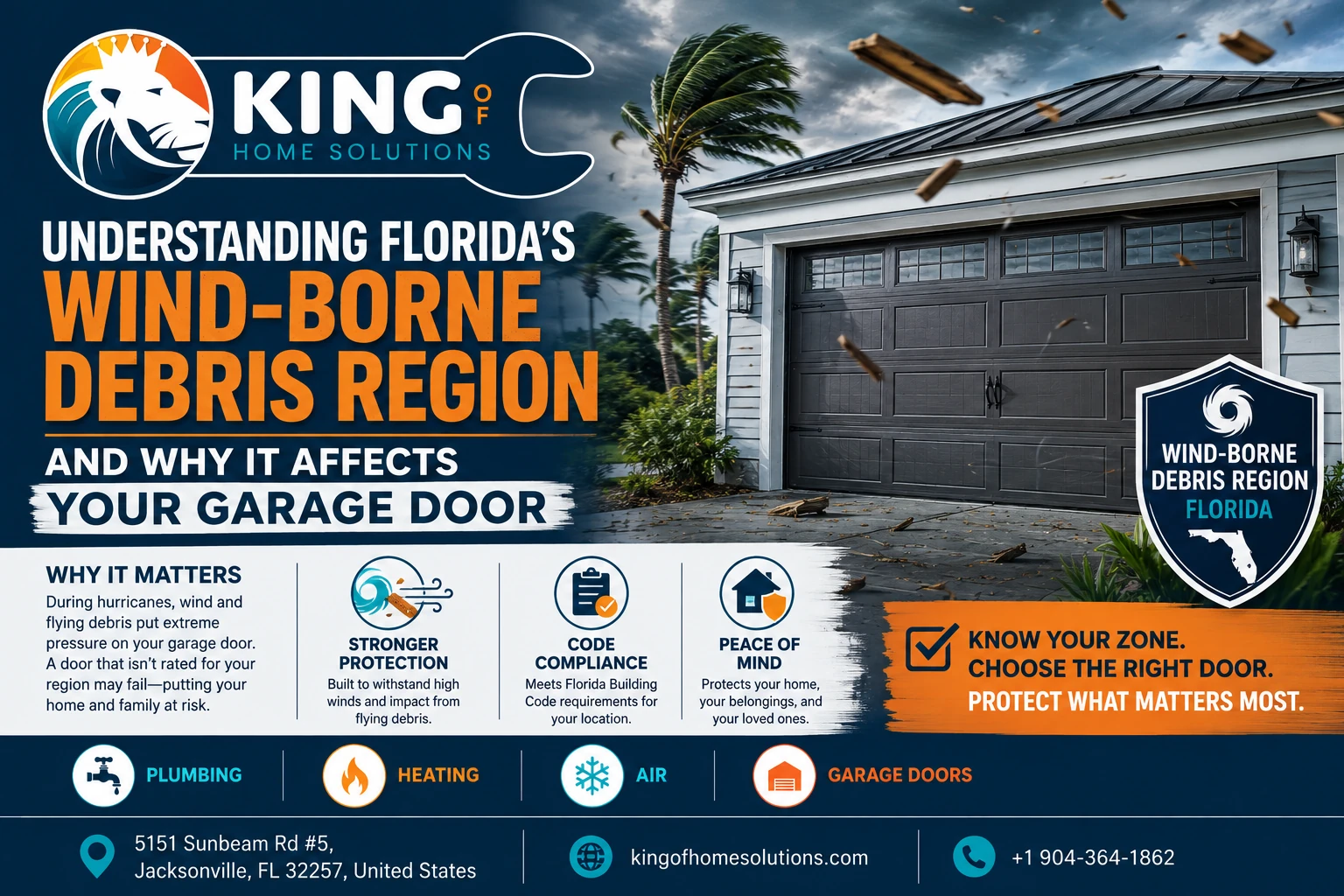
Understanding Florida’s “Wind-Borne Debris Region” and Why It Affects Your Garage Door
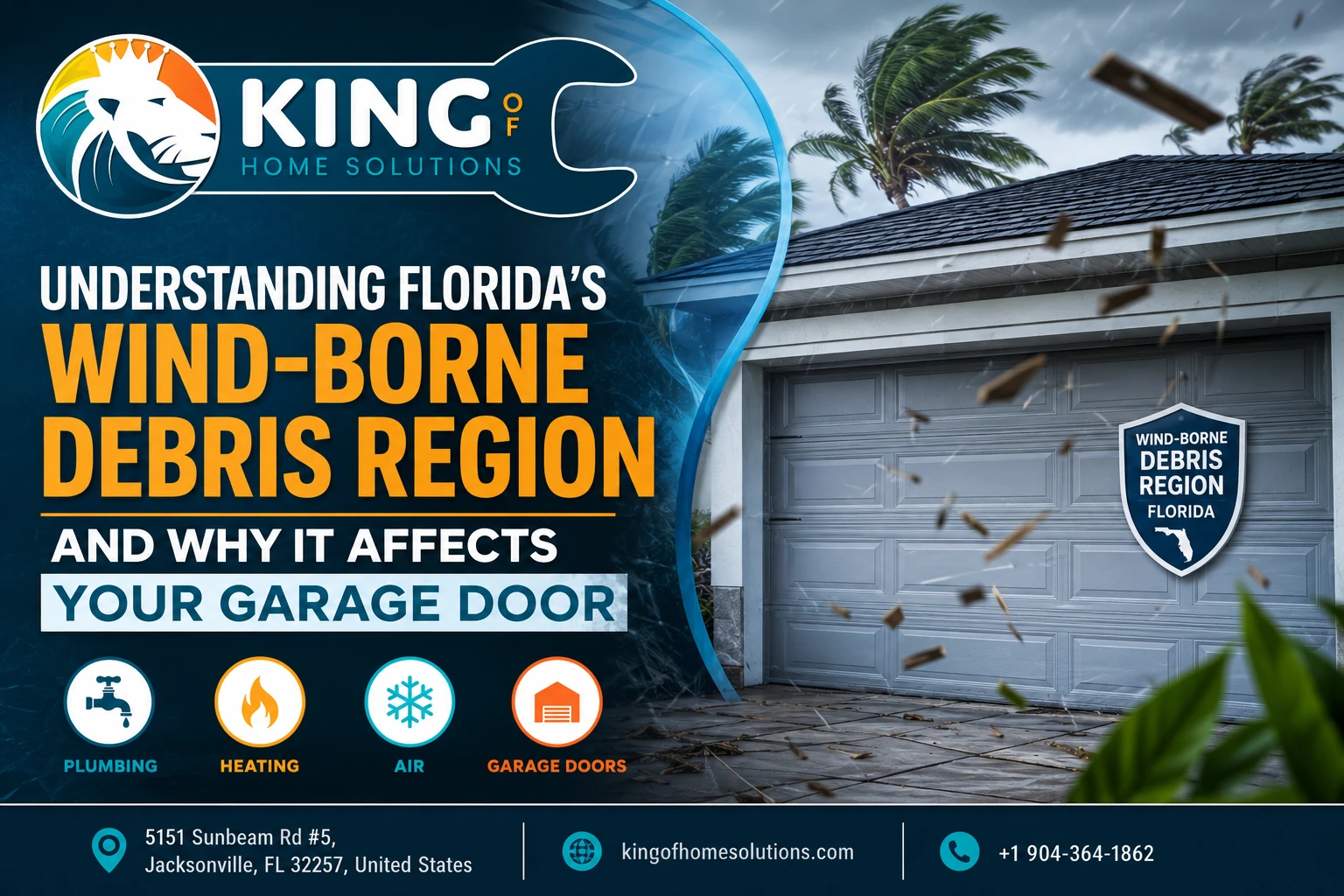
Understanding Florida’s “Wind-Borne Debris Region” and Why It Affects Your Garage Door
If you own a home in Florida, you’ve probably heard terms like hurricane-rated, wind-rated, and impact-resistant used when talking about garage doors.
They sound similar. They are not necessarily the same thing.
One of the biggest factors determining what kind of garage door your home needs is whether the property sits inside Florida’s Wind-Borne Debris Region, often shortened to WBDR.
And this matters for more than passing an inspection.
Your garage door is one of the largest openings in your home. During a hurricane, it has to withstand tremendous wind pressure while also dealing with the possibility of flying debris. Understanding what your location requires can help you avoid buying a door that looks strong on paper but isn’t approved for the conditions at your home.
Is Your Garage Door Ready for Florida Winds?
Protect your home with a garage door built for Florida’s wind-borne debris requirements. Call now for professional service you can trust.
What Is Florida’s Wind-Borne Debris Region?
The Wind-Borne Debris Region is an area identified by the Florida Building Code where buildings face a significant enough risk from hurricane-force winds and flying debris that additional protection requirements apply.
Under the Florida Building Code, the designation is based primarily on factors including design wind speed, proximity to certain coastal areas, and wind exposure conditions. The current code framework generally includes areas where the ultimate design wind speed reaches 140 mph or greater, along with certain areas near the coast where lower wind-speed thresholds and Exposure D conditions apply.
That means this isn’t simply a question of:
“Do I live near the beach?”
A property farther inland can still fall within a Wind-Borne Debris Region depending on its location and required design wind speed.
The Florida Building Commission has also continued studying how WBDR boundaries should address certain inland areas near large bodies of water, which is another reason homeowners shouldn’t try to determine their requirements from a generalized Florida hurricane map alone.
Why Flying Debris Changes the Conversation
Hurricanes create two separate threats to a garage door.
The first is wind pressure.
As wind moves around your home, the garage door can experience both inward and outward forces. A properly engineered wind-rated door is designed to resist those pressures up to its approved design pressure.
The second threat is impact.
Roofing material, branches, signs, fencing and other objects can become airborne during a severe storm. When those objects strike an opening in the home, the problem isn’t simply the initial damage.
If an opening fails, wind can enter the structure and rapidly increase internal pressure.
That increased pressure can place additional stress on the walls and roof.
That is why Florida’s building requirements distinguish between resisting wind pressure and protecting certain openings from wind-borne debris.
So What Does the WBDR Mean for Your Garage Door?
This is where homeowners can easily get confused.
A garage door may have an impressive wind rating and still not meet every requirement for a particular property.
The door needs to be approved for the design pressures required at that specific home. If the garage door contains windows, those glazed openings can also trigger wind-borne-debris protection requirements.
The 2023 Florida Building Code Residential specifically requires exterior glazed openings in buildings located within wind-borne debris regions to be protected against wind-borne debris. It also specifically addresses glazed openings in garage doors, requiring them to comply with an approved impact-resistance standard or ANSI/DASMA 115.
In practical terms, that means you can’t judge suitability simply by looking at the thickness of the door, the number of reinforcement struts or a manufacturer’s hurricane-themed marketing.
You need to know what that exact door configuration is approved to do.
“Wind-Rated” Does Not Automatically Mean “Impact-Rated”
This distinction is worth remembering.
A wind-rated garage door is engineered and approved to resist specified positive and negative wind pressures.
An impact-resistant configuration has also met applicable requirements related to debris impact.
Those ratings are not interchangeable.
Florida’s own product-approval database demonstrates this distinction. Garage-door configurations can be approved for specific design pressures while still being identified as not impact resistant, and some product approvals specifically restrict the use of glazing in wind-borne debris regions. Other configurations of similar doors may carry impact-resistant approval.
Even two garage doors from the same manufacturer and product line can therefore have very different limitations depending on:
- Door width and height
- Reinforcement package
- Track configuration
- Glazing
- Hardware
- Design pressure
- Installation method
- Product approval
- Whether the installation is inside the High-Velocity Hurricane Zone
That’s why choosing a Florida garage door by model name alone can be misleading.
Garage Door Windows Deserve Special Attention
Windows can dramatically change which version of a garage door is appropriate.
You may find a beautiful hurricane-rated garage door with decorative windows and assume the entire system is approved for your home.
Not necessarily.
The Florida Building Code places specific protection requirements on glazing within Wind-Borne Debris Regions.
So whenever you’re considering a garage door with windows, ask whether that specific glazed configuration is approved for your location.
Not just the solid version of the door.
Not just the product family.
The configuration you’re actually purchasing.
That small distinction can save you from permit headaches, inspection problems and an expensive change order later.
What About Miami-Dade and Broward County?
Another source of confusion is the High-Velocity Hurricane Zone, or HVHZ.
The HVHZ has additional requirements and historically applies to Miami-Dade and Broward counties. Product approvals often explicitly state whether a particular garage-door configuration is approved for use within the HVHZ.
Florida’s product database, for example, distinguishes between products approved outside the HVHZ and those approved for use inside it.
So a garage door being approved somewhere in Florida does not automatically mean it is approved everywhere in Florida.
Location matters.
Your Required Wind Rating Isn’t Determined by ZIP Code Alone
Homeowners sometimes ask:
“What wind-speed garage door do I need for my ZIP code?”
A ZIP code can help narrow things down, but it isn’t enough to engineer the installation.
The required design pressure for a garage door can depend on several factors, including the site’s wind speed, exposure category, building characteristics, opening size and location on the structure.
Ultimately, the approved garage door needs to match the pressures and conditions required for the actual project.
That’s why a reputable garage-door company shouldn’t simply tell you, “This is a 150-mph door, so you’re good.”
The more useful questions are:
What design pressure does my house require?
What pressures is this exact garage-door configuration approved for?
Does my property fall within a Wind-Borne Debris Region?
If the door has windows, is that glazing approved for this application?
Those answers tell you far more than a marketing label.
Why the Garage Door Matters So Much During a Hurricane
Think about the size of a typical double garage door.
It may represent roughly 150 square feet or more of your home’s exterior wall.
That’s a massive opening.
If the door bows excessively, comes off its tracks or otherwise fails during extreme winds, the storm suddenly has a large pathway into the garage.
For homeowners, this is why hurricane garage-door protection shouldn’t be treated as simply a code-compliance purchase.
You’re protecting one of the largest vulnerable openings in the building envelope.
5 Reasons Your Garage Door Won’t Close in the Jacksonville Heat
You press the button. The garage door starts moving. Then it stops. Or worse it closes halfway and immediately reverses.…
Read The BlogReplacing a Garage Door? Ask These Questions First
Before purchasing a replacement garage door in Florida, make sure your installer can answer a few basic questions:
- Is my property located in a Wind-Borne Debris Region?
- What design pressures are required for my garage-door opening?
- What Florida Product Approval applies to this exact door?
- Is the approved configuration the same size I’m purchasing?
- Are the windows, if any, approved for my location?
- Is the door approved for HVHZ use if my property requires it?
- Does the proposed track, reinforcement and hardware match the approved installation documents?
A knowledgeable garage-door professional should be comfortable answering those questions.
If all you’re hearing is “Don’t worry it’s hurricane-rated,” you haven’t been given enough information yet.
The Bottom Line
Florida’s Wind-Borne Debris Region isn’t just another complicated building-code term.
It helps determine how openings in your home must be protected during extreme wind events, and that can directly affect which garage door and which version of that garage door can be installed on your house.
The safest approach is simple:
Don’t shop based solely on a hurricane rating printed in a brochure.
Have your property’s requirements identified, confirm the required design pressures and make sure the exact door, size, glazing package and installation configuration are approved for those conditions.
Because when the next Florida storm https://kingofhomesolutions.com/service-area/whitehouse/arrives, what matters isn’t whether your garage door was advertised as hurricane-ready.
It’s whether the entire installed system was designed for your home, your location and your wind exposure.
Don’t Let the Next Storm Test Your Garage Door
Make sure your garage door is prepared for high winds and flying debris. Call today for expert inspection and service.