Serving The Jacksonville Area


Furnace Blowing Cold Air? 6 Possible Causes Homeowners Should Know
Furnace Blowing Cold Air? 6 Possible Causes Homeowners Should Know
A furnace blowing cold air may have a thermostat setting problem, a delayed heating cycle, a clogged air filter, a failed ignition component, an overheating shutdown, or a malfunctioning control. Some causes are easy to identify without opening the equipment, while others require professional diagnosis. Checking the thermostat and filter can help homeowners rule out basic issues before scheduling heating repair.
In Jacksonville, FL, heating systems may sit unused for months before cooler weather arrives. When the first chilly morning calls for heat, unexpected cold airflow can be frustrating. At King of Home Solutions, we help homeowners identify why their heating equipment stops producing warm air and recommend the appropriate repairs to restore comfort and safe operation.
Quick Answer: Why Is My Furnace Blowing Cold Air?
When a furnace runs but does not produce warm air, the problem may involve the thermostat, heating cycle, airflow, ignition system, or an internal safety control.
The most common causes include:
- Thermostat fan set to On: The blower may circulate air even when the furnace is not actively heating.
- Normal heating-cycle timing: The fan may run briefly before warm air reaches the vents or after the burners shut off.
- Dirty air filter: Restricted airflow can contribute to overheating and protective shutdowns.
- Ignition failure: The furnace may be unable to light its burners and produce heat.
- Overheating: A safety limit may shut off the burners while the blower continues operating.
- Control or mechanical failure: Faulty sensors, relays, motors, or control components can interfere with normal heating.
Not every situation indicates a breakdown.
A few seconds of cooler airflow during startup may be normal for some systems. However, a furnace that continuously circulates room-temperature or cold air while the thermostat calls for heat needs attention.
Start by confirming the thermostat settings and inspecting the air filter if it is safely accessible.
If the furnace still fails to heat, stop troubleshooting and arrange professional service.
Important: Jacksonville homes may use heat pumps, electric furnaces, gas furnaces, or other heating equipment. The ignition and burner problems discussed below apply to fuel-burning furnaces, not ordinary electric resistance heaters or heat pumps.
Cause #1: The Thermostat Fan Is Set to “On”
A thermostat fan setting is one of the simplest explanations for a furnace that seems to blow cold air.
Most thermostats provide at least two fan settings: Auto and On.
Although they sound similar, the settings control the blower differently.
What Happens When the Fan Is Set to On?
When the fan is set to On, the blower is generally instructed to run continuously.
The furnace does not necessarily produce heat during that time.
Instead, the blower circulates indoor air through the ductwork.
When the burners are off, that circulating air may feel cool compared with the warm air produced during active heating.
For example, a Jacksonville homeowner might set the thermostat to 72°F while the house is already at that temperature.
The furnace has no reason to heat.
However, if the fan is set to On, air may continue moving through the vents.
That airflow can feel chilly even though the thermostat is functioning as configured.
How Is Auto Different?
When the fan is set to Auto, the thermostat allows the heating system to manage blower operation according to its normal control sequence.
In many systems, this means the blower runs during heating calls and stops afterward, subject to any built-in delays or special settings.
What Can Homeowners Safely Check?
Look at the thermostat display.
Confirm that the system is set to Heat and the fan setting is Auto.
If the thermostat uses programmed fan circulation schedules, review those settings as well.
After changing the setting, allow the system time to respond.
When Is It More Than a Thermostat Setting?
If the fan is on Auto but continues blowing cool air during a heating call, another problem may be preventing heat production.
A failed ignition system, safety shutdown, or control problem may be responsible.
The thermostat setting is a useful first check, but it is not a complete diagnosis.
Cause #2: The Furnace Has Not Finished Its Heating Cycle
A furnace does not necessarily produce hot air the instant the thermostat requests heating.
Its internal controls follow a startup sequence.
Depending on the furnace design, the system may perform safety checks before allowing the burners to ignite.
The blower is then controlled according to the equipment’s heating sequence.
What Happens During Startup?
A typical gas furnace may go through several stages:
- The thermostat requests heating.
- The furnace control begins its startup checks.
- The combustion-air system operates as designed.
- The ignition system attempts to light the burners.
- The furnace confirms appropriate flame operation.
- The circulating blower delivers heated air through the ductwork.
The exact sequence varies by manufacturer and model.
Why Might Air Feel Cool at First?
Some systems may briefly circulate air that has not yet reached a comfortable temperature.
Ductwork in an attic or other unconditioned area may also contain cooler air before the system delivers fully heated airflow.
This can be more noticeable after the furnace has been off for a long period.
What Happens at the End of a Heating Cycle?
When the thermostat reaches the desired temperature, the burners shut off.
However, the blower may continue operating temporarily.
This helps move residual heat from the furnace through the ductwork and allows the equipment to complete its normal shutdown sequence.
Air may gradually feel cooler as the cycle ends.
How Long Is Normal?
The timing varies by equipment and control settings.
A brief period of cooler airflow may be expected, but continuous cold air without meaningful heating is not normal.
What Should Homeowners Watch For?
Pay attention to whether the vents eventually deliver warm air.
If the system warms the home and then completes its cycle, the operation may be normal.
If it never produces heat, repeatedly starts and stops, or runs without raising the indoor temperature, professional diagnosis may be needed.
A furnace blowing cold air throughout an entire heating call should not be dismissed as a normal startup delay.
Cause #3: A Dirty Air Filter Is Restricting Airflow
A dirty air filter can create more than a dusty house.
In some cases, severe airflow restriction contributes to furnace overheating.
When that happens, protective controls may shut down the burners.
The blower may continue running to help cool the equipment.
The result can be air moving through the vents without the expected warmth.
How Does a Clogged Filter Affect Heating?
The blower moves air through the furnace’s heat exchanger and into the home’s ductwork.
That airflow helps carry heat away from the equipment.
When the filter becomes heavily clogged, the amount of air moving through the system may decrease.
The furnace may then become hotter than its intended operating range.
What Happens When the Furnace Overheats?
Many furnaces include a high-temperature limit switch.
If temperatures reach an unsafe level, the control can shut off the burners.
Depending on the equipment, the blower may continue operating.
This can make the furnace appear to be running even though it is no longer producing heat.
Signs of a Restricted Filter
Homeowners may notice:
- Weak airflow from supply vents.
- A filter visibly covered with dust.
- Uneven temperatures between rooms.
- A furnace that cycles on and off frequently.
- Increased operating noise.
- Heating that stops before the thermostat reaches its set temperature.
These symptoms can have other causes, so they do not confirm a clogged filter by themselves.
What Can Homeowners Do?
If the filter is intended for homeowner replacement and is safely accessible, inspect it.
Replace a dirty disposable filter with the correct size and type.
For a reusable filter, follow the manufacturer’s cleaning instructions.
Avoid choosing a filter solely because it has the highest advertised filtration rating. A filter that is too restrictive for the system can contribute to airflow problems.
Will Replacing the Filter Restore Heat?
Sometimes, correcting airflow restriction resolves a contributing issue.
However, if the furnace has repeatedly overheated, additional inspection may be necessary.
The system may have another airflow restriction, a failing blower, or a safety-related problem.
If heating does not return normally after a filter replacement, schedule professional service.
Why Jacksonville Homeowners Should Pay Attention
Jacksonville’s long cooling season means the same HVAC filter may collect dust during months of air conditioning operation.
When the heating season arrives, a neglected filter can already be heavily loaded.
Checking it before cooler weather is a useful habit.
Cause #4: The Ignition System Is Not Working Properly
A fuel-burning furnace must ignite its burners before it can produce heat.
If the ignition sequence fails, the blower may still operate even though warm air is not being generated.
Modern gas furnaces commonly use electronic ignition systems rather than continuously burning pilot lights.
How Ignition Problems Develop
A furnace’s ignition system includes components that help initiate and verify combustion.
Depending on the model, these may include an igniter, gas valve, flame sensor, and related controls.
If part of the sequence fails, the furnace may stop trying to heat.
Failed Igniter
An igniter helps start combustion.
If it fails, the burners may never light.
The system may attempt startup and then shut down according to its safety logic.
Flame-Sensing Problems
A flame sensor helps the furnace control verify that a flame is present when expected.
If the control cannot properly confirm flame operation, it may shut off the gas supply.
Homeowners may notice the furnace attempting to start but failing to maintain heat.
Gas Supply or Gas Valve Problems
A furnace may also fail to ignite because the required fuel is unavailable or a gas control component is not functioning correctly.
These situations require professional evaluation.
Homeowners should not attempt to adjust gas valves, burners, or internal gas connections.
Can an Ignition Problem Make the Blower Run?
Yes.
Depending on the furnace and its controls, the circulating fan may operate even when combustion has not been established.
Some equipment also enters a temporary safety lockout after repeated failed ignition attempts.
What Should Homeowners Avoid?
Do not attempt to manually light a furnace unless the manufacturer’s instructions explicitly permit a homeowner procedure for that specific model.
Never bypass a flame sensor, ignition control, or safety device.
Do not open burner compartments to test components.
When Professional Service Is Needed
If the furnace repeatedly attempts to start without heating, a technician should inspect the ignition and control sequence.
At King of Home Solutions, our Heating Repair services include diagnosing ignition and pilot-related problems, along with other heating failures.
Cause #5: The Furnace Is Overheating and Shutting Down the Burners
A furnace that produces warm air briefly before switching to cool airflow may be experiencing an overheating condition.
This is different from a normal heating cycle.
In an overheating situation, the furnace may stop producing heat before the thermostat’s requested temperature is reached.
Why Would a Furnace Overheat?
Possible contributing factors include:
- A severely clogged air filter.
- Blocked or restricted airflow.
- A malfunctioning blower motor.
- Ductwork restrictions.
- Improper equipment operation.
- Other internal mechanical or control problems.
A trained technician must determine the actual cause.
What Does the High-Limit Switch Do?
The high-temperature limit switch is a safety device.
It helps protect the furnace when temperatures exceed the intended range.
When the limit opens, the burners may shut off.
The blower may continue moving air to help cool the system.
Why Does the Furnace Start Heating Again Later?
Some high-limit controls reset after the furnace cools.
This may allow the equipment to begin another heating cycle.
However, if the cause of overheating remains, the problem can happen repeatedly.
What Might Homeowners Notice?
Common symptoms include:
- Warm air followed by room-temperature air.
- Heating cycles that end too early.
- A blower that continues running.
- Indoor temperatures that never reach the thermostat setting.
- Repeated attempts to heat the home.
Is It Safe to Keep Running the Furnace?
No homeowner should assume repeated overheating is harmless.
The high-limit switch is a safety component, not a normal temperature-control method.
Continued overheating can place stress on equipment and may indicate a condition that requires prompt attention.
Why DIY Repairs Are Not Appropriate
Homeowners should never bypass or alter a high-limit switch.
They should also avoid opening equipment panels to test internal temperatures, inspect wiring, or modify blower settings.
If the furnace repeatedly overheats, stop operating it and arrange professional repair.
Cause #6: A Control or Mechanical Component Has Failed
Sometimes, a furnace produces cold airflow because a component is no longer operating as intended.
Unlike an incorrect thermostat setting, these failures generally cannot be corrected through ordinary homeowner checks.
Faulty Furnace Control Board
The control board coordinates important furnace functions.
If it fails, the equipment may receive an incorrect signal, fail to start the heating sequence, or operate the blower unexpectedly.
Control board problems require electrical testing and careful diagnosis.
Blower Motor or Fan Problems
The blower distributes heated air throughout the home.
A failing motor, control module, or related component can interfere with airflow.
Some problems cause weak airflow.
Others may contribute to overheating or unusual cycling.
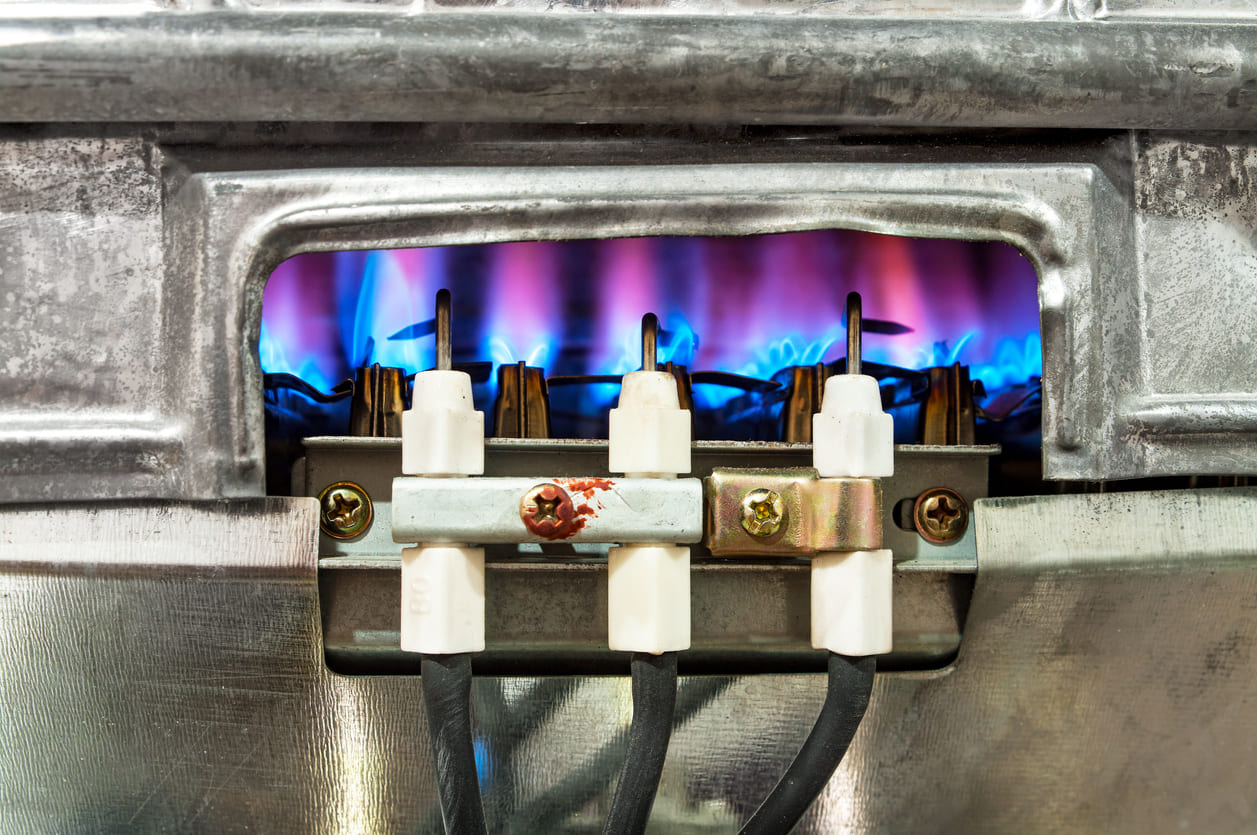
Damaged or Disconnected Wiring
Loose, damaged, or deteriorated electrical connections can interrupt normal operation.
Electrical problems may be intermittent, making the furnace work sometimes but fail at other times.
Faulty Sensors or Switches
Furnaces depend on multiple switches and sensors to monitor safe operation.
If a required safety condition is not satisfied, the control may prevent burner operation.
Thermostat Communication Problems
A thermostat may display the correct temperature but fail to communicate the heating request properly.
This can result from thermostat faults, control wiring problems, or other equipment issues.
Mechanical Wear
Some furnace components wear with age and repeated operation.
A problem may become apparent when the furnace begins operating more frequently during cooler weather.
Why Accurate Diagnosis Matters
Several component failures can create similar symptoms.
For example, a homeowner may hear the blower running and assume the motor is functioning correctly.
However, the system may still have an airflow or control problem.
Replacing parts without testing can lead to unnecessary costs and unresolved heating problems.
Our technicians evaluate the equipment to identify the cause before recommending repairs.
What Can Homeowners Safely Check?
Not every cold-air complaint requires immediate internal furnace testing.
A few simple checks can help homeowners determine whether the issue involves a normal setting, a basic maintenance concern, or something requiring professional service.
The key is staying within safe, homeowner-accessible tasks.
Safe Troubleshooting Checklist
- Confirm the thermostat is set to Heat.
Make sure the thermostat is requesting heating rather than cooling or fan-only operation.
- Check the fan setting.
If the fan is set to On, switch to Auto if that matches the intended operation.
- Review the temperature setting.
Set the heating temperature a few degrees above the current room temperature and allow the system time to respond.
- Check thermostat batteries if applicable.
Replace depleted batteries according to the thermostat manufacturer’s directions.
- Inspect the air filter.
If it is designed for homeowner replacement, check whether the filter is dirty and replace it with the correct type.
- Look at accessible supply and return vents.
Make sure furniture, boxes, or other objects are not blocking airflow.
Do not dismantle ducts or equipment.
- Observe the heating pattern.
Notice whether the air becomes warm after a short delay, stays cold continuously, or changes from warm to cold before the thermostat is satisfied.
- Note unusual symptoms.
Record any clicking, unusual cycling, burning odors, or thermostat error messages.
These observations may help the technician identify the problem.
What Should Not Be Checked by Homeowners?
Avoid opening furnace compartments or attempting to inspect:
- Burners and gas valves.
- Igniters or flame sensors.
- Internal electrical wiring.
- Control boards.
- High-limit switches.
- Heat exchangers.
- Blower motors and electrical components.
These parts require appropriate training and diagnostic equipment.
Is Resetting the Furnace a Good Idea?
Homeowners should not repeatedly reset a furnace that is failing to ignite, overheating, or entering a safety lockout.
Repeated restarting can obscure symptoms or encourage operation despite an unresolved safety problem.
If the manufacturer’s user instructions provide a specific homeowner reset procedure, it should only be considered when there are no gas, combustion, overheating, or electrical warning signs.
Otherwise, professional evaluation is the safer choice.
When Should You Stop Troubleshooting?
A furnace blowing cold air is inconvenient, but certain symptoms indicate that homeowners should stop operating the equipment and seek help.
Gas Odors
If a gas odor is suspected, leave the building immediately.
Avoid operating switches, phones, appliances, or electrical devices while inside.
From a safe location, contact the gas utility or emergency services.
Do not attempt to locate or repair a gas leak.
Carbon Monoxide Alarm
A carbon monoxide alarm must be treated as a serious warning.
Follow the alarm manufacturer’s emergency instructions, evacuate to fresh air, and contact emergency services.
Do not reenter until the area has been declared safe.
Persistent Burning Odors
A strong or continuing burning smell may indicate overheating or electrical damage.
Stop operating the equipment if it is safe to do so and arrange professional evaluation.
Smoke or fire requires emergency response.
Repeated Safety Shutdowns
A furnace that continually shuts down its burners should not be forced to keep operating.
Unusual Mechanical Noises
Loud banging, scraping, or grinding may indicate mechanical damage.
Continuing to run the system could worsen the problem.
Visible Damage or Water Near Electrical Equipment
Avoid touching damaged or wet electrical components.
Arrange professional service.
Heating Failure in a Vulnerable Household
If indoor temperatures become unsafe for young children, older adults, or people with health conditions, arrange an appropriately heated location while the furnace is repaired.
A safety warning is not a situation for trial-and-error troubleshooting.
When to Call for Professional Heating Repair
Homeowners should schedule professional heating repair when the furnace continues delivering cold air after thermostat and basic airflow checks.
Several patterns make a service visit particularly important.
The Furnace Never Produces Heat
If the thermostat is calling for heating but the supply air never becomes warm, the furnace may have an ignition, electrical, or control problem.
The System Produces Heat Briefly, Then Stops
This may suggest overheating, a safety shutdown, or another operating fault.
The Furnace Repeatedly Attempts to Start
Repeated ignition attempts or short cycling should be professionally evaluated.
The Blower Runs Continuously
If the fan remains active even when set to Auto, the problem may involve a furnace control, safety condition, or thermostat-related issue.
The Thermostat Shows a Warning
Some modern systems display alerts or diagnostic codes.
Homeowners can note the message without attempting internal repairs.
The Problem Returns After Basic Checks
If replacing a dirty filter or correcting thermostat settings does not restore normal heating, additional diagnosis is needed.
What Happens During a Professional Service Visit?
A technician may evaluate:
- Thermostat operation and control signals.
- Airflow and filter condition.
- Heating-cycle behavior.
- Ignition and flame verification.
- Safety controls.
- Blower operation.
- Relevant electrical components.
- Combustion and venting safety for fuel-burning equipment.
The precise diagnostic process depends on the system and symptoms.
At King of Home Solutions, we identify the reason for the failure and explain the repair recommendation before proceeding with the approved work.
Furnace and Heating Repair in Jacksonville
Jacksonville homeowners may not use their heating systems as heavily as households in colder states.
However, that does not make reliable heating any less important when temperatures drop.
Long periods of limited heating operation can also mean that a developing issue goes unnoticed until the first chilly morning.
A thermostat problem, dirty filter, failed igniter, or malfunctioning safety control can quickly leave the home uncomfortable.
At King of Home Solutions, we provide heating diagnostics and repair services for homeowners throughout Jacksonville and nearby communities.
Heating Problems Diagnosed at the Source
Our technicians examine the symptoms and evaluate the components involved in heating operation.
Whether the furnace is producing cold airflow, cycling irregularly, or failing to ignite, we work to identify the underlying problem.
Furnace and Heating System Repairs
Our Heating Repair services include thermostat troubleshooting, ignition repairs, blower motor issues, and other common heating system problems.
We service different heating equipment types and consider the specific design when diagnosing a malfunction.
Clear Repair Recommendations
After identifying the problem, we explain the findings and discuss the repair options.
Our goal is to help homeowners understand what needs attention rather than replace parts unnecessarily.
Preventive Heating Care
Although maintenance cannot prevent every failure, regular inspection can help identify certain airflow, control, and operating concerns.
Our Heating Maintenance services help Jacksonville homeowners prepare their systems for the cooler months.
Local Heating Service
We serve Jacksonville and surrounding communities, including Mandarin, San Marco, Arlington, Bartram Springs, and other areas across Duval County.
For homeowners dealing with a furnace blowing cold air, our team can evaluate the equipment and recommend the appropriate next step.
FAQs About Furnaces Blowing Cold Air
Why is my furnace blowing cold air instead of heat?
Common causes include the thermostat fan being set to On, normal heating-cycle delays, a dirty filter, ignition failure, overheating, or a faulty control component.
Can a dirty air filter make a furnace blow cold air?
Yes. Severe airflow restriction can cause a furnace to overheat and shut off its burners while the blower continues running.
Why does my furnace blow cold air when the fan is set to On?
The On setting typically runs the blower continuously, including when the furnace is not producing heat. Setting the fan to Auto may stop unnecessary circulation between heating cycles.
Is it normal for a furnace to blow cool air when starting?
A brief period of cooler airflow may occur depending on the system. Continuous cold air or repeated failed heating cycles is not normal.
Why does my furnace heat for a few minutes and then blow cold air?
The furnace may be overheating and activating a high-temperature limit switch. Airflow restrictions, blower problems, or other faults may be responsible.
Can a bad igniter cause cold air from the vents?
Yes. A failed ignition component can prevent a gas furnace from lighting its burners. The blower may still operate depending on the furnace controls.
Should I keep running a furnace that blows cold air?
If the problem persists beyond normal heating-cycle behavior, professional evaluation is recommended. Stop operation immediately if there are gas odors, burning smells, repeated safety shutdowns, or other serious warning signs.
Do Jacksonville homes need annual furnace maintenance?
Professional heating maintenance is generally recommended even in Jacksonville’s mild winter climate. It can help identify developing problems before the heating system is needed.
Cold Air Doesn’t Belong in Your Heating Cycle Call King of Home Solutions
A furnace should deliver the warmth your Jacksonville home needs when outdoor temperatures drop.
If the vents are blowing cold air instead, the problem may involve a simple thermostat setting or an internal component that requires professional repair.
While checking the thermostat, fan settings, and air filter can help eliminate basic causes, ignition systems, gas components, and electrical controls should always be handled by trained professionals.
At King of Home Solutions, we help homeowners diagnose heating problems and restore dependable system operation.
Our technicians inspect furnace performance, identify the source of cold airflow, and explain appropriate repair options.
Whether the system fails to ignite, overheats, or continues circulating air without heat, our team can determine what needs attention.
Get Warm Air Flowing Again With King of Home Solutions
If your furnace is blowing cold air and basic checks have not resolved the issue, contact us for professional heating repair in Jacksonville, FL.
Call (904) 865-4663 or visit our office at 5151-5 Sunbeam Road, Jacksonville, FL 32257.
Explore our Heating Repair Services or contact King of Home Solutions to schedule an appointment.
Our team is ready to help identify the problem, explain the repair, and restore comfortable heating to your home.
Recent News
Why North Florida Homes Are Switching to Heat Pumps in 2026
Top 5 Garage Door “Curb Appeal” Trends in Jacksonville: 2024 Edition
Braided Stainless Steel vs. Rubber Supply Lines: Is the “Flood Guard” Worth It?

5 Plumbing Upgrades That Can Increase a Jacksonville Home’s Resale Value