Serving The Jacksonville Area


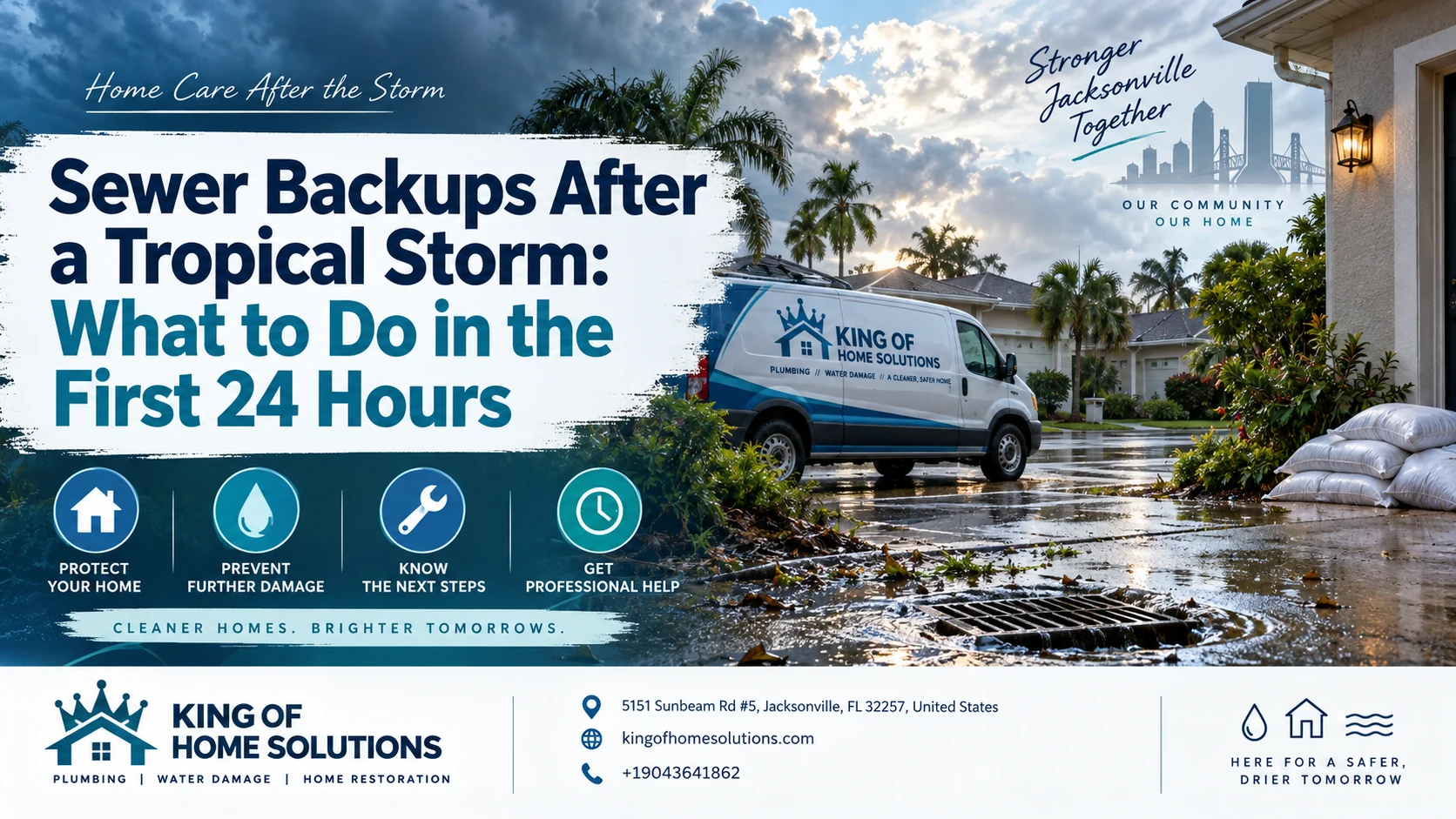
Sewer Backups After a Tropical Storm: What to Do in the First 24 Hours
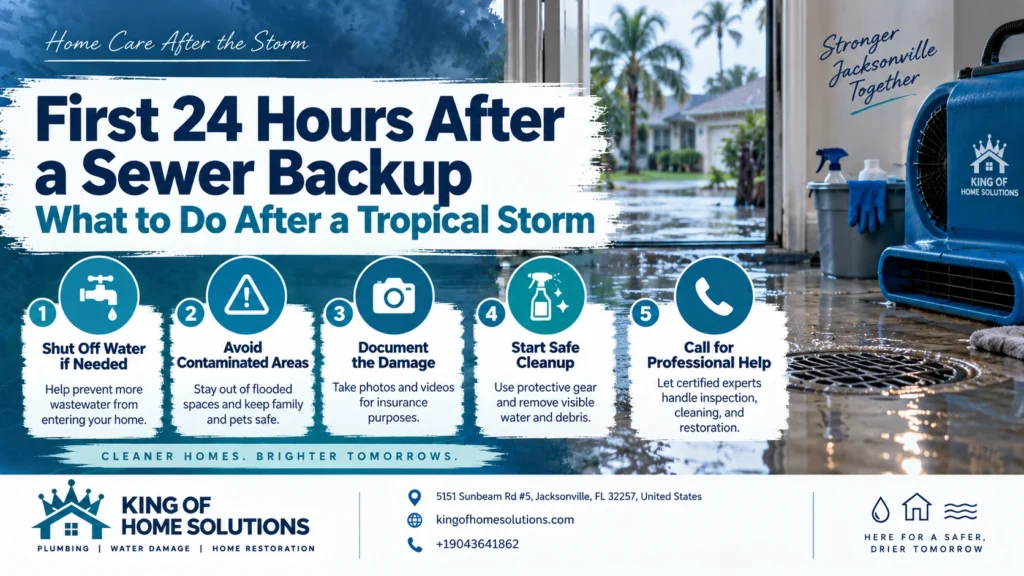
Sewer Backups After a Tropical Storm: What to Do in the First 24 Hours
The storm has passed.
The rain is slowing down, the wind has eased—and then you notice water around the floor drain.
Or the toilet bubbles when you run the sink.
Then dirty water begins coming up through the shower.
A sewer backup after a tropical storm is more than a plumbing inconvenience. The water entering your home may contain sewage, bacteria, viruses, chemicals, and other contaminants. At the same time, saturated soil, overwhelmed municipal sewer systems, flooded septic systems, and damaged underground pipes can make the problem difficult to diagnose immediately.
What you do during the first 24 hours matters.
Your priorities are simple:
Protect people. Stop adding water to the problem. Document the damage. Identify the source. Begin safe drying and cleanup as quickly as conditions allow.
Here is what homeowners should do.
First 30 Minutes: Stop Using Water
When sewage starts backing up, one of the worst things you can do is continue sending more wastewater into the system.
Stop:
- Flushing toilets
- Taking showers
- Running the washing machine
- Running the dishwasher
- Filling sinks or tubs
- Using large amounts of water
This is especially important for homes with septic systems after heavy rain.
Flooding can saturate the soil surrounding a drain field, preventing wastewater from dispersing normally. The CDC recommends reducing nonessential water use and flushing toilets as little as possible when septic systems are affected by flooding.
Even on a municipal sewer system, reducing water use is sensible until you know whether the blockage is inside your property’s sewer lateral or part of a larger neighborhood problem.
The goal is simple:
Don’t add another 50 gallons of wastewater to a system that is already struggling to move what is there.
Treat Sewage as Contaminated Water
Don’t let children or pets walk through sewage-contaminated areas.
Don’t step barefoot into the water.
And don’t assume that because the water looks relatively clear, it is safe.
Floodwater and sewer backups can contain harmful microorganisms and other contaminants. The CDC advises avoiding contact with floodwater that may contain sewage.
If you must enter an affected area, appropriate protective equipment may include waterproof boots, protective gloves, eye protection, clothing that covers exposed skin, and respiratory protection when conditions warrant it. EPA flood-cleanup guidance recommends protective clothing and equipment and emphasizes that some cleanup situations are better handled by qualified professionals.
If the sewage contamination is extensive, professional cleanup is often the safer choice.
Check for Electrical Danger Before Entering
Water on the floor creates another immediate risk:
electricity.
If standing water is near electrical outlets, appliances, extension cords, HVAC equipment, electrical panels, or other energized equipment, do not walk through the water to turn something off.
The CDC recommends shutting off electricity from a dry location when possible. If reaching the main electrical switch requires entering standing water, an electrician should handle the shutdown.
The plumbing problem can wait.
Electrical shock cannot.
During the First Hour: Find Out Whether It’s Just Your House
Now start gathering clues.
Ask a neighbor whether they are experiencing slow drains or sewer backups.
If several nearby homes have the same problem immediately after intense rainfall, the municipal sewer system may be overwhelmed or experiencing an infrastructure problem.
If your house is the only one affected, your private sewer lateral deserves closer investigation.
Pay attention to where the backup appears.
A single slow bathroom sink could be a localized drain clog.
But if your toilets, showers, tubs, and floor drains are all affected at the same time, the blockage may be farther downstream in the main building drain or sewer lateral.
A plumber can usually determine whether the immediate problem is:
- A clogged building drain
- Tree-root intrusion
- Grease or debris buildup
- A damaged sewer lateral
- A collapsed or displaced pipe
- A flooded septic system
- A municipal sewer issue
After tropical weather, however, conditions outside the pipe matter just as much as conditions inside it.
Don’t Assume the Pipe Simply Needs Snaking
A tropical storm can produce enormous amounts of water in a short period.
Soil becomes saturated.
Groundwater rises.
Low areas flood.
Older underground plumbing can already have cracked joints, root intrusion, offsets, or low spots that become more obvious when the surrounding ground is saturated.
A plumber may restore flow with a snake or hydro-jetter, but recurring backups deserve further investigation.
A sewer camera inspection can help identify whether there is a structural problem inside the line.
If the plumber clears the blockage but finds roots entering through a broken joint, for example, you haven’t completely solved the problem.
You’ve restored drainage.
The opening that allowed the roots inside still exists.
If You Have a Septic System, Be Especially Careful
Flooded septic systems require different thinking.
When the soil around a septic drain field becomes saturated, the system may temporarily lose its ability to accept and treat wastewater.
EPA guidance advises homeowners not to use the sewage system until conditions around the absorption field have sufficiently improved. It also warns against pumping a septic tank while surrounding soil remains heavily saturated because an emptied tank can potentially shift or float, damaging associated piping.
Don’t assume the fastest solution is automatically to call a pump truck and empty everything.
Contact a qualified septic professional who understands post-flood conditions.
If your home uses a private well, flooding creates another concern. EPA and CDC guidance advises against drinking potentially flooded well water until its safety has been confirmed.
Within the First Few Hours: Document Everything
Before throwing damaged belongings into a dumpster, take pictures.
Photograph:
- The affected rooms
- Water levels
- Sewage coming from drains
- Damaged flooring
- Baseboards and drywall
- Furniture
- Appliances
- Personal belongings
- Exterior flooding
- The location of any visible sewage overflow
Take video as well if it helps establish the extent of the damage.
EPA recommends documenting a flooded home and belongings before cleanup begins and contacting your insurance company.
Documentation can be especially important when determining whether coverage may apply under a sewer-backup endorsement, flood policy, or another portion of your insurance.
Don’t delay an urgent safety measure simply to take pictures.
But whenever conditions are safe, document before major cleanup removes the evidence.
Start Removing Contaminated Materials
Once the sewage source has been stopped and the area is electrically safe, cleanup should begin as soon as reasonably possible.
The clock matters because wet building materials create conditions for mold growth.
EPA recommends cleaning and drying flooded homes and belongings within approximately 24 to 48 hours when possible.
Hard, nonporous surfaces may often be cleaned and disinfected appropriately.
Porous materials contaminated by sewage can be much more difficult to salvage.
Depending on the extent of contamination, items requiring disposal may include:
- Carpet padding
- Certain carpets
- Saturated drywall
- Insulation
- Some upholstered furniture
- Particleboard
- Heavily contaminated mattresses
- Other materials that cannot be thoroughly cleaned and dried
Professional water-damage companies can determine which materials can realistically be restored.
Be Careful With Bleach and Cleaning Chemicals
Homeowners often reach immediately for bleach after sewage contamination.
Disinfection may be appropriate for certain surfaces, and EPA provides specific disinfecting guidance for sewage-contaminated areas and septic backups.
But more chemical is not automatically better.
Never mix bleach with ammonia, acids, or other household cleaners.
EPA explicitly warns against mixing cleaning products or adding bleach to other chemicals because dangerous gases can result.
Follow the disinfectant manufacturer’s instructions and applicable public-health guidance.
If contamination is widespread, let trained remediation professionals handle the sanitation process.
By Hour 12: Start Drying Aggressively—When It’s Safe
Once contaminated material has been removed and surfaces have been cleaned appropriately, drying becomes a priority.
Depending on conditions, professionals may use:
- Dehumidifiers
- Air movers
- Moisture meters
- Extraction equipment
- Controlled ventilation
EPA recommends ventilation and dehumidification during appropriate flood cleanup, but cautions against using fans in ways that could spread existing mold.
The objective isn’t simply to make the floor feel dry.
Moisture can remain behind baseboards, beneath flooring, inside wall cavities, and within cabinetry long after surface water disappears.
That’s why moisture testing can be valuable after a significant backup.
By Hour 24: You Should Know What Happens Next
Ideally, by the end of the first day you should have answers to several questions.
Has the sewage flow stopped?
Is the blockage inside your plumbing or part of a municipal problem?
Does the sewer lateral need camera inspection?
Is your septic system saturated or damaged?
Has contaminated material been removed or professionally evaluated?
Has structural drying begun?
The mistake is assuming that because the drain starts flowing again, the emergency is finished.
After a tropical storm, the clog itself may be only the visible symptom.
Repeated backups could indicate root intrusion, pipe movement, a damaged lateral, a sewer belly, an overwhelmed septic drain field, or another condition that needs more than routine drain cleaning.
The Bottom Line
The first 24 hours after a tropical-storm sewer backup are not about finding the cheapest plumbing repair.
They are about controlling the damage safely.
Stop using water.
Keep people and pets away from sewage.
Watch for electrical hazards.
Document the damage.
Call the appropriate plumber, septic contractor, municipality, or remediation company.
Begin cleanup and drying quickly.
And once the immediate emergency is under control, find out why the backup happened.
Clearing a clogged sewer may get your toilets working tonight.
Understanding why sewage entered your home is what helps keep you from going through the same emergency during the next tropical storm.